









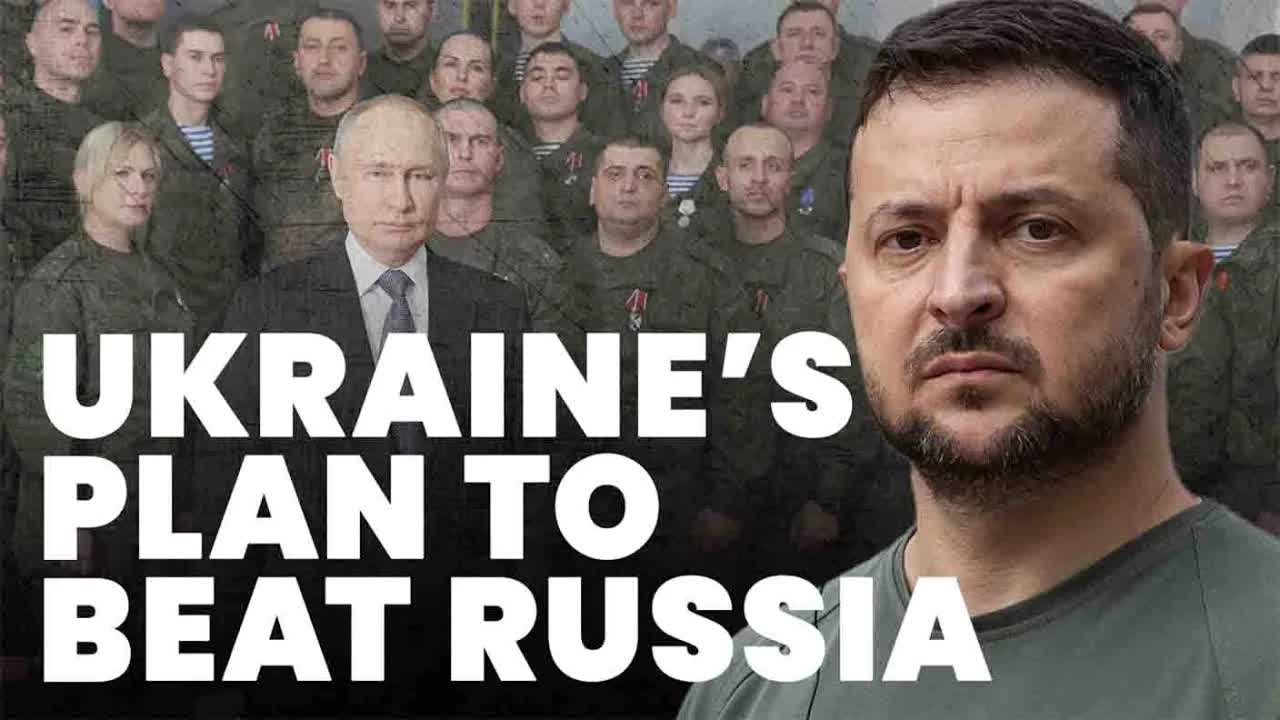
In a significant address to the Ukrainian parliament, President Volodymyr Zelensky outlined an ambitious victory plan aimed at securing Ukraine’s future in the face of ongoing conflict with Russia.
This plan not only signals Ukraine’s determination but also serves as a clear message to Russian President Vladimir Putin about the nation’s aspirations for NATO membership.
The crux of Zelensky’s argument hinges on the belief that Ukraine’s defense against Russian aggression requires a robust collective security framework.
Zelensky’s recent discussions have emphasized that Russia shows no inclination towards seeking a peaceful resolution to the conflict.
He pointedly remarked on Putin’s steadfast refusal to engage with proposals for a diplomatic settlement.
Instead, the Ukrainian president laid out five pivotal strategies that hinge largely on the support and collaboration of Western allies.
The essence of these strategies lies in altering the current dynamics of the war.
At the forefront of Zelensky’s plan is the pursuit of NATO membership, or at the very least, an invitation to join the alliance.
While full membership remains a distant goal, the invitation itself would symbolize a significant step forward in bolstering Ukraine’s security.
In addition to this, Zelensky called for enhanced defense assistance to shift the balance on the battlefield, underscoring the necessity of international support.
Moreover, Zelensky’s vision includes future deterrence measures, which he has proposed to both the United States and the United Kingdom.
This involves the potential placement of non-nuclear capabilities designed to deter further Russian attacks.
Such strategies reflect a proactive approach to ensure Ukraine remains resilient against external threats.
The economic aspect of Zelensky’s plan is equally crucial.
He envisions a Ukraine capable of sustaining itself economically while simultaneously maintaining a strong military defense industry.
This includes the ability to export goods through the Black Sea, which could play a vital role in revitalizing the nation’s economy amid ongoing conflict.
Perhaps most strikingly, Zelensky articulated a vision for post-war Ukraine, one where the country transitions from being a security recipient to a security provider.
He boldly asserted that Ukraine could potentially replace U.S. forces on NATO’s eastern flank, showcasing the confidence he has in the capabilities of the Ukrainian armed forces.
Zelensky’s ability to inspire hope and a sense of possibility among his constituents is commendable.
His strategic framing of the situation encourages both Ukrainians and international observers to believe in the potential for victory.
His charisma and political acumen resonate deeply with the Ukrainian populace, where trust in his leadership remains robust despite the hardships faced.
Polling data reveals a strong belief among Ukrainians regarding their ability to reclaim territory lost to Russian forces, particularly in light of the 2014 annexation of Crimea.
More than 40 percent of citizens see the expulsion of Russian troops as a realistic goal, indicating a resilient national spirit fueled by Zelensky’s leadership.
However, the path to NATO membership remains uncertain, especially given the shifting political landscape in the United States.
Zelensky’s call for NATO to remove Ukraine’s membership from the negotiation table reflects a determination to assert Ukraine’s right to self-defense without compromise.
The ongoing discussions among NATO leaders have reiterated the commitment to Ukraine’s future within the alliance, albeit with no immediate timeline.
As Zelensky continues to push for international support, the question of economic investment looms large.
The success of his victory plan hinges not only on military assistance but also on attracting foreign investment.
There are signs of progress, particularly in the defense sector, where companies like Germany’s Rheinmetall are establishing operations in Ukraine.
In conclusion, the interplay between military strategy and economic recovery is critical for Ukraine’s long-term survival.
As the nation navigates this complex landscape, private sector engagement will be essential in rebuilding and fortifying its defenses.
Zelensky’s vision, while ambitious, reflects a growing consensus that Ukraine can emerge stronger from this conflict, provided it secures the necessary support from its allies.
Read more
