





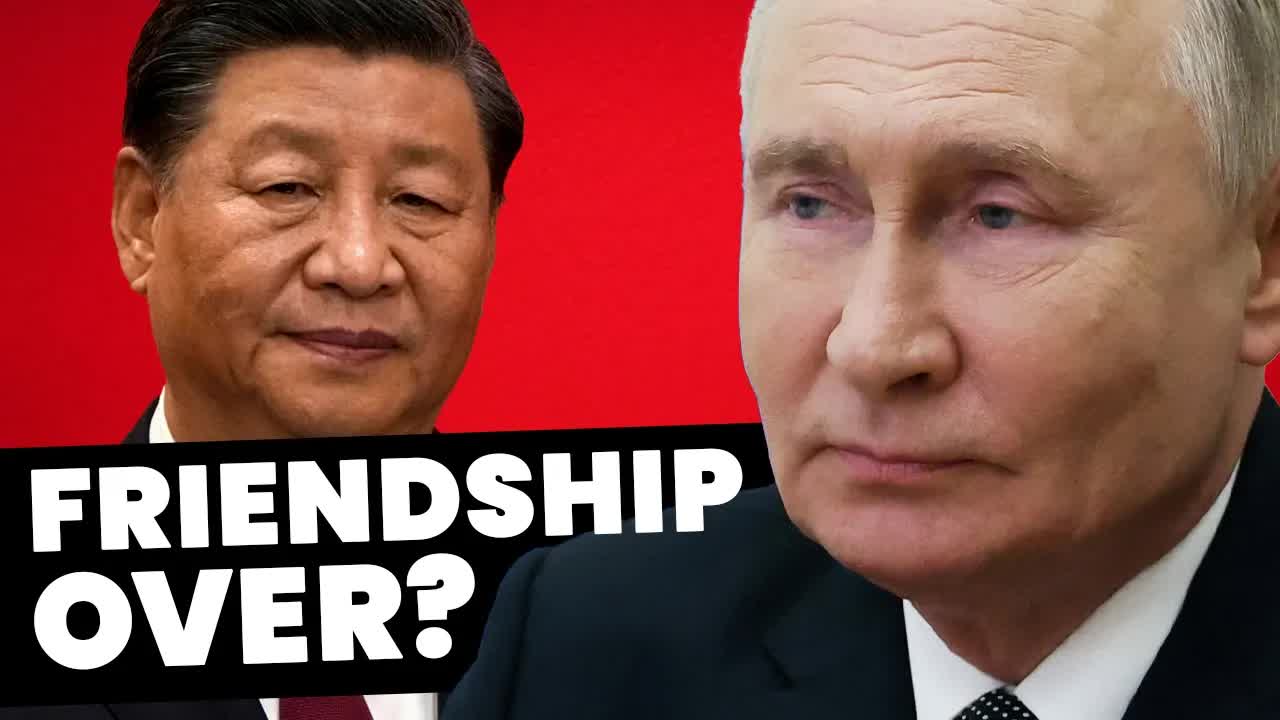
In the intricate web of international relations, Xi Jinping’s views on Russia are deeply rooted in his formative years.
As a young man, he was instilled with a sense of animosity and apprehension toward the country.
A recently declassified American document sheds light on this narrative, revealing how his mentor, a high-ranking official in the Chinese defense forces, conveyed the historical tensions between China and the Soviet Union during a visit to Washington.
The Soviets, he claimed, aimed to reduce China to a mere agricultural hub for the socialist bloc, stifling its industrial ambitions.
Moreover, historical grievances linger, with Chinese sentiments reflecting on the vast territories seized by the Tsars in the 19th century, now part of Vladimir Putin’s eastern regions.
This legacy of distrust paints a complicated picture of Sino-Russian relations.
Amidst this backdrop, the Taiwanese president’s recent address came as no surprise.
His speech was marked by a tone of defiance, emphasizing Taiwan’s commitment to self-defense without veering into provocative territory like declaring independence.
Such a declaration could easily ignite tensions with China, which has made it clear that any move toward independence would be met with force.
However, the political landscape in Taiwan remains relatively stable.
The recent elections resulted in a president who supports Taiwanese separation, yet the opposition holds sway in the legislature, leading to a stalemate that discourages any radical actions.
As we observe these dynamics, China’s broader geopolitical role becomes increasingly significant.
Current events in the Middle East, particularly Israel’s aggressive stance against Iran and the military developments in Lebanon, raise questions about China’s positioning in these conflicts.
The Taiwan Strait and surrounding waters have emerged as critical arenas for potential confrontations between China and industrialized democracies, led by the United States.
Here, China is not just a passive observer but an active player on the diplomatic stage, engaging with issues related to Russia and Ukraine while also navigating its interests in the Middle East.
China’s foreign policy reflects a delicate balance; it seeks stability in a region where it is heavily reliant on oil imports.
The prospect of skyrocketing oil prices is concerning for Beijing.
While maintaining close ties with Iran, China is wary of complete chaos in the Middle East.
Interestingly, the current disarray among Western nations seems to benefit China, yet it does not desire total instability.
With the upcoming U.S. elections looming, there are speculations about how the outcomes may influence global developments, particularly in the Middle East.
The election landscape in the U.S. is unpredictable, making it difficult to forecast the implications of a potential second Trump term.
Observers note that nations, including China, are preparing for various scenarios.
Trump’s chaotic approach can be appealing to China, as it creates division and uncertainty among democracies.
However, his unpredictability also raises concerns, especially for Xi Jinping, who values order and stability.
In contrast, the Biden administration represents continuity, likely pursuing a firm policy of commercial containment and military deterrence against China.
Despite their complex relationship, Xi and Trump have interacted personally, even sharing moments at Trump’s estate and during state visits.
However, any notion of personal rapport seems overstated.
Observations suggest that their conversations lacked warmth, contrasting sharply with Trump’s public proclamations about Xi.
On the other hand, Kamala Harris, representing continuity, remains a figure of uncertainty for China, as she has not engaged directly with Chinese leaders.
China’s current priorities revolve around economic recovery post-COVID and maintaining stability.
The lessons learned from global turmoil, particularly in Ukraine and the Middle East, underscore the importance of avoiding reckless risks.
Xi’s administration appears focused on fostering an environment where peace prevails, recognizing that mutual interests thrive in a stable world.
Turning back to the Sino-Russian relationship, it’s essential to note that Xi’s perspective is shaped by historical animosities.
Recent events have highlighted the transactional nature of Xi and Putin’s interactions.
Reports indicate that during a critical moment when fears arose regarding Putin’s potential use of tactical nuclear weapons in Ukraine, Xi urged caution.
This underscores a fundamental principle in Chinese diplomacy: prioritizing statecraft in high-risk situations.
The specter of nuclear weapons looms large in discussions about Putin’s intentions.
While the intricacies of his mindset remain largely inscrutable, China’s reaffirmation of its “no first use” doctrine signals a desire to prevent escalation.
This is particularly crucial in the current climate, where the risks associated with Putin’s unpredictability could have dire consequences for global stability.
In summary, the interplay between Xi Jinping’s historical experiences, Taiwan’s political landscape, and China’s evolving role in global affairs paints a complex picture.
As tensions simmer in various regions, the need for diplomacy and a focus on stability becomes increasingly vital for all parties involved.
Read more
