




Right-wing comedy has long been a topic of debate, and many are left scratching their heads, wondering why it often misses the mark.
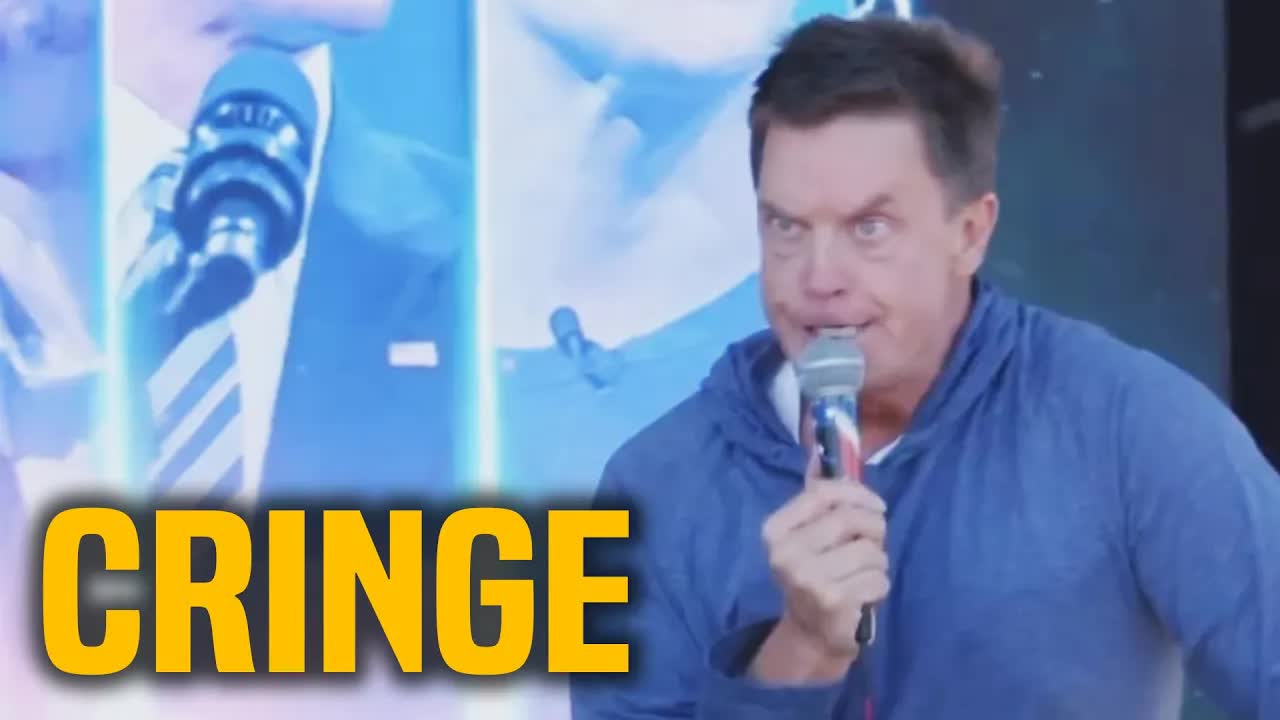
Recently, a performance by comedian Jim Brewer at a QAnon rally in North Carolina sparked conversations about the quality and effectiveness of right-leaning humor.
Brewer’s impression of Vice President Kamala Harris drew raucous laughter from an enthusiastic crowd, but for many, the humor felt forced and unoriginal.
The scene at the rally was striking—crowd members doubled over in laughter, seemingly oblivious to the awkwardness of the performance.
One might wonder, what kind of audience finds such material genuinely funny?
It raises questions about the cultural and sociological factors that contribute to the reception of right-wing comedy.
Brewer’s act serves as a prime example of why this brand of humor often falls flat.
One glaring issue with right-wing comedy is its timing.
In Brewer’s case, the pacing felt off, lacking the rhythm typically found in effective comedic performances.
Whether it’s a drawn-out joke or poorly timed punchlines, the result is often a comedic experience that leaves audiences confused rather than amused.
This misalignment can make even the simplest attempts at humor seem overly complicated or tedious.
Another significant problem lies in the reliance on outrage.
True comedians often highlight absurdities in everyday situations, sparking laughter through relatable experiences.
However, Brewer’s performance seemed to hinge on a manufactured outrage over trivial matters, such as Harris’s interview responses.
The disconnect between the intended outrage and the actual content left many wondering where the humor was hiding.
Additionally, effective comedy often subverts expectations, taking audiences on an unexpected journey.
Yet, right-wing humor frequently fails to deliver this twist.
Instead of clever surprises, it tends to follow predictable patterns, leaving little room for genuine laughter.
Brewer’s mocking of accents and stereotypes felt stale, offering nothing new or inventive to the audience.
Moreover, there’s a troubling trend of “punching down” in right-wing comedy.
Targeting marginalized groups or societal outcasts lacks the depth and nuance that can elevate comedy to a more thoughtful realm.
While left-leaning comedians may also use stereotypes, they often do so in a way that doesn’t belittle those being referenced.
In contrast, Brewer’s approach felt like a missed opportunity for meaningful commentary.
This repetitive cycle of unfunny content can create a feedback loop.
When sheltered audiences find themselves laughing at mediocre jokes, it reinforces the notion that such humor is effective.
This, in turn, leads comedians to believe they’re onto something, prompting them to continue down the same uninspired path.
It’s a disheartening cycle that leaves many longing for more substantive comedic material.
Brewer’s performance exemplifies the challenges facing right-wing comedy today.
The lack of originality, poor timing, and reliance on outdated stereotypes all contribute to a perception of humor that feels tired and uninspired.
As audiences crave authenticity and cleverness, the question remains: how can right-wing comedians evolve to meet these expectations?
As the landscape of comedy continues to shift, it will be interesting to see whether right-leaning performers can adapt.
Will they find ways to engage with audiences more meaningfully, or will they remain stuck in a loop of mediocrity?
For now, the conversation surrounding right-wing comedy serves as a reminder of the complexities of humor and the importance of connecting with one’s audience.
So, what do you think?
Is there a way for right-wing comedy to improve, or is it destined to remain a punchline in its own right?
The dialogue around this topic is far from over, and as the comedy scene evolves, it will be fascinating to watch how these dynamics play out.
Read more
