

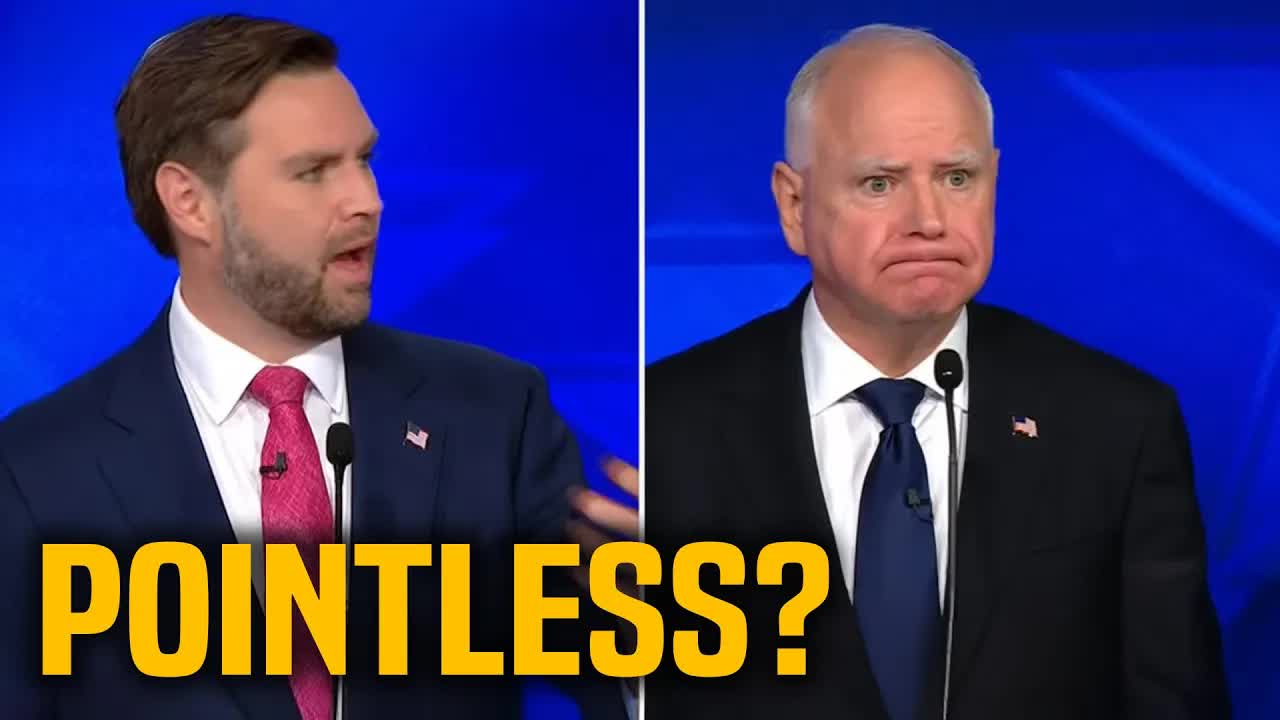
Last night’s vice presidential debate stirred up a whirlwind of opinions, with many commentators claiming J.D.
Vance emerged as the more polished candidate.
Sure, he appeared composed, perhaps even a bit more put together in terms of presentation.
However, beneath that smooth facade lay a series of evasive answers and outright falsehoods that left many viewers skeptical.
While Vance might have dazzled on the surface, the American public seems to be looking deeper.
On the other hand, Tim Walz’s performance was solid, though he didn’t land any knockout punches.
One memorable moment came when he pressed Vance on the contentious issue of the 2020 election results, forcing him to dodge the question entirely.
That exchange alone was a highlight, showcasing Walz’s ability to challenge his opponent directly, even if it didn’t shift the overall momentum.
Looking at the immediate aftermath, CNN conducted a poll among those who tuned in, revealing a nearly even split: 51% favored Vance while 49% leaned towards Walz.
Not exactly a landslide for either side.
CBS followed suit with its own instant poll, showing Vance at 42% and Walz at 41%, with a surprising 17% calling it a tie.
This paints a picture of a debate that didn’t significantly sway public opinion in either direction.
Before the debate, a substantial 62% of respondents believed Walz was qualified to serve as vice president.
Post-debate, that number ticked up slightly to 65%.
This modest shift indicates that while viewers may have been impressed, it wasn’t enough to create a seismic change in perception.
In terms of favorability ratings, both candidates saw improvements.
Walz gained eight points, moving from 52% to 60%, while Vance experienced a nine-point boost, climbing from 40% to 49%.
These increases suggest that while neither candidate knocked it out of the park, they did manage to win over some undecided voters.
Historically speaking, vice presidential debates tend to be low-stakes affairs that rarely alter the course of an election.
A truly disastrous performance might shift opinions, but generally, these debates are more about maintaining the status quo.
The instant polling results reflect this trend, indicating that last night’s showdown likely won’t have lasting repercussions.
As we look back, it’s worth noting that going into the debate, Kamala Harris held a slim lead in national polling averages.
Real Clear Politics showed her ahead by two points, while FiveThirtyEight had her up by 2.6 points.
Given the results from last night’s debate, it’s unlikely those numbers will experience any significant upheaval.
What does all this mean for the upcoming election?
Read more
