
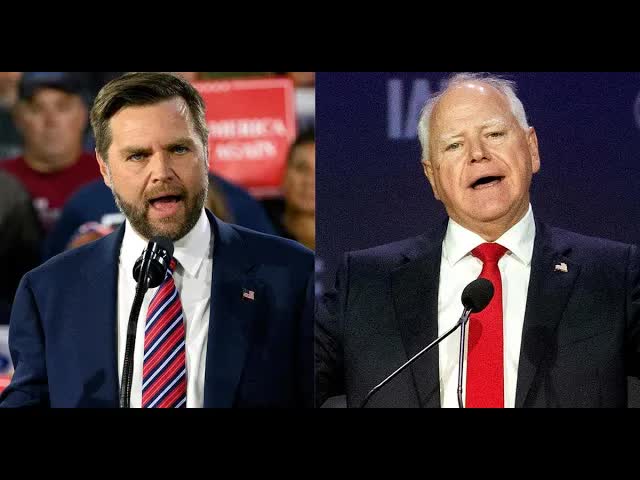
In a high-stakes vice presidential debate, J.D.
Vance aimed to salvage his running mate’s reputation after a tumultuous first outing that captivated 75 million viewers.
The question on everyone’s mind was whether he could effectively navigate the contentious issues that have polarized the nation, particularly climate change and immigration.
Right from the start, Vance tackled climate change, a topic that has sparked heated discussions across the political spectrum.
He acknowledged the legitimate concerns surrounding erratic weather patterns and emphasized his commitment to clean air and water.
However, his approach was somewhat evasive.
He suggested that if carbon emissions were indeed the primary driver of climate change, the logical step would be to reshore American manufacturing and ramp up domestic energy production.
While he claimed this would position the U.S. as a leader in environmental stewardship, critics pointed out that the current administration has already created 800,000 manufacturing jobs and achieved unprecedented energy independence.
Yet, Vance’s assertions raise eyebrows, especially considering the job losses during Donald Trump’s presidency.
His opponents quickly highlighted the contradiction between his call for reshoring jobs and the reality of lost manufacturing positions under his running mate’s administration.
Vance’s response seemed to skirt accountability, leaving many wondering how he reconciles these conflicting narratives.
The conversation shifted to immigration, a domain where Vance’s rhetoric took a controversial turn.
He echoed Trump’s past claims, which included bizarre anecdotes about migrants, despite being informed by local authorities that such stories were unfounded.
Vance admitted on air that he would create narratives to influence public perception, suggesting a willingness to manipulate facts for political gain.
His proposed solutions included reinstating Trump-era border policies and mass deportations, yet he offered scant details on how these measures would be implemented.
Tim Walz, his opponent, countered with a more pragmatic approach to immigration reform, citing bipartisan efforts that had previously garnered support.
He argued that the chaos at the border was exacerbated by Trump’s rejection of a comprehensive immigration bill designed to address these very issues.
Walz’s emphasis on collaboration and expert input stood in stark contrast to Vance’s combative stance.
As the debate progressed, Vance faced scrutiny over his handling of facts, particularly regarding the legal status of migrants in Springfield.
When moderators fact-checked him, he appeared flustered, revealing a discomfort with being held accountable for his statements.
This moment underscored a broader issue: when a political platform relies heavily on misinformation, pushback can lead to defensiveness rather than constructive dialogue.
On the topic of gun violence, Vance proposed increasing security measures in schools, a response that many viewed as a band-aid solution to a much deeper problem.
His suggestion to fortify school buildings with stronger doors and more resource officers missed the mark for those advocating for more comprehensive gun control measures.
Walz pointed out that other countries, like Finland, manage to maintain safety without resorting to militarizing educational environments.
Healthcare was another contentious subject.
Vance claimed that Trump had salvaged the Affordable Care Act (ACA), a statement that elicited skepticism from Walz, who recounted his firsthand experience in crafting the legislation.
Walz highlighted Trump’s repeated attempts to repeal the ACA, emphasizing that the former president’s actions contradicted Vance’s assertions.
The debate took a significant turn when Vance was pressed about his refusal to certify the last presidential election results.
His response was vague, focusing instead on future challenges rather than addressing the elephant in the room: the legitimacy of the 2020 election.
This reluctance to confront the issue head-on raised concerns about his commitment to democratic principles.
Throughout the evening, Vance’s performance painted him as a mere echo of Trump’s controversial policies.
Whether discussing healthcare, gun safety, or immigration, he struggled to present any fresh ideas or solutions.
Instead, he seemed to align himself closely with Trump’s agenda, offering little reassurance to voters seeking new leadership.
As the debate wrapped up, it became clear that Vance’s strategy was less about presenting a distinct vision and more about defending a troubled legacy.
With Americans increasingly dissatisfied with the status quo, the question remains: can Vance break free from Trump’s shadow, or will he continue to be viewed as a mere continuation of an unpopular agenda?
In a political landscape that demands authenticity and innovation, Vance’s performance may not have been enough to sway undecided voters.
As the election approaches, it will be fascinating to see how these debates shape public opinion and influence the direction of the campaign.
Read more
