









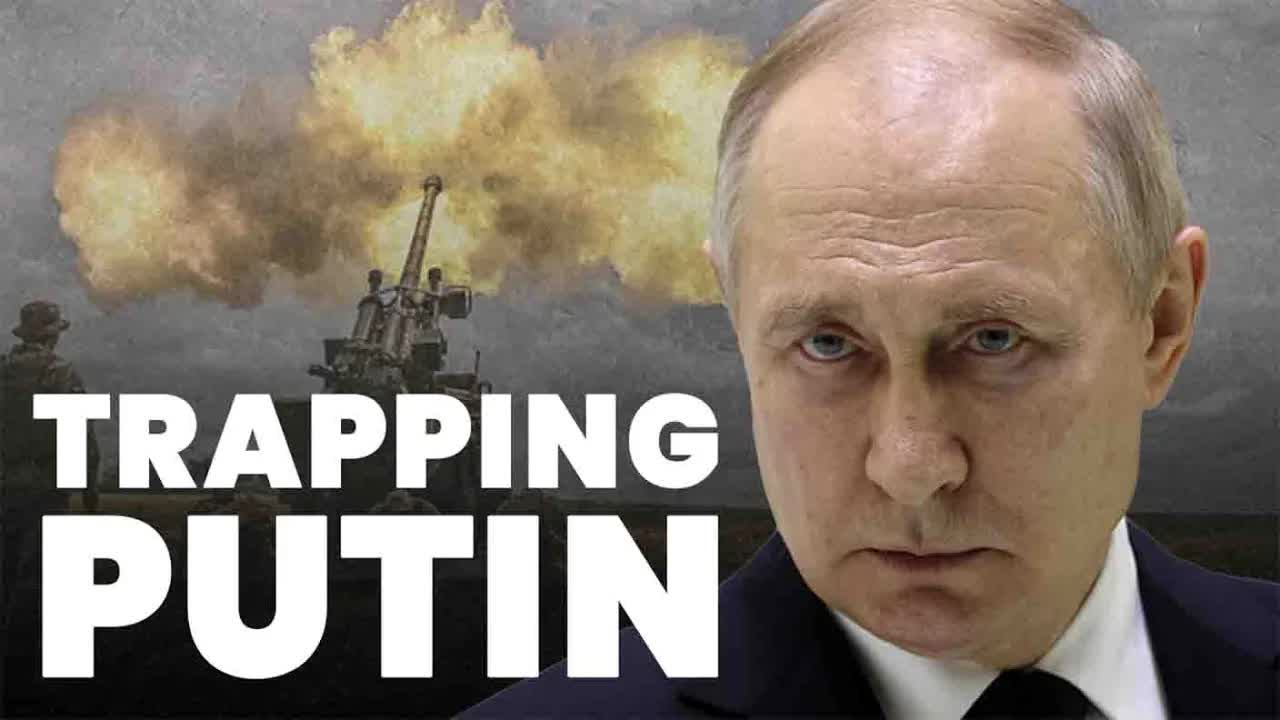
In a calculated effort to disrupt Russian military operations, Ukraine has been employing a series of tactics aimed at unsettling its adversary.
By striking within Russian territory, Ukraine forces the Kremlin to divert its resources and attention, preventing a concentrated offensive against Ukrainian positions.
This strategy, which has seen some success in the past, appears to be a cornerstone of Ukraine’s military approach as the conflict continues to evolve.
The situation on the ground, particularly in Kursk, is complex.
It has been roughly two months since Ukraine initiated its incursion into Kursk Oblast, and while there were early successes, the overall impact remains to be fully realized.
The initial surprise inflicted on Russian forces sent a political message that challenged the notion of inviolable Russian territory.
The implications of this operation have sparked discussions in Western circles about the appropriateness of supplying Ukraine with long-range missiles capable of targeting Russia directly.
Despite these early victories, Ukraine missed a crucial opportunity to sever a key segment of Russian forces by failing to capitalize on the destruction of bridges along a vital river.
This oversight has allowed Russian troops to regroup and push eastward, posing significant challenges for Ukrainian forces attempting to maintain their advance.
As the situation stands, Ukrainian attempts to gain further ground have been met with increasing difficulty, especially with ongoing assaults on critical locations like Pokrovsk.
So, why is Pokrovsk considered such a strategic asset?
Capturing this garrison town would effectively isolate southern towns like Kostantinovka, putting pressure on Chasov Yar, a well-fortified Ukrainian position.
Chasov Yar’s elevated terrain and defensive structures have kept Russian forces at bay for months.
If Ukraine can successfully flank these positions, it could pave the way for a more substantial offensive toward Kramatorsk and Slovyansk, both of which hold historical significance for Ukraine’s military operations in the Donbass region.
The stakes are high for both sides.
For Russia, taking Pokrovsk would not only signify a tactical victory but also bring them closer to fulfilling one of the primary objectives of their invasion: securing control over the entire Donbass region.
Such a move would allow President Putin to claim success in an area that has been a focal point of contention since 2014.
While the Kursk incursion may be labeled a tactical success in some respects, it has yet to yield significant strategic advantages.
The debate surrounding the provision of long-range missile capabilities to Ukraine has intensified following this operation, highlighting the need for the West to reassess its stance on military support.
However, tangible benefits from this debate remain elusive.
As the conflict drags on, Ukraine’s military strategies are likely to include further cross-border raids, albeit perhaps on a smaller scale than the Kursk operation.
This tactic serves to keep Russian forces on edge, compelling them to allocate resources defensively rather than offensively.
Despite improvements in Russian defenses, the prospect of Ukrainian strikes within Russia will continue to be a central component of their military strategy.
Reflecting on the initial success of the Kursk incursion, many observers note that it was not without its challenges.
Holding onto newly acquired territory has proven difficult, as Russian forces quickly maneuvered to reclaim lost ground.
The lack of robust defenses along the border allowed Ukraine to exploit vulnerabilities, but this also underscores the broader issue of how the West has permitted Russia to conduct its military campaign largely unchallenged.
The question of whether to provide Ukraine with advanced weaponry remains contentious.
The argument is made that without sufficient quantities and rapid production, symbolic gestures of support will fail to make a meaningful impact.
The effectiveness of military aid hinges not just on the type of equipment supplied but also on the volume and timeliness of delivery.
As winter approaches, the likelihood of major breakthroughs from either side may diminish.
The precarious situation in Pokrovsk, coupled with Russian advances in the region, suggests that both armies face significant challenges in maintaining momentum.
Nevertheless, the potential for Russian breakthroughs remains, fueled by their considerable manpower and resources, including support from allies like Iran and North Korea.
In this ongoing conflict, the balance of power is constantly shifting.
As Ukraine continues to fight for international support and military aid, the complexities of warfare in the modern age become increasingly evident.
The outcome of these strategic maneuvers will undoubtedly shape the course of the war and the future of Ukraine’s sovereignty.
Read more
