









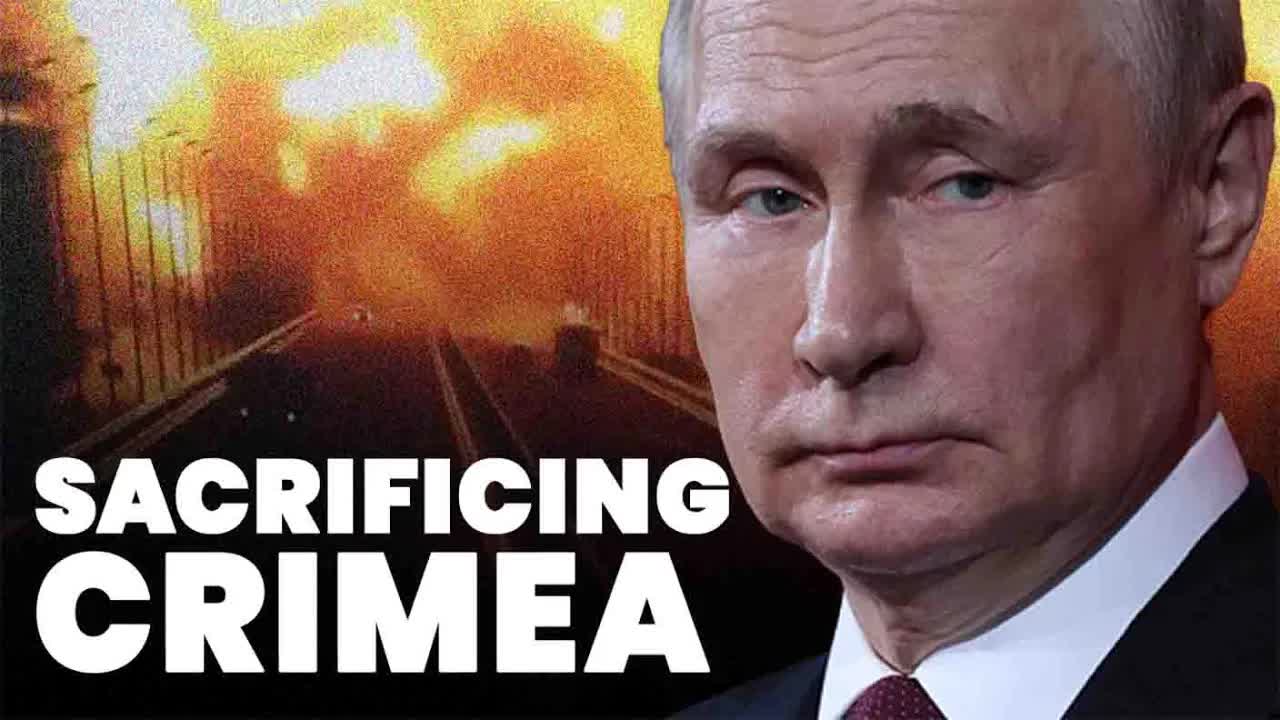
The ongoing conflict in Ukraine has reignited discussions about the future of Crimea and the potential for Ukraine to join NATO.
In a recent conversation, experts explored the implications of such a move, considering the historical context and the current geopolitical landscape.
The idea is that if Ukraine were to relinquish its claims to Crimea, it might pave the way for NATO membership, a deal that could be palatable to many stakeholders.
But is this a feasible solution, or merely a pipe dream?
Since Ukraine achieved independence in 1991, the question of Crimea has loomed large, rooted in centuries of historical tensions.
This region has been a focal point of conflict dating back to the 18th century, underscored by the British involvement in the Crimean War.
Today, this contentious territory remains a flashpoint, raising the stakes for both Ukraine and its allies.
However, the real challenge lies not just in the possibility of such a deal, but in whether key figures like U.S. President Joe Biden, Vice President Kamala Harris, or even former President Donald Trump would be willing to take that leap.
James Hanson of Times Radio recently hosted Peter Apps, author of “Deterring Armageddon: A Biography of NATO,” who weighed in on NATO’s critical role in today’s world.
According to Apps, while NATO may not be more important than ever, we are undoubtedly in one of its most crucial periods since the organization’s inception.
He draws parallels between the current situation and the late 1940s, when NATO was formed in response to the Soviet threat.
The unpredictability of U.S. politics at that time mirrors today’s concerns over American commitment to European security.
NATO’s formation was pivotal in tying the United States to Europe, establishing a collective defense mechanism that deterred potential aggressors during the Cold War.
However, the dynamics have shifted significantly since the fall of the Soviet Union in 1991.
The resurgence of aggressive tactics from Russia, coupled with China’s growing influence, has put NATO back in the spotlight.
The alliance is now faced with the task of adapting to a rapidly changing global landscape, where threats can emerge from unexpected corners.
With the recent appointment of Mark Rutte as NATO Secretary General, the organization enters a new chapter.
Rutte steps into the role following Jens Stoltenberg’s decade-long tenure, which was marked by escalating tensions with Russia, particularly after the annexation of Crimea in 2014.
Rutte’s experience as a coalition leader could prove invaluable as NATO navigates complex issues surrounding Ukraine and broader European security.
As the world watches, the implications of potential U.S. political shifts loom large.
If Trump were to reclaim the presidency, speculation abounds regarding his unpredictable approach to NATO.
Some analysts suggest he might withdraw the U.S. from the alliance altogether, while others believe he could leverage NATO membership to push European nations to increase their defense spending.
The reality is that Trump’s past actions and statements create an atmosphere of uncertainty that could affect NATO’s cohesion.
Moreover, the conversation around defense spending in Europe is heating up.
As countries reevaluate their military commitments, the question arises: how much should they invest?
While some leaders advocate for increased spending, others argue that effective defense strategies hinge more on how resources are allocated rather than the sheer amount spent.
Countries like Finland have shown that a robust reserve force can be just as effective as a larger standing army.
Apps emphasizes that the geopolitical landscape is fluid, with various factors influencing Europe’s defense strategies.
The looming threat of a Chinese invasion of Taiwan adds another layer of complexity.
As the U.S. focuses on Asia, European nations must grapple with their own security needs, leading to diverse approaches to defense among NATO members.
The Baltic states, for instance, have adopted a conscription model, while Poland invests heavily in advanced military technology.
The rise of far-right political movements across Europe also poses challenges for NATO’s future.
If nationalist parties gain power in key member states, it could reshape the alliance’s priorities and strategies.
The prospect of a fragmented Europe raises questions about collective defense and the effectiveness of NATO in addressing emerging threats.
Looking ahead, the likelihood of Ukraine becoming a full NATO member remains uncertain.
While some experts predict a 35% chance of membership within the next five years, the path forward hinges on negotiations and the willingness of both Ukraine and NATO allies to make concessions.
The idea of Ukraine permanently ceding Crimea in exchange for NATO membership is one potential compromise, but it raises concerns about the reliability of Russian commitments.
Ultimately, the fate of Ukraine, Crimea, and NATO membership will depend on a confluence of political will, historical grievances, and the evolving geopolitical landscape.
As the world watches these developments unfold, the stakes remain high, not just for Ukraine but for the entire European continent.
The question remains: can a lasting peace be achieved, or are we simply witnessing the latest chapter in a long history of conflict?
Read more
