






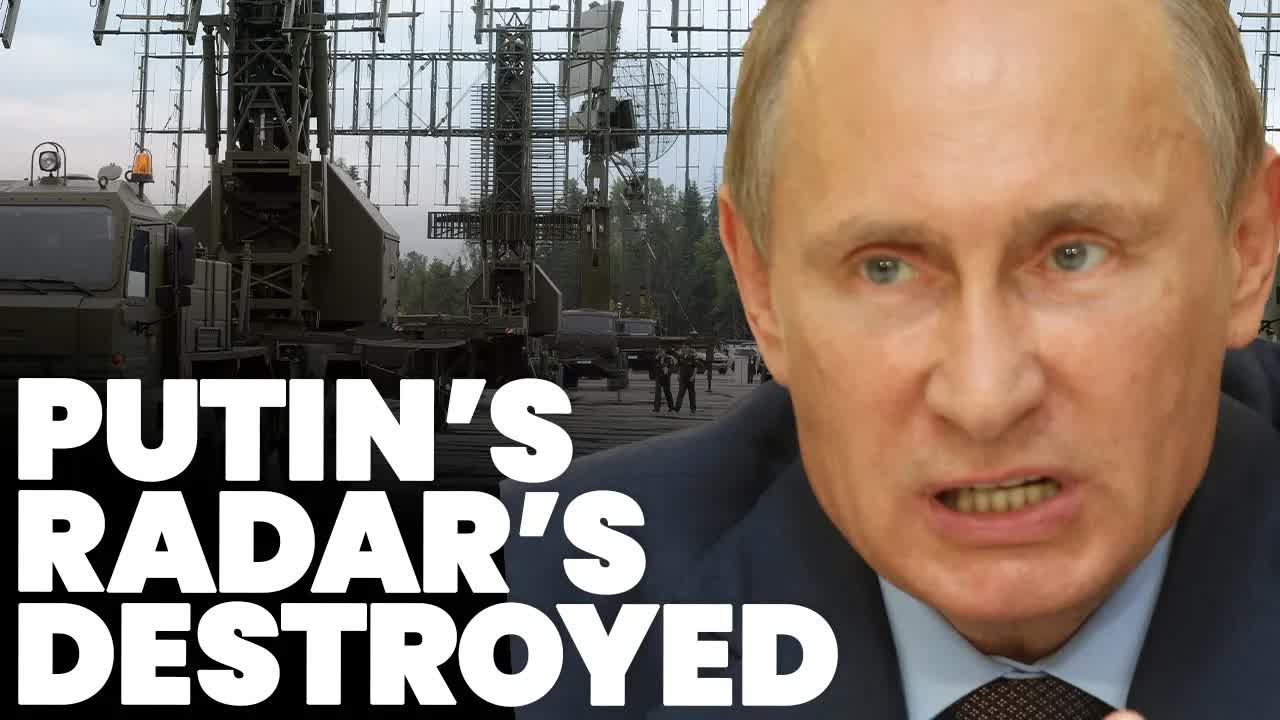
In a notable escalation of its military capabilities, Ukraine has once again employed ATAKIM missiles to target Russian radar systems, specifically destroying the Nabo-M radar.
While this tactic isn’t groundbreaking for Ukraine, it underscores a significant shift in the conflict’s dynamics.
Historically, these strikes have largely occurred within Russian-occupied territories, particularly in Crimea and areas close to Ukraine’s borders.
However, the stakes rise dramatically if such targets are situated deep within Russia itself.
General Philip Breedlove, former Supreme Allied Commander Europe, recently shared insights on the evolving situation in Ukraine during an interview.
He highlighted that the Ukrainian military is increasingly capable of striking deeper into Russian territory, a development that is beginning to unsettle Moscow.
This shift signals not just a change in tactics but also raises questions about the policies that restrict Ukraine from utilizing Western weaponry against targets further inside Russia.
The general noted that Ukraine’s use of ATAKIM missiles is part of a broader strategy to dismantle Russian military infrastructure.
These radar systems play a crucial role in Russia’s defense against Ukrainian strikes, and their destruction could significantly enhance Ukraine’s operational effectiveness.
Yet, the West has imposed limitations on Ukraine’s use of advanced weaponry, a policy that many experts, including Breedlove, criticize as detrimental to Ukraine’s war efforts.
As the conflict continues, the international community watches closely.
President Biden has faced scrutiny for his approach to Ukraine, with critics arguing that his reluctance to allow deeper strikes undermines Ukraine’s potential for decisive victories.
Breedlove contends that denying Ukraine the ability to preemptively strike Russian forces places them at a tactical disadvantage, a notion that resonates with military strategists who understand the importance of striking first.
The conversation also touched on the broader implications of Western support for Ukraine.
Breedlove expressed concern that the current U.S. administration’s policies may inadvertently embolden Russia.
He pointed out that Putin’s strategy heavily relies on intimidation tactics, which have proven effective in swaying Western decision-making.
This dynamic raises fears that the West may be too hesitant to fully support Ukraine’s military objectives.
On the battlefield, recent developments indicate that Russian troops are suffering significant losses as they attempt to capture key locations like Ulaanbaatar in the Donbass region.
The cost of this endeavor has been staggering, with estimates suggesting that Russian casualties far exceed the population of the cities they seek to control.
Despite these losses, Breedlove believes that Russia can sustain its aggressive tactics for some time, largely due to Putin’s grip on power and media narrative within the country.
As winter approaches, Ukraine faces several challenges, including maintaining international support and ensuring its infrastructure remains operational.
The outcome of upcoming elections in the U.S. could have profound implications for Ukraine, with potential shifts in policy direction that may either bolster or undermine its fight against Russian aggression.
Critically, the recent debates among U.S. presidential candidates have largely overlooked the war in Ukraine, reflecting a broader trend where domestic issues overshadow foreign policy concerns.
Breedlove argues that this neglect could have dire consequences, as history shows that isolationism often leads to greater problems down the line.
The general emphasized the strategic importance of supporting Ukraine, drawing parallels to past conflicts where delayed intervention by the U.S. resulted in increased global instability.
He underscored that America’s interests are deeply intertwined with European security, and allowing a democratic nation like Ukraine to fall to an authoritarian regime would have far-reaching consequences.
Looking ahead, Breedlove remains cautiously optimistic about NATO’s future under new Secretary General Mark Rutter.
He believes that NATO’s unity will be paramount in addressing the challenges posed by Russia.
However, he cautioned that political divisions within the alliance, influenced by Putin’s tactics, could hinder Ukraine’s aspirations for NATO membership.
Ultimately, Breedlove advocates for a robust reassessment of Western policies towards Ukraine.
He argues that simply providing enough support to prevent loss is insufficient; instead, the West must empower Ukraine to achieve a decisive victory.
This requires a fundamental shift in how military aid is structured and delivered, ensuring that Ukraine has the tools necessary to secure its sovereignty and stability in the face of ongoing aggression.
Read more
