




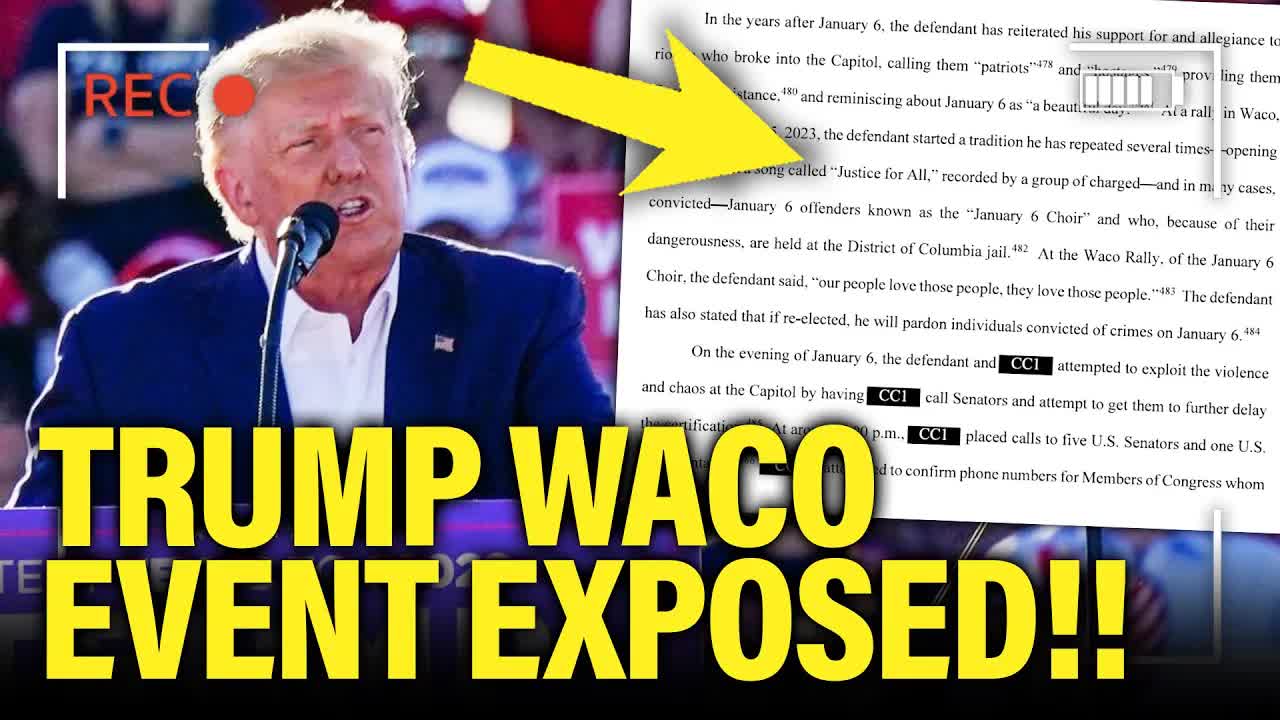
In a striking turn of events, Donald Trump’s controversial rally in Waco, Texas, has reemerged as a significant element in the ongoing federal criminal election interference case against him.
This resurgence follows a recent filing by special counsel Jack Smith, which was unsealed by Judge Tanya Chutkan, revealing 165 pages of compelling evidence.
For those who have been tuned into the Midas Touch Network, this isn’t news; we’ve been flagging the implications of that rally for over a year now.
The Waco rally, held on March 25, 2023, coincided with the 30th anniversary of the infamous Waco siege and has now been cited in legal documents as a pivotal moment in Trump’s alleged misconduct.
Despite the media’s tendency to downplay or gloss over the event, its significance is undeniable.
Jack Smith’s filing explicitly links Trump’s actions during this rally to his ongoing support for the January 6 rioters, whom he has referred to as “patriots.”
Smith’s filing asserts that Trump has not only celebrated these individuals but has also provided them with financial backing.
At the heart of the rally was a performance by the so-called January 6 choir, composed of those charged in connection with the Capitol riot.
Trump opened the event with a song titled “Justice for All,” setting a tone that many observers found deeply troubling.
He proclaimed, “Our people love those people,” further entrenching his allegiance to the insurrectionists.
The rally featured a slew of inflammatory rhetoric from various speakers, including Ted Nugent, who made headlines by disparaging Ukrainian President Volodymyr Zelensky in a homophobic tirade.
Nugent’s comments were just the beginning; the atmosphere was charged with hostility and defiance, setting the stage for Trump’s own incendiary remarks.
Among the notable attendees was Marjorie Taylor Greene, who unleashed a barrage of conspiratorial claims about the legal challenges facing Trump.
She accused Manhattan District Attorney Alvin Bragg of engaging in a politically motivated witch hunt, suggesting that such actions could spell doom for the nation.
Greene’s rhetoric veered into anti-Semitic territory, implicating financier George Soros in the alleged persecution of Trump.
As the rally progressed, it became clear that the event was not merely a political gathering but rather a demonstration of loyalty to Trump and his narrative of victimhood.
Speakers traded barbs against the Biden administration and the judicial system, framing their grievances as an existential threat to America.
The rhetoric reached a fever pitch when one speaker claimed that the government had effectively become a terrorist organization.
Trump himself did not shy away from perpetuating falsehoods regarding the 2016 and 2020 elections.
He reiterated claims of a rigged election, echoing sentiments that have fueled division and unrest within the country.
His remarks about the Supreme Court’s alleged cowardice in addressing these issues further incited his base, blurring the lines between fact and fiction.
Throughout the rally, Trump maintained a theatrical flair, even going so far as to pledge allegiance to a version of the national anthem sung by the January 6 choir.
This moment, captured on video, showcased his willingness to embrace the very individuals who attempted to overturn the democratic process.
The imagery of Trump with his hand over his heart while insurrectionists sang behind him sent shockwaves through viewers.
While the Waco rally was a spectacle of political theater, it also served as a grim reminder of the divisions plaguing American society.
Outside the venue, visual displays of loyalty to Trump included flags emblazoned with his image, raising eyebrows about respect for national symbols.
Such scenes underscored the cult-like fervor surrounding his persona, further complicating the political landscape.
Media coverage of the rally has been a mixed bag, with some outlets labeling Trump’s behavior as “defiant.”
However, critics argue that this terminology downplays the seriousness of his actions and the potential ramifications for democracy.
The Associated Press’s framing of the event as defiance rather than a dangerous display of insurrectionist support has sparked outrage among those who see it as a failure to accurately report the gravity of the situation.
As the legal proceedings unfold, the implications of the Waco rally will likely continue to resonate.
Jack Smith’s inclusion of this event in the court filings reinforces the notion that Trump’s actions cannot be viewed in isolation; they are part of a broader pattern of behavior that raises questions about accountability and the rule of law.
For those following this saga closely, the Waco rally serves as a critical juncture in understanding the dynamics at play.
With each new development, the stakes grow higher, and the need for transparency and truth becomes ever more pressing.
As we move forward, the lessons gleaned from this chapter will undoubtedly shape the discourse surrounding American politics and governance in the months and years to come.
Read more
