



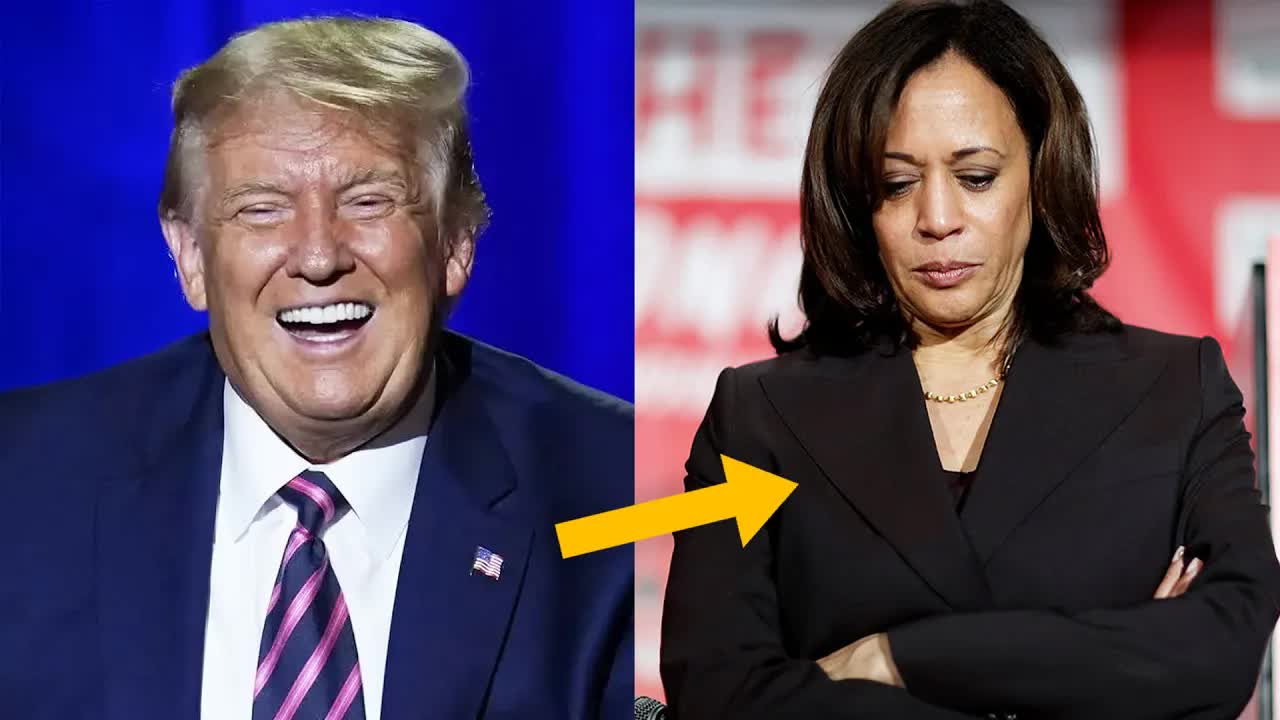
In a shocking revelation, recent reports from The New York Times have surfaced, indicating that former President Donald Trump has been privately referring to Vice President Kamala Harris using derogatory language.
This revelation adds another layer to the ongoing narrative surrounding Trump’s behavior, particularly in relation to his perceived masculinity and dominance within the political arena.
The context of this story is layered, presenting two distinct interpretations.
On one hand, it paints Trump as the quintessential bully—an insecure individual who resorts to belittling others unless they show unwavering loyalty.
We’ve seen this pattern before; Trump often lashes out at anyone who dares to challenge him or doesn’t fall in line with his agenda.
Yet, there’s another angle to consider: Trump’s tendency to project his insecurities onto others.
Over the years, we’ve witnessed a gradual decline in his cognitive abilities, which he has frequently highlighted in his critiques of President Joe Biden.
After a particularly lackluster debate performance, Biden announced he would not seek re-election, paving the way for Harris to step into the spotlight.
Instead of addressing Harris on her merits, Trump has resorted to the same playbook he used against Biden.
He has questioned Harris’s intelligence, citing her failure to pass the bar exam on her first attempt, as if he himself has ever taken such a test.
His comments about her mental state have escalated, suggesting she suffers from cognitive decline akin to Biden’s, despite clear evidence to the contrary.
The use of the term “retarded” to describe Harris is particularly troubling.
It reflects not only Trump’s personal insecurities but also a broader societal issue regarding language and respect.
This choice of words is reminiscent of past incidents where Trump has mocked individuals with disabilities, revealing a disturbing pattern of behavior that many find unacceptable.
Moreover, Trump’s remarks about Harris are intertwined with his frustrations over support from Jewish communities.
He has expressed bewilderment at their continued backing of Harris, claiming they need to reconsider their choices.
This suggests that as concerns grow about Trump’s own cognitive health, he deflects attention by targeting others, further highlighting his projection.
The irony here is palpable.
While Trump aims to undermine Harris, it is he who faces scrutiny regarding his mental acuity.
His tactics seem to shift from substantive policy discussions to personal attacks when he feels cornered or challenged, which is often the case in his political discourse.
It’s worth noting that Trump’s supporters appear unfazed by his choice of language.
Despite the offensive nature of his comments, they seem to remain steadfast in their loyalty.
This raises questions about the values held by his base and their tolerance for such derogatory remarks.
As we dissect these troubling comments, it’s essential to remember the implications of language in politics.
Words matter, and when a public figure uses derogatory terms, it not only reflects their character but also influences societal norms and attitudes.
In an era where respect and inclusivity are paramount, Trump’s language stands in stark contrast to these ideals.
Yet, his supporters seem indifferent, illustrating a disconcerting divide in political discourse and societal expectations.
Ultimately, this situation serves as a reminder of the complexities of political communication.
It highlights how leaders can wield language as a weapon, often at the expense of civility and respect.
As the narrative unfolds, it will be crucial to observe how both Trump and his opponents navigate this charged landscape.
Read more
