


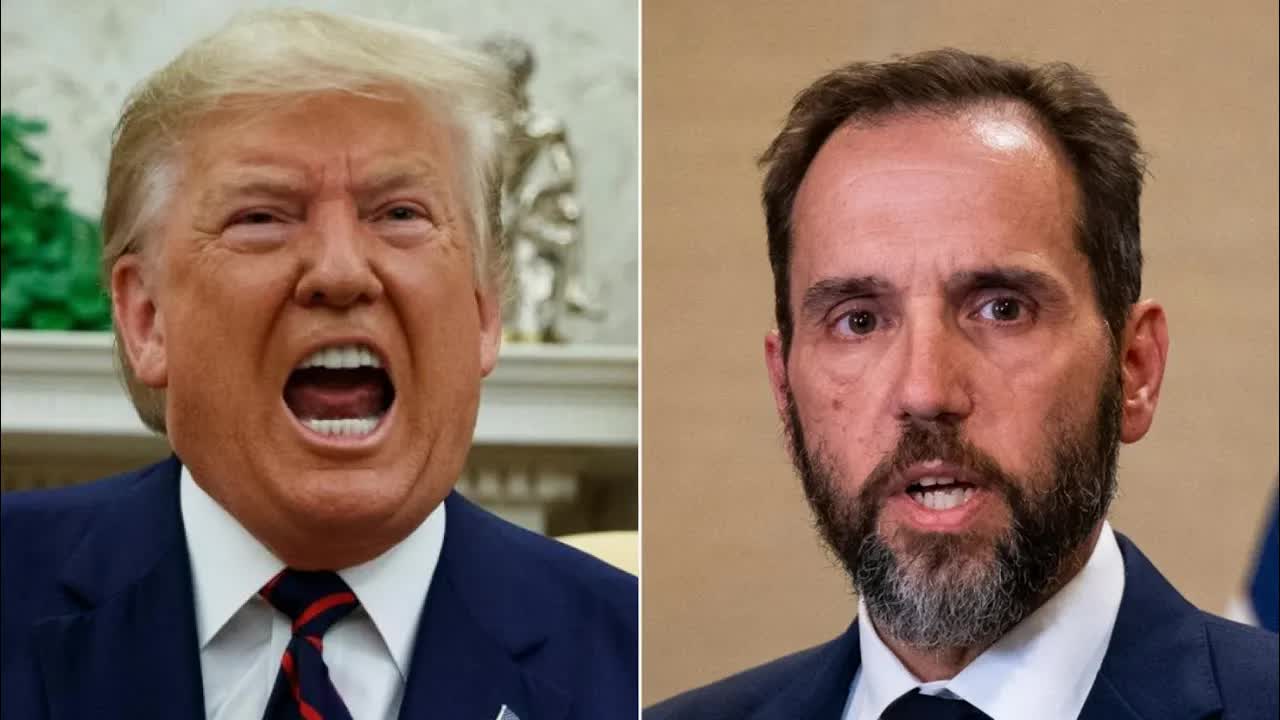
In a recent episode of The Legal Breakdown, legal analysts Glenn Kirschner and Brian Taylor Cohen delved into a troubling statement made by former President Donald Trump.
During a rally, Trump declared that if he were to win the upcoming election, he would swiftly dismiss special counsel Jack Smith, saying he would do so “in two seconds.” This bold proclamation raises significant concerns about Trump’s understanding of legal protocols and the implications of such a move.
It’s essential to note that a sitting president does not have the authority to directly fire a special counsel.
However, the president can appoint an attorney general who might be willing to carry out such directives.
This situation evokes memories of the infamous Saturday Night Massacre during Richard Nixon’s presidency, where Nixon attempted to rid himself of special prosecutor Archibald Cox after Cox subpoenaed tapes that ultimately led to Nixon’s downfall.
Back in 1973, when Nixon faced pushback from his attorney general and deputy attorney general, he eventually found a compliant figure in Robert Bork, who executed the order to fire Cox.
While that action was later deemed unlawful by the courts, it illustrates how a determined president can manipulate the justice system to evade accountability.
Trump appears undeterred by historical precedents and seems ready to repeat similar tactics.
The discussion also highlighted the potential appointment of Judge Aileen Cannon as Trump’s attorney general.
Cannon has already demonstrated an unusual willingness to dismiss serious charges against Trump, including those related to classified documents.
Given her previous rulings, it’s plausible she would comply with Trump’s wishes to terminate Jack Smith’s investigation, should she assume that role.
In the realm of Trump’s legal challenges, the idea of appointing Cannon is troubling.
No other judge has ruled that a special counsel is unconstitutional; Cannon’s stance is an anomaly.
Trump’s admiration for her decisions suggests he may see her as a key ally in his strategy to dismantle the legal proceedings against him.
If Trump were to reclaim the presidency, he could instruct Cannon to dismiss the federal cases against him, leveraging her previous rulings to argue that they lack constitutional legitimacy.
This maneuver would allow Trump to position himself as both the defendant and the judge, effectively controlling the narrative around his legal troubles.
However, it’s crucial to understand that even if Jack Smith were removed, the prosecutions against Trump wouldn’t simply vanish.
The mechanics of dismantling these cases would require a concerted effort to withdraw charges—a task that would likely fall to an attorney general willing to act against established legal norms.
The conversation also touched on the importance of state-level prosecutions.
Unlike federal cases, state prosecutions are not subject to presidential pardon and operate independently.
If Trump were to win the election, these state cases would likely be frozen but not eliminated, highlighting their significance in holding him accountable.
As the analysts explored these scenarios, it became clear that Trump’s disregard for legal standards poses a substantial risk to the integrity of the justice system.
His history of exploiting legal loopholes raises questions about the future of American democracy and the rule of law.
With the election approaching, the analysts emphasized the urgency for citizens to engage in the democratic process.
They urged viewers to encourage friends and family to vote, noting how small shifts in voter turnout could dramatically impact election outcomes.
Moreover, they cautioned against the potential for intimidation at polling places, especially with Trump’s calls for supporters to act as poll watchers.
Early voting was recommended as a way to mitigate these risks and ensure that individuals can cast their ballots without interference.
As the discussion wrapped up, it served as a stark reminder of the stakes involved in the upcoming election.
With Trump’s history of lawlessness and manipulation, the need for active civic engagement has never been more pressing.
Each vote carries the weight of ensuring that the lessons of history are not forgotten and that accountability prevails in the face of power.
Read more
