

As the countdown begins with just 20 days until America casts its votes for the next president, early voting has already kicked off in several states.
The race between Donald Trump and Kamala Harris has tightened significantly, becoming a neck-and-neck competition.
Polls from seven crucial swing states show results so close that they may not provide a reliable forecast for election night outcomes.
To delve deeper into this unfolding situation, we spoke with Hal Lambert, a prominent Republican donor and former member of Trump’s inaugural committee in 2016.
Lambert expressed his optimism about Trump’s chances, suggesting that the former president might secure a convincing win.
He believes that analyzing past elections is key to understanding the current landscape.
“If you look back at 2016 and 2020, Trump consistently exceeded his polling numbers on election day,” Lambert explained.
He pointed to key Midwest states like Pennsylvania, Michigan, and Wisconsin, where Trump outperformed expectations by an average of five points in both previous elections.
For instance, in Michigan during the 2020 election, polls indicated Trump would lose by seven points, yet he only fell short by two.
If he enters this cycle tied in those states, Lambert suggests it could indicate an actual lead of five points for Trump.
“Currently, he’s polling better than he did in either 2016 or 2020,” he noted, adding that Trump leads in most swing states, with Wisconsin being the sole exception—though he anticipates Trump will soon take the lead there as well.
However, it’s important to remember the context of polling accuracy.
Lambert acknowledges the uncertainty surrounding polling results, referencing the unexpected outcomes of the 2022 midterms, where Democrats performed better than anticipated despite predictions of a Republican surge.
“That year was certainly disappointing for Republicans,” he admitted, but he believes Trump stands apart in how he connects with voters, particularly those who may not openly express their support to pollsters.
The demographic shifts are noteworthy too, with Lambert observing increased backing for Trump among Hispanic and Black voters compared to prior elections.
In Nevada, for example, if Trump is polling in the high 30s among Hispanic voters—a significant increase over historical Republican support—Lambert suggests that such figures are likely underestimated.
“We might look back and see where the polling missed the mark regarding Trump’s support,” he speculated.
Transitioning to the campaign dynamics, Lambert reflected on his initial support for Ron DeSantis, noting concerns about Trump’s appeal to moderate voters.
However, he believes Biden’s declining mental acuity has led many to reconsider their stance.
“The Democrats were stuck with Kamala Harris as their candidate, which I think is a significant weakness,” he asserted, emphasizing that voters now view Trump as the stronger option.
Yet, Trump’s rhetoric remains a point of contention.
Critics worry about his combative language, especially statements implying the use of military force against perceived threats.
Lambert argued that Trump’s comments are often taken out of context.
“He’s referencing the riots from past years, where cities faced significant unrest,” he explained, defending Trump’s emphasis on maintaining order.
Lambert also addressed concerns about Trump’s approach to the justice system, noting that while some fear a vengeful presidency, he believes Trump’s intentions are misunderstood.
“The narrative of ‘lawfare’ has been largely driven by Democrats targeting Trump since 2016,” he contended, suggesting that the current political climate has fundamentally shifted how justice is perceived in relation to party politics.
As for loyalty within a potential Trump administration, Lambert dismissed the idea of a strict loyalty test.
“Trump will want people who align with his policies, not necessarily those who’ve always supported him,” he clarified.
He cited examples of past critics who have since aligned with Trump’s vision, indicating that the focus will be on implementing effective governance rather than punishing dissenters.
In discussing the broader implications of a second Trump presidency, Lambert remained confident in the stability of American democracy.
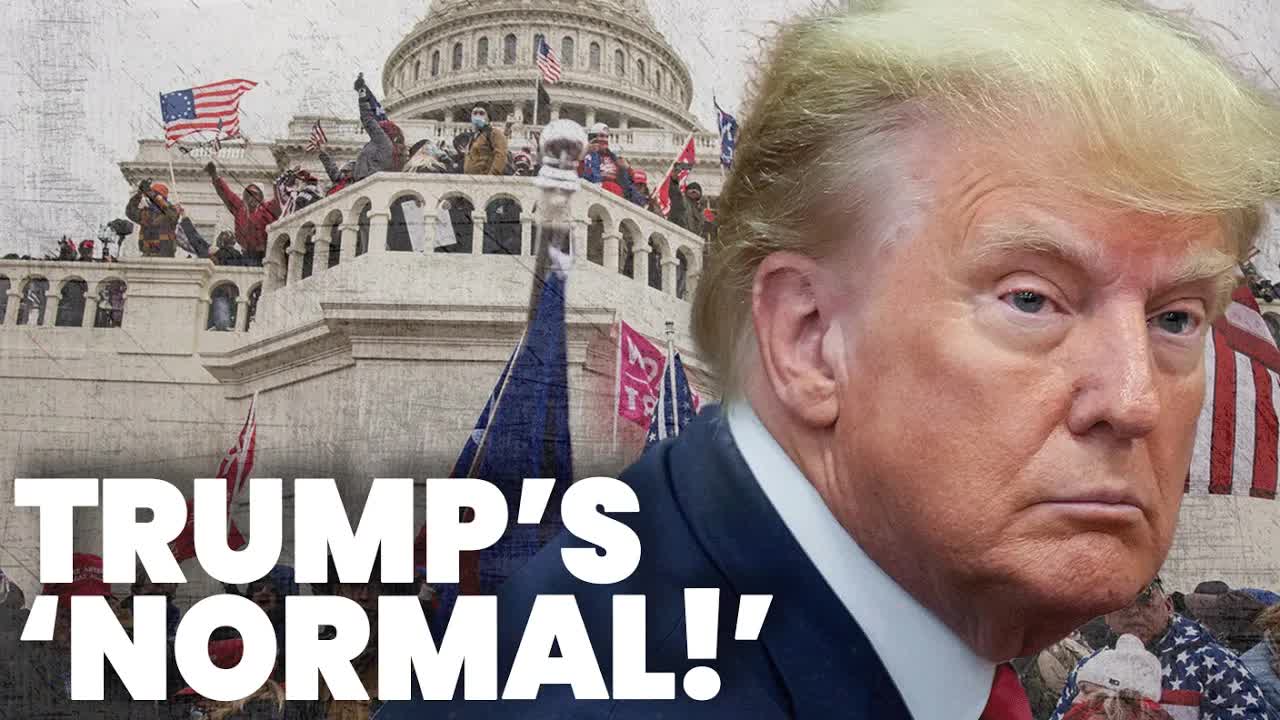
“Trump’s presidency will be normal; he’ll face the same checks and balances any president does,” he stated.
He emphasized that the political landscape will continue to evolve, and regardless of who wins this election, a new administration will emerge in four years.
With the election looming, the debate over Trump’s potential return to power intensifies.
As voters weigh their options, Lambert’s insights offer a glimpse into the complex dynamics at play in this unpredictable race.
The coming weeks will undoubtedly shape the future of American politics, leaving many eager to see how it all unfolds.
Read more
