
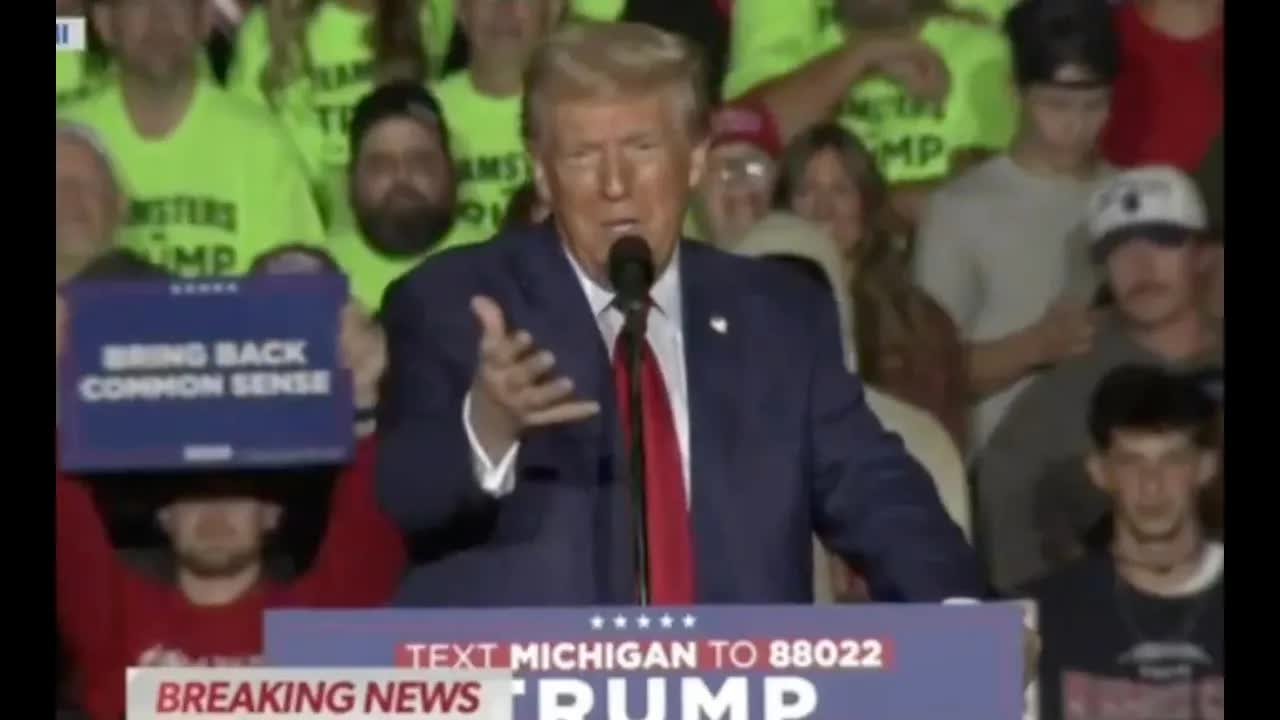
In a recent rally in Michigan, former President Donald Trump took the stage to celebrate what he claimed was a successful turnout, despite the auditorium being only half full.
His self-congratulatory remarks were met with skepticism, especially given his previous complaints about crowd sizes at other events.
It’s a curious phenomenon when a politician feels the need to brag about attendance numbers, particularly when they’re not as impressive as one might hope.
During his speech, Trump reflected on a prior rally in Wisconsin, where he claimed that 60,000 supporters showed up, but due to a lack of proper security coverage from the White House, he was left speaking to a much smaller audience of around 900 people in Michigan.
He expressed frustration over what he perceived as a deliberate effort to downplay his popularity, asserting that those who missed the Wisconsin event still loved him and would vote for him in the upcoming elections.
But here’s the kicker: if you can’t fill a room, wouldn’t it be wiser to avoid drawing attention to the size of your audience?
It seems that Trump’s need for affirmation is insatiable, as he repeatedly emphasizes his supposed popularity and the magnitude of his rallies.
This fixation raises questions about his confidence and the underlying motivations behind such statements.
Observers noted that Trump’s speeches often veer into unexpected territory, touching upon topics that seem unrelated to the issues at hand.
For instance, he has been known to reference fictional characters or make bizarre claims about health concerns related to industrial mills.
What’s more disconcerting is the noticeable trend of attendees leaving his rallies prematurely, likely out of fatigue or boredom.
Critics argue that Trump’s rhetoric seldom addresses the real needs and aspirations of ordinary Americans.
Instead of focusing on the challenges faced by the electorate, he often prioritizes his own grievances and self-image.
It’s a stark contrast to the kind of leadership many believe the country deserves—one that genuinely prioritizes the citizens’ interests.
In response to Trump’s comments, some have pointed out the irony of his claims about crowd sizes.
His opponents are quick to highlight that attendance at their own events doesn’t require the same level of scrutiny or exaggeration.
Trump’s insistence that “nobody leaves my rallies” stands in stark contrast to the accounts of those who have witnessed the exodus firsthand.
As the rally continued, Trump made bold promises regarding energy independence and national resources, claiming credit for achievements that he argues are unmatched in political history.
However, the enthusiasm surrounding these proclamations can feel overshadowed by the underlying anxieties about his ability to lead effectively, especially in negotiations with foreign powers.
The implications of Trump’s behavior extend beyond mere showmanship; they tap into deeper concerns about national security.
Observers worry that his susceptibility to manipulation could pose risks on the global stage.
With leaders like Vladimir Putin potentially recognizing Trump’s vulnerabilities, there’s a fear that he could unwittingly serve their agendas if given another chance in office.
It’s not just about crowd sizes or rally attendance; it’s about the broader ramifications of having someone so easily baited in a position of power.
The notion that international adversaries could exploit his insecurities is troubling, prompting discussions about the kind of leader America truly needs in turbulent times.
Mark Cuban, in a recent interview, echoed these sentiments, emphasizing that Trump’s emotional volatility could be a significant disadvantage in negotiations.
The idea that world leaders might leverage Trump’s ego against him offers a chilling perspective on what it means to have someone so easily rattled at the helm of the nation.
Ultimately, the relationship between Trump and the American public appears strained.
Many citizens feel fatigued by what they perceive as a one-sided dynamic, where their needs and concerns are overshadowed by Trump’s incessant need for validation.
As the election approaches, it remains to be seen whether voters will once again express their discontent at the ballot box, echoing the sentiments of past elections that rejected his leadership.
Read more
