






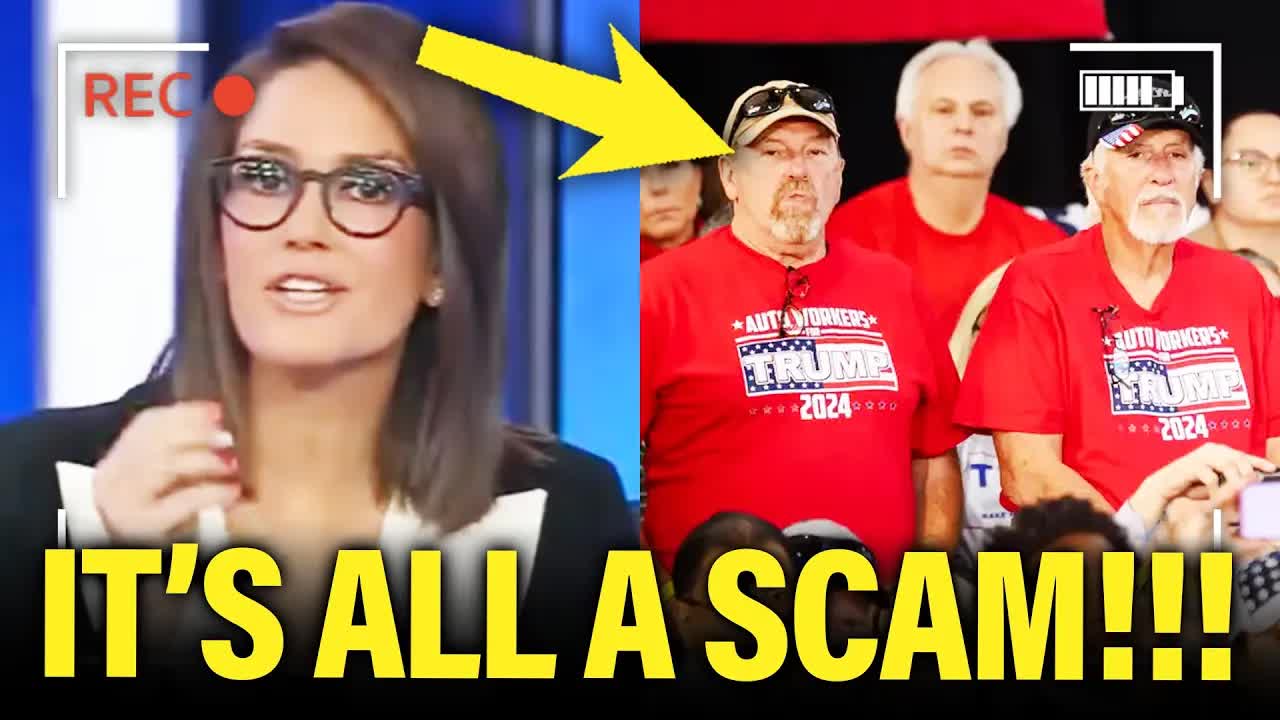
In a recent rally in Michigan, former President Donald Trump found himself at the center of controversy, as reports surfaced suggesting that many attendees wearing “Autoworkers for Trump” shirts were not actually employed in the auto industry.
This revelation raises questions about the authenticity of Trump’s support among blue-collar workers, particularly as the nation grapples with economic challenges and labor strikes.
During the rally, which took place on a Tuesday, J.D.
Vance, a prominent supporter of Trump, faced scrutiny when it was revealed that several individuals donning autoworker apparel were simply paid to attend the event.
This tactic seems to echo a pattern from Trump’s previous rallies, where genuine support from the auto industry has often been called into question.
The optics of the situation are striking, especially given the ongoing struggles faced by actual autoworkers in the state.
The backdrop of this rally is particularly significant.
Just days prior, President Joe Biden had shown solidarity with striking autoworkers on the picket line, while Trump held his event at a non-union plant—an obvious contradiction to his claimed support for labor unions.
This juxtaposition highlights a growing disconnect between Trump’s rhetoric and the realities facing American workers.
Critics have pointed out that Trump’s narrative, which often targets immigrants and blames them for various societal issues, lacks nuance and accuracy.
The Department of Homeland Security even had to clarify that statistics cited by Trump regarding criminal activity among immigrants were misleading, emphasizing that many of those figures date back decades and do not reflect current realities.
It’s clear that voters are seeking more than just sensationalized soundbites; they want a deeper understanding of the issues at hand.
Moreover, Trump’s claims regarding economic policies raise eyebrows.
His proposed tariffs, which could impose a 20% tax on certain goods, are seen by many as detrimental to the economy.
As Kamala Harris articulates her plans for economic recovery, Trump’s continuous attacks seem to fall flat.
Polls indicate a decline in his support, particularly among women, who are reportedly turning away from him in larger numbers than ever before.
At the heart of the matter lies a fundamental question: Who does Trump really represent?
His past comments about unions and workers suggest a lack of genuine concern for their welfare.
In fact, during his presidency, he was notably absent from supporting workers during significant strikes, leaving many to wonder if his current posturing is merely a political ploy.
The United Auto Workers (UAW) has recently filed federal labor charges against Trump and Tesla’s Elon Musk, alleging intimidation tactics against striking workers.
This development underscores the tension between corporate interests and labor rights, a theme that resonates deeply in Michigan’s auto industry.
As Vance’s rally unfolded, he attempted to downplay the importance of electric vehicles, referring to Biden’s initiatives as “table scraps.”
However, this stance appears to be more about political posturing than a genuine commitment to improving the lives of Michigan’s workers.
The reality is that both Trump and Musk have been criticized for prioritizing profits over people, particularly as manufacturing jobs shift away from the Midwest.
With the auto industry at a crossroads, the question remains: Will Michigan workers see through the façade of support presented by Trump and his allies?
Many are beginning to connect the dots, recognizing that the promises made by these political figures often lack substance and sincerity.
As the political landscape continues to evolve, the need for authentic engagement with workers becomes increasingly crucial.
The people of Michigan deserve leaders who genuinely advocate for their interests, rather than those who merely use their struggles as a backdrop for political gain.
In this pivotal moment, it’s essential for voters to critically evaluate the narratives being presented and demand accountability from those in power.
The future of Michigan’s auto industry—and its workers—depends on it.
Read more
