


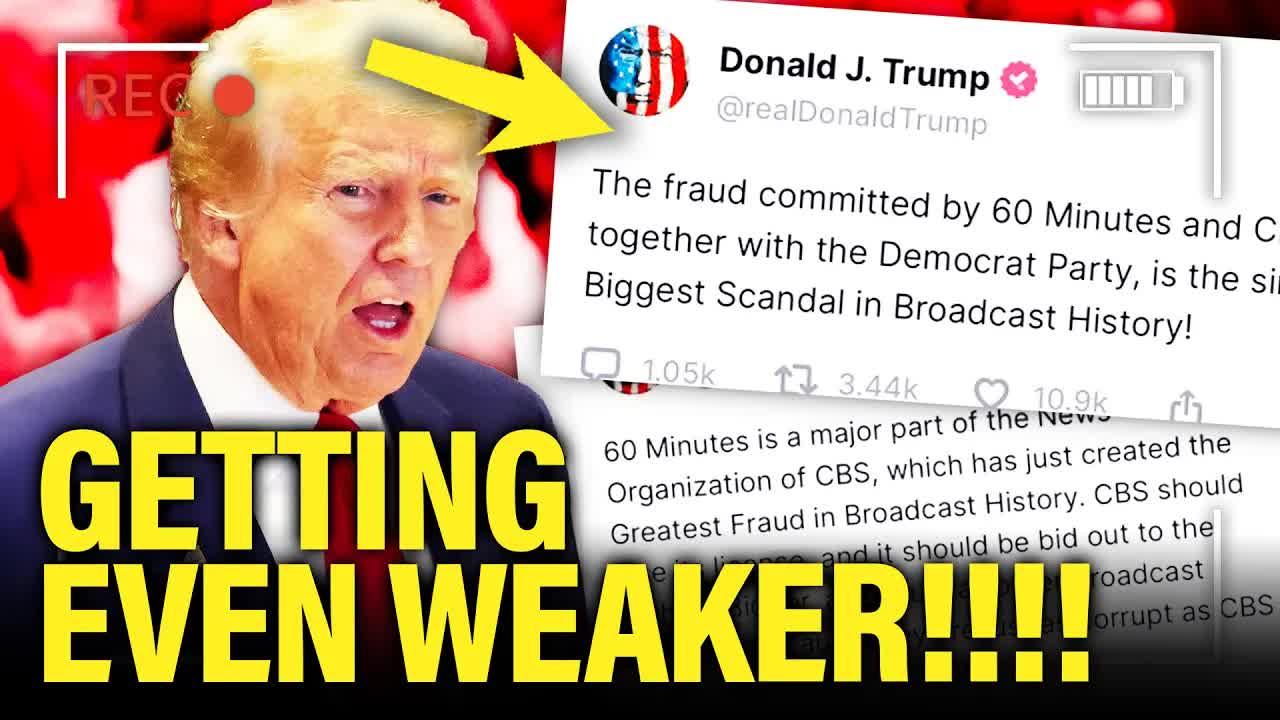
In a dramatic morning of social media activity, former President Donald Trump unleashed a series of posts aimed at CBS and other major media outlets, threatening to revoke their broadcast licenses.
This outburst came after CBS declined to interview him, instead opting to engage with Vice President Kamala Harris.
Trump’s online tirade follows similar threats made against ABC, Google, and MSNBC, all stemming from what he perceives as unfair treatment.
In his posts, Trump characterized the actions of CBS and its flagship program, 60 Minutes, as “the greatest fraud in broadcast history.”
He accused the network of colluding with the Democratic Party to undermine his credibility.
The former president’s rhetoric was laced with claims of election interference and allegations that CBS should be stripped of its broadcasting rights for its purportedly biased coverage.
The tone of Trump’s messages was combative, claiming that CBS had manipulated Harris’s responses during her interview to present her in a more favorable light.
He suggested that the network’s actions were not only unethical but potentially illegal, calling for immediate repercussions against the station.
His insistence that the media is out to get him reflects a broader narrative he has maintained throughout his political career.
Interestingly, Trump’s threats were not isolated.
He has previously targeted ABC for what he described as “mean” coverage during debates and has extended his ire to other news organizations that he feels have treated him poorly.
This pattern suggests a strategic approach to media relations that involves intimidation and demands for accountability.
As the media landscape continues to evolve, Trump’s aggressive stance raises questions about the implications for press freedom.
His call for revoking broadcast licenses could set a concerning precedent, especially if he were to regain the presidency.
The former president’s fixation on perceived slights from the media seems to indicate a deeper insecurity regarding his public image and electoral viability.
Vice President Harris, meanwhile, has taken a different approach.
She recently released an advertisement showcasing her strength in contrast to Trump’s perceived weaknesses.
This ad campaign highlights her willingness to face tough questions, something Trump has notably avoided, particularly during his previous interviews.
Polling data suggests that Trump’s tactics may be backfiring.
Recent surveys indicate that Harris is gaining ground in key battleground states, with some reports showing her leading in districts that are crucial for the upcoming elections.
This shift in voter sentiment could further fuel Trump’s anxiety about his chances in the 2024 race.
Moreover, Trump’s critiques of other media companies, including Google and NBC, paint a picture of a man increasingly frustrated by a media environment that he believes is stacked against him.
His claims about Google’s alleged bias reflect a broader narrative among some conservatives who feel marginalized by mainstream platforms.
In his posts, Trump didn’t shy away from hyperbole, labeling major media outlets as “dishonest” and “corrupt.”
He even went so far as to suggest that these companies should face legal consequences for their coverage.
This level of animosity towards the press underscores the ongoing tension between Trump and the media landscape.
The former president’s remarks also included disparaging comments about renewable energy, specifically wind power, which he described as ineffective and expensive.
This rhetoric aligns with his broader skepticism toward climate change initiatives and reflects a continued focus on appealing to his base.
As the political landscape shifts and the 2024 election approaches, Trump’s strategies will likely continue to evolve.
His recent posts reveal a man who is not only fighting for his narrative but also grappling with the realities of a changing electorate.
The stakes are high, and the battle for public perception is more intense than ever.
With each post, Trump reinforces his position as a polarizing figure in American politics.
His threats against media outlets serve as a reminder of the complex relationship between politicians and the press, particularly in an era where information is disseminated rapidly and opinions are deeply divided.
The coming months will undoubtedly reveal how this ongoing saga unfolds and what it means for the future of American democracy.
Read more
