







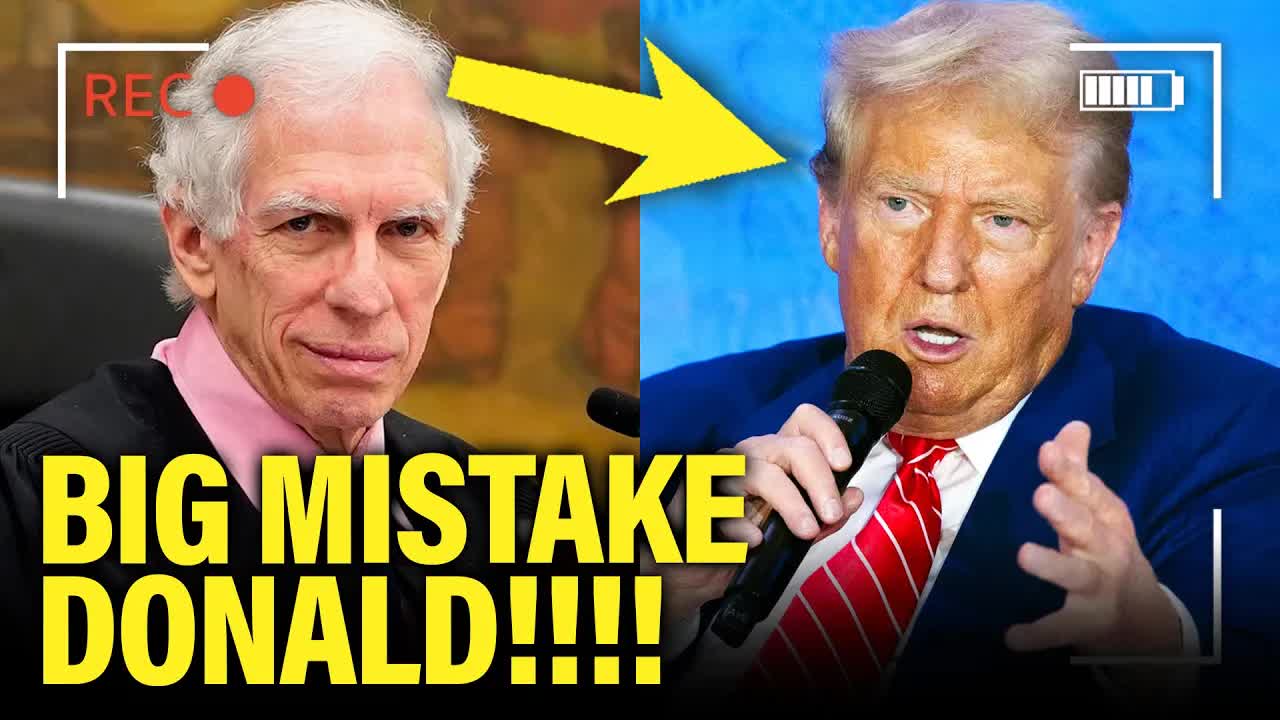
In a recent examination of former President Donald Trump’s appeal regarding a civil fraud ruling, legal experts have weighed in on the complexities and challenges that lie ahead.
Shan Wu, a commentator on the legal proceedings, provided insights into the arguments presented by Trump’s attorneys and the potential hurdles they may encounter.
One of the key arguments raised by Trump’s legal team revolves around the statute of limitations.
They contend that the case should not proceed because it allegedly stems from actions taken too long ago.
However, this argument faces significant obstacles, as fraud cases often come with exceptions for ongoing fraudulent activity.
The notion that Trump’s actions constituted a continuous effort to deceive could undermine this defense, suggesting that the statute of limitations may not apply as they hope.
Another focal point in the appeal is the issue of summary judgment.
The initial ruling declaring fraud was made without a full trial, relying instead on a motion for summary judgment.
In such cases, the court must determine if there are any material facts in dispute.
Judge Ngoron, who presided over the original case, asserted that no significant disagreements existed regarding the facts, leading him to rule in favor of finding fraud.
Trump’s lawyers are now arguing that there were indeed material facts at stake, but this is a common tactic in appeals and may not hold much weight given the strong foundation established by the trial judge.
Additionally, an interesting moment arose during the appeal when one of Trump’s attorneys, previously sanctioned for making repetitive arguments, faced a silent bench.
This lack of engagement from the judges typically signals a challenging path ahead for the attorney, particularly when contesting sanctions imposed by the trial court.
The deference granted to trial judges in these matters further complicates Trump’s legal team’s position.
Perhaps the most consequential argument made by Trump’s lawyers is that the case should never have been initiated by New York Attorney General Letitia James, claiming it represents a victimless crime.
They argue that both parties involved—the Trump Organization and Deutsche Bank—were sophisticated entities that benefitted from their transactions, thus negating any claims of wrongdoing.
However, the Attorney General’s rationale for pursuing the case is rooted in protecting the integrity of the financial system and ensuring fairness for all participants, particularly less affluent individuals.
During the appeal, judges probed the state’s attorney about similar cases that justified the prosecution, leading to a realization that no direct comparisons could be drawn.
While this raised questions about the uniqueness of the case, it does not necessarily weaken the Attorney General’s authority to pursue such matters under her broad prosecutorial discretion.
At the heart of Trump’s argument appears to be a challenge to the appropriateness of the Attorney General’s actions rather than a complete dismissal of the case itself.
This nuanced position may resonate with some judges, but the overarching powers granted to the Attorney General suggest that Trump’s team will struggle to prevail on this front.
The appellate court’s deliberation process is expected to be lengthy, leaving many to ponder the implications of the eventual decision.
As the legal saga unfolds, it remains crucial to consider public perception and the narrative surrounding Trump’s legal battles.
In a panel discussion, journalist Paula Reed emphasized the importance of transparency in the judicial process, advocating for cameras in courtrooms to allow the public to witness the proceedings firsthand.
She highlighted that seeing the arguments and the rigorous questioning faced by both sides can foster a greater understanding of the fairness of the system.
Reed’s perspective underscores a critical point: providing access to courtroom proceedings could help demystify the legal process and potentially counteract narratives of unfairness or bias.
The public’s ability to observe the judicial system in action could enhance its credibility, especially in high-profile cases like Trump’s.
As the appeal continues, the outcome remains uncertain, but the discussions surrounding it reflect broader themes of accountability and justice within the legal framework.
The interplay between legal arguments and public perception will undoubtedly shape the narrative as this case progresses.
Read more
