





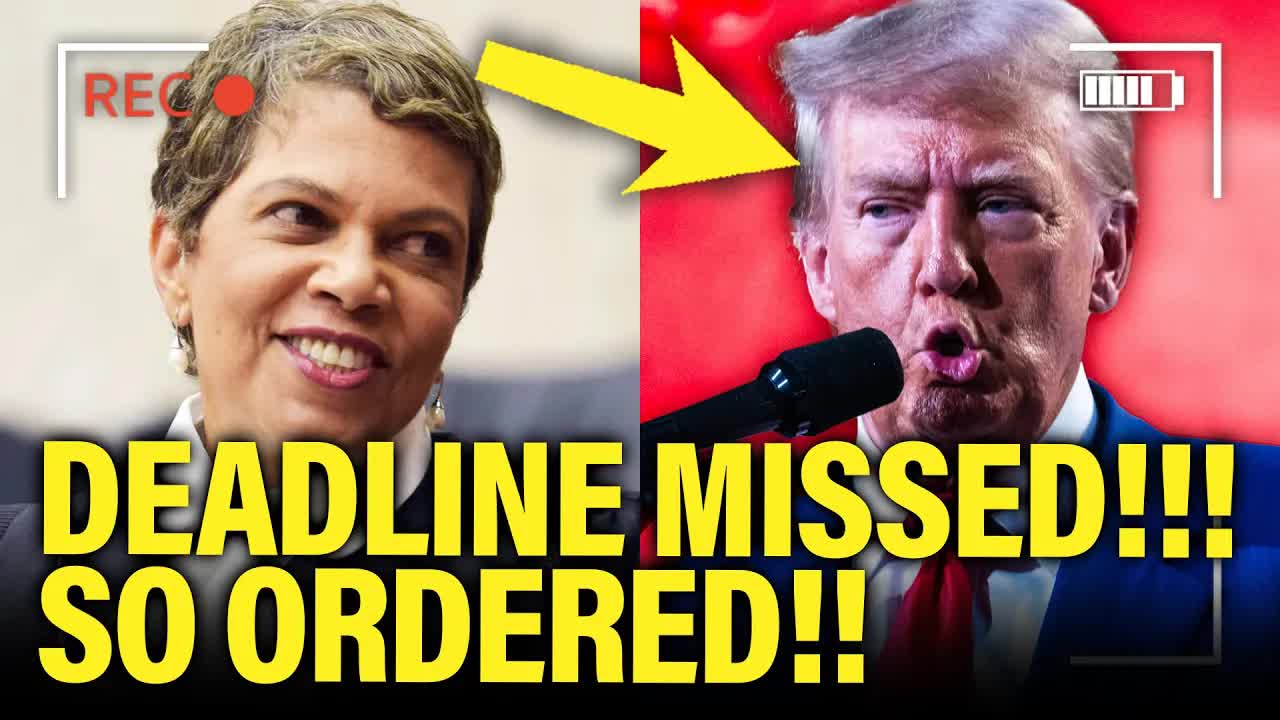
In a surprising turn of events, Donald Trump’s attempt to stall legal proceedings has backfired, thanks to a decisive ruling from Judge Tanya Chutkan.
The former president’s so-called “ELO strategy,” which stands for exploring litigation options, appears to have been nothing more than a misguided effort to delay the inevitable.
As the clock ticked down to a critical deadline, Trump and his legal team found themselves in a precarious position, having failed to take any meaningful action during the past week.
Last week, when Judge Chutkan ruled against Trump, he requested additional time to explore his options.
This was interpreted by many as a thinly veiled threat or an attempt to buy time without any real substance.
Judge Chutkan, however, was not swayed.
She promptly granted Trump a week but made it clear that she would soon release over 500 pages of evidence related to the election interference case spearheaded by special prosecutor Jack Smith.
As the days passed, it became evident that Trump’s legal team had not filed any motions with the appellate court to contest Judge Chutkan’s order.
This lack of action raises questions about the effectiveness of their ELO strategy.
Simply wishing for a reprieve from the judge’s ruling was not enough; they needed to actively pursue legal avenues to obtain a stay.
With two appellate courts available for recourse—the DC Court of Appeals and the Supreme Court—Trump’s team had options but failed to utilize them.
The reality is that judges at the federal level wield significant discretion regarding what can be made public.
This principle is rooted in the foundation of American justice, where transparency is paramount.
The public deserves to see the evidence against individuals accused of crimes, and Judge Chutkan is tasked with balancing this transparency with the need to protect sensitive information.
Historically, trials have always been conducted in public view, a practice that dates back to the early days of the American judicial system.
Even high-profile cases, such as the treason trial of Aaron Burr, were held in public forums.
The expectation is that the accused can clear their name in an open environment, fostering trust in the legal process.
While there are circumstances where certain details must remain confidential—such as classified documents or the identities of witnesses—the overarching principle is that most information should be accessible.
A coalition of media organizations has been actively seeking to ensure that essential documents are unsealed, further emphasizing the importance of public access to legal proceedings.
Judge Chutkan’s authority in this regard is substantial.
The standard for appealing her decisions is stringent; to succeed, one must demonstrate that she abused her discretion.
In Popoc’s extensive experience, such reversals are exceedingly rare.
The appellate courts generally respect the trial judge’s decisions unless there is clear evidence of an error in judgment.
Given the timeline, it’s unlikely that Trump will mount a successful challenge to Judge Chutkan’s ruling.
The absence of any filings from his legal team suggests that they are either unprepared or unwilling to pursue this course of action.
This silence speaks volumes about the viability of the ELO strategy, which seems more like a campaign talking point than a robust legal tactic.
As the deadline approaches, anticipation builds around the release of the evidence.
It promises to include witness summaries and various forms of documentation that could significantly impact the ongoing case.
The public’s eagerness to see these materials reflects the broader interest in the intersection of law and politics, particularly in a case involving a former president.
In a related development, the Midas Touch Network has expanded its offerings, launching the Legal AF MTN channel, which aims to provide in-depth analysis of legal issues and their implications in the political arena.
This new platform has quickly gained traction, attracting over 200,000 subscribers in just a few weeks, showcasing a growing appetite for legal commentary and news.
As the situation unfolds, all eyes will be on the next steps taken by Trump and his team.
Will they finally act, or will they remain passive as the evidence is unveiled?
The coming days promise to be pivotal, not just for Trump, but for the broader narrative surrounding accountability and transparency in the American legal system.
Read more
