



In a familiar twist of events, Donald Trump is once again pointing fingers regarding the January 6th Capitol riot, attempting to deflect responsibility from himself.
His latest legal brief in the D.C. election interference case has reignited discussions about who bears the blame for the chaos that unfolded that day.
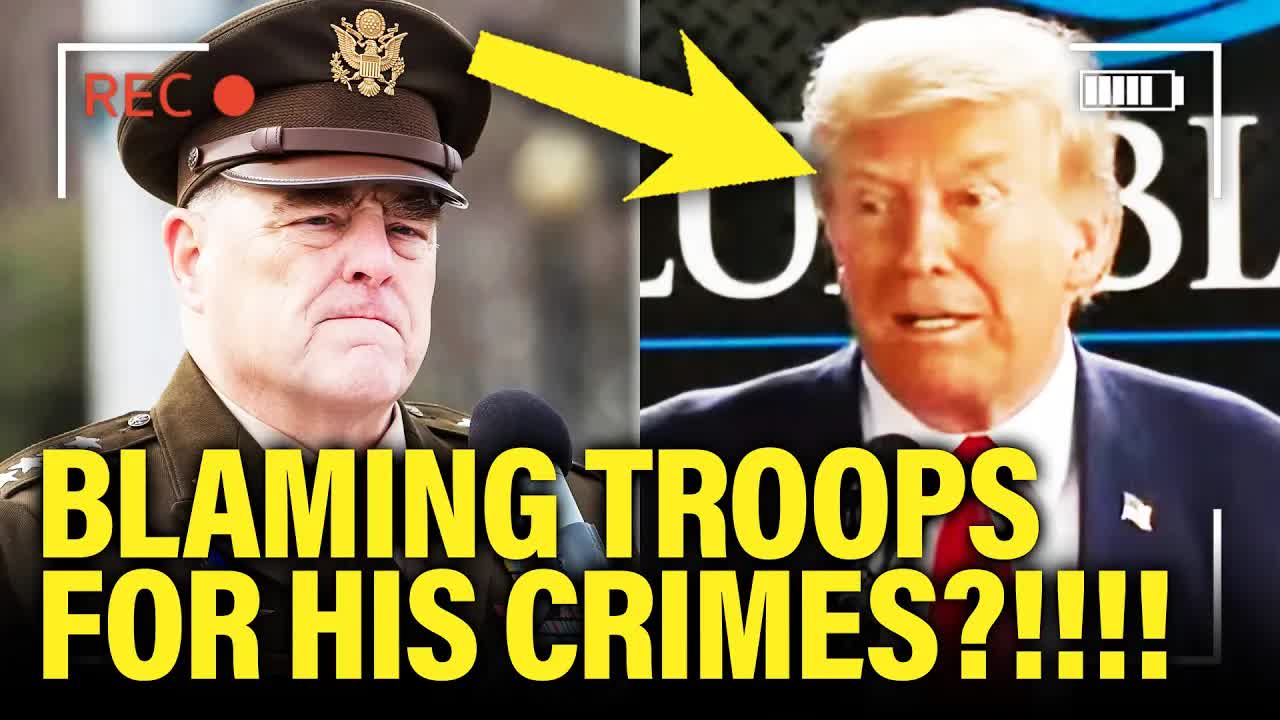
Notably, Trump is casting accusations towards former House Speaker Nancy Pelosi and General Mark Milley, claiming they share the culpability for the events that transpired, while conveniently omitting his own role.
In a rare instance of punctuality, Trump filed his supplemental motion on time, responding to Judge Chutkan’s request to dismiss all four criminal counts against him, particularly focusing on two charges related to obstructing an official proceeding.
Trump’s strategy seems to hinge on presenting what he believes to be his strongest argument: that the failures of others absolve him of any wrongdoing.
However, the evidence he presents appears tenuous at best.
Trump cites a brief clip of Pelosi discussing security issues on Capitol Hill, alongside Milley’s comments about the National Guard, as proof of shared responsibility.
Yet, this cherry-picking of statements raises questions about the validity of his arguments.
After all, it overlooks the broader context of their testimonies, particularly Milley’s pointed criticism of Trump’s actions during the insurrection.
Comparing this recent brief to one filed a year ago reveals a consistent pattern in Trump’s legal approach—an attempt to portray himself as the victim of a politically motivated prosecution.
His lawyers argue that the indictment is an authoritarian overreach, accusing him of crimes simply for expressing his political beliefs.
This narrative, however, seems more like a desperate attempt to shift focus away from the facts surrounding January 6th.
The legal landscape has shifted since Trump’s original filing, particularly following the Supreme Court’s decision in the U.S. vs. Fisher case.
In that ruling, the court clarified that obstruction charges require not just intent but also an actual interference with evidence.
Trump’s team now argues that the charges against him were improperly applied, suggesting that his actions did not meet the threshold established by the Fisher decision.
As the legal back-and-forth continues, Trump’s brief, which spans only seven pages, raises eyebrows.
Is this truly enough to counter the extensive evidence presented by the Department of Justice?
With 71 witnesses lined up against him and a mountain of documentation, Trump’s argument appears thin.
It’s almost as if he’s trying to write a book report at the last minute, hoping to bypass the thorough scrutiny of his actions.
In his new filing, Trump’s rhetoric remains combative.
He accuses the special counsel’s office of stretching the law to pin blame on him for events he claims he could not control.
This narrative, however, seems to ignore the reality of his actions leading up to and during the insurrection.
The suggestion that he was merely an innocent bystander in the chaos is difficult to reconcile with the facts.
Moreover, Trump’s attempts to implicate Pelosi and Milley as scapegoats for his alleged failures are reminiscent of a child refusing to take responsibility for breaking a vase.
Instead of owning up to his role in inciting the mob, he deflects attention to others, hoping to rewrite history in his favor.
This tactic, while perhaps familiar to his supporters, does little to address the gravity of the situation.
The brief also fails to address key points raised by Milley regarding Trump’s conduct during the riot.
Milley has been vocal about Trump’s inaction, labeling him a coward for not stepping up to quell the violence.
This characterization starkly contrasts with Trump’s portrayal of himself as a leader concerned for the safety of the nation.
As the legal proceedings unfold, the stakes remain high for Trump.
The upcoming deadline for the Department of Justice to file its final brief looms, and Judge Chutkan is expected to make a significant ruling soon after.
With the weight of the evidence against him, Trump’s strategy of blaming others may not hold up in court.
Ultimately, the narrative surrounding January 6th continues to evolve, but one thing remains clear: accountability is essential.
While Trump seeks to distance himself from the chaos, the legal system will determine whether his arguments stand up to scrutiny or if he will face the consequences of his actions that day.
As the story develops, it will be crucial to keep an eye on how these legal battles play out in the coming weeks.
Read more
