
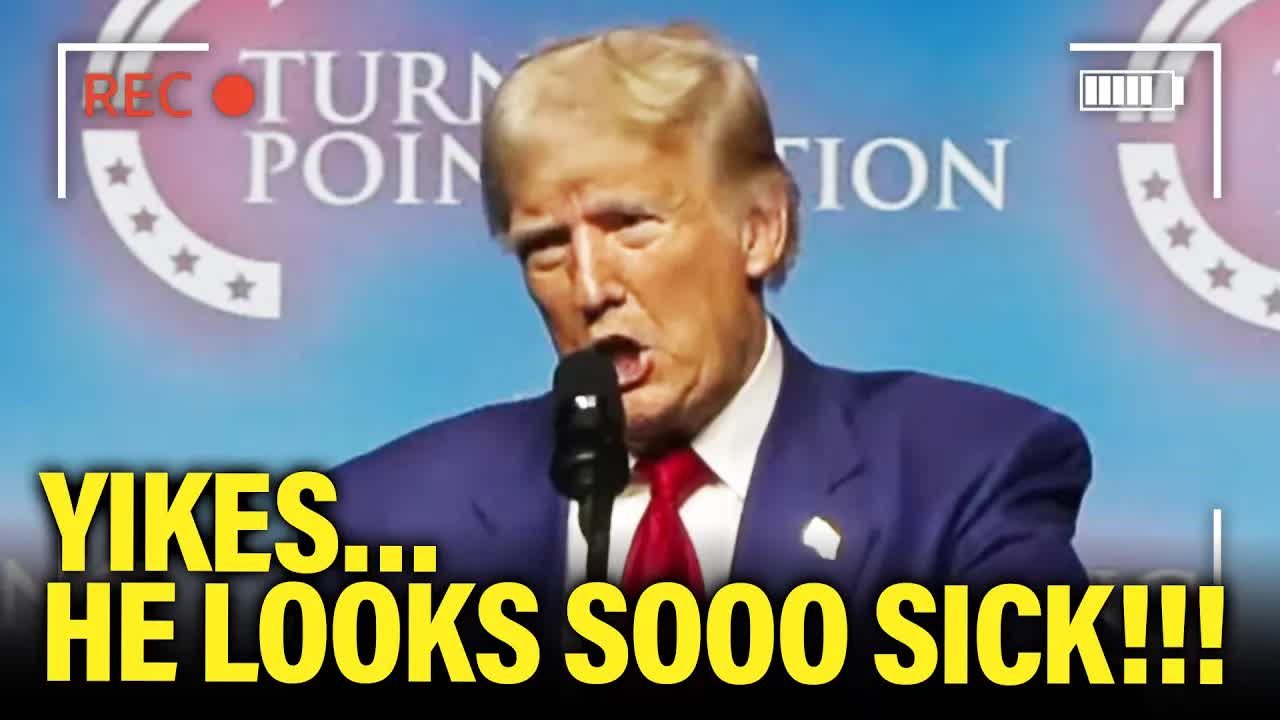
In a recent late-night address in Las Vegas, former President Donald Trump delivered a speech that left many scratching their heads.
The event was riddled with awkward moments, confusing statements, and some questionable claims that have sparked conversations across the nation.
The speech, which took place on Thursday evening, showcased Trump’s characteristic bravado but also revealed numerous gaffes.
Observers noted how he struggled with his words, at times appearing to lose track of his thoughts.
One notable moment included him referencing “tremendous armage” instead of the intended term.
Such slip-ups raised eyebrows and led to speculation about his mental acuity.
While addressing the audience, Trump made a peculiar reference to Aurora, seemingly mixing up locations as he mentioned both California and Colorado.
This pattern of errors continued as he expressed disbelief at his status as a senior citizen, stating, “I’m a senior, can you believe it?” His demeanor suggested fatigue, prompting some to question if he was grappling with more than just a late-night schedule.
Critics quickly pointed out that his behavior mirrored symptoms often associated with cognitive decline.
Many viewers were reminded of loved ones who suffered from dementia, leading to serious discussions about the implications of his public appearances.
The late-night setting only added to the perception that he may not be in peak condition.
Adding to the drama, Trump insisted he was not reading from a teleprompter, despite clear evidence to the contrary.
He claimed, “We have an intelligent group of people here tonight,” while simultaneously glancing at the script scrolling before him.
This contradiction did not go unnoticed and fueled further skepticism about his credibility.
Trump also took a moment to lament not winning a Nobel Prize, comparing his election victory to Barack Obama’s award.
He seemed genuinely perplexed about why he had not received similar recognition, even questioning, “Why did I get it?” This line of reasoning struck many as odd, especially given the context of his speech.
As he continued, Trump made sweeping claims about communities in Springfield, Ohio, suggesting that an influx of non-English speaking residents was overwhelming local services.
He painted a dire picture of hospitals and schools struggling to accommodate newcomers, a narrative that critics argue is exaggerated and divisive.
In a bizarre twist, Trump likened the situation to medieval conquests, claiming towns across America were being “invaded.” This rhetoric drew parallels to historical tyrants, raising alarms among commentators who fear the implications of such language.
It’s not just hyperbole; it’s a dangerous framing that echoes sentiments from darker chapters of history.
The former president didn’t shy away from taking shots at current Vice President Kamala Harris either, claiming she “bombed” during her recent speech in Georgia.
However, footage from her event showed an energized crowd, starkly contrasting Trump’s portrayal.
Harris emphasized the importance of choice in the upcoming election, presenting herself as a dedicated public servant.
Throughout his speech, Trump maintained a defiant stance against the media, accusing them of having a “death wish” for not covering him favorably.
His fixation on media narratives overshadowed substantive policy discussions, leaving many wondering if he truly understands the issues at hand.
As Trump wrapped up his speech, he hinted at the unrest brewing among his supporters, likening their frustrations to a “boiler waiting to explode.” This metaphor raised alarms about the potential for violence, drawing attention to the charged political climate in the country.
With each passing moment, it became increasingly clear that Trump’s speech was more than just a campaign rally; it was a showcase of a man grappling with his past, his identity, and the ever-evolving landscape of American politics.
Whether this performance will resonate with voters remains to be seen, but one thing is certain: the conversation around his health and rhetoric is far from over.
Read more
