








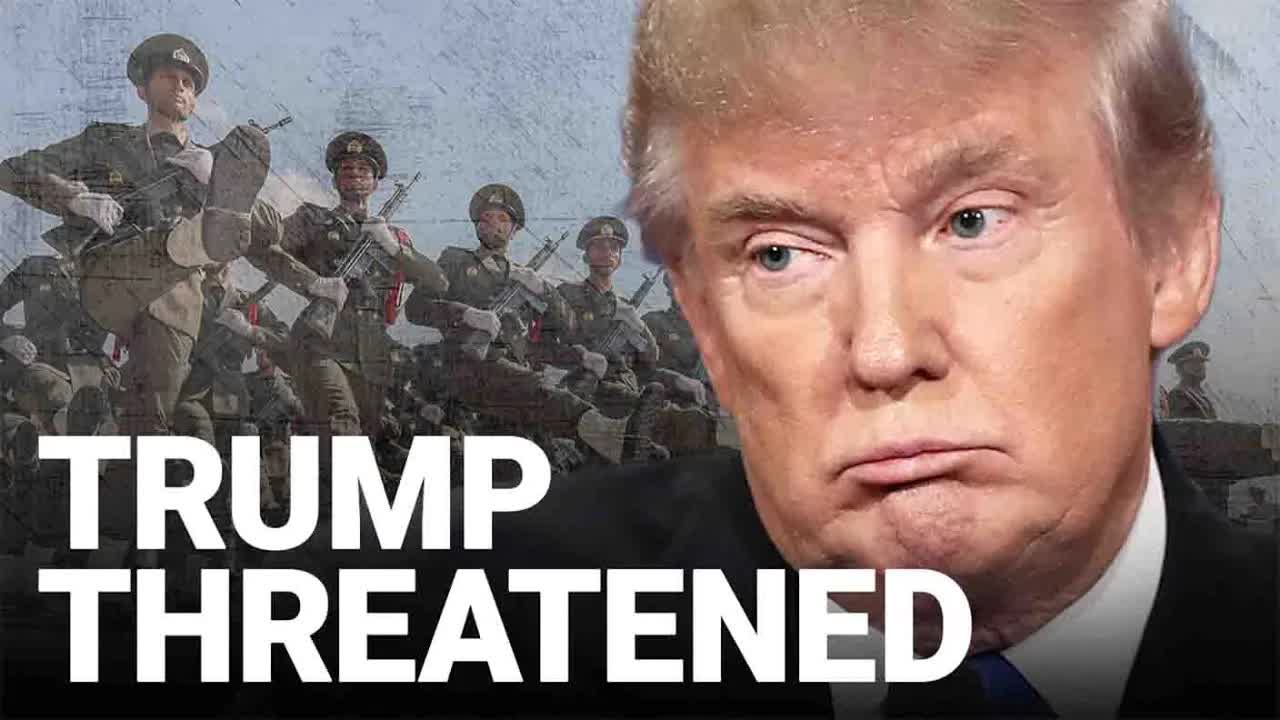
In a dramatic turn of events, the political landscape is heating up as former President Donald Trump and his campaign assert that they have received intelligence about potential assassination threats from Iran.
This announcement comes at a crucial moment, just weeks before the upcoming election, and raises questions about its implications for U.S.-Iran relations and the broader geopolitical climate.
This move by Trump not only elevates his profile as a strong opponent of Iran but also places the nation in a precarious position internationally.
It’s worth noting that just yesterday, Iranian President Pesashkian addressed the UN General Assembly, expressing a desire to mend ties with the West and initiate negotiations aimed at lifting sanctions.
His statements were undeniably conciliatory, yet they also seemed to contradict the notion of Iran orchestrating an assassination against a prominent American figure.
Meanwhile, the situation in Lebanon has escalated dramatically.
Israeli military forces have launched a new wave of airstrikes, reportedly killing at least ten individuals, according to the Lebanese health ministry.
This surge in violence follows Israel’s interception of a ballistic missile fired by Hezbollah, aimed at Tel Aviv.
The ongoing hostilities underscore the fragile nature of peace in the region.
To delve deeper into these developments, we spoke with Dr. Birju Ozcilic, a Senior Research Fellow specializing in Middle East security at the Royal United Services Institute (RUSI).
He emphasized the significance of Hezbollah’s missile launch, stating that while it was a bold move, the actual impact did not meet their expectations.
Most of the rockets targeting northern Israel and even deeper regions like Haifa and Tel Aviv have been intercepted, limiting their effectiveness.
Israel’s airstrikes, on the other hand, seem to be part of a broader strategy.
Dr. Ozcilic pointed out that Israel has achieved several tactical victories recently, but the overarching strategic goals remain somewhat ambiguous.
The Israeli government has publicly stated its intention to create safe conditions for over 60,000 civilians in northern Israel to return home, a pressing concern following the devastating attacks earlier this month.
However, the situation is equally dire for those displaced on the Lebanese side of the border.
The Israeli military’s limited objective appears to be pushing Hezbollah forces further north, beyond the Litani River, in accordance with UN Resolution 1701 established in 2006.
Yet, Hezbollah has shown little willingness to comply with these demands, complicating the situation further.
Looking ahead, the question arises: will this conflict escalate or will either side choose to back down?
Dr. Ozcilic described the current state of affairs as precarious.
Much hinges on Hezbollah’s next moves and their military capabilities, which have reportedly been significantly weakened in recent days.
The potential for concessions from Hezbollah will play a crucial role in determining the future trajectory of this conflict.
One of the most pressing questions remains whether Israel will initiate a ground invasion of Lebanon.
Such a move could aim to establish a buffer zone, allowing Israeli civilians to safely return to their homes.
However, this would likely lead to considerable escalation and potential casualties on the Israeli side, raising the stakes even higher.
Israeli officials have accused Hezbollah of concealing advanced weaponry within civilian infrastructure in southern Lebanon, justifying their ongoing bombing campaign.
If Israel can achieve its military objectives without resorting to a ground invasion, it may avoid further escalation of the conflict.
As for Trump’s claims about Iranian threats, Dr. Ozcilic expressed skepticism regarding the plausibility of such a scenario.
He noted that while the timing of these allegations is significant, it seems counterintuitive for Iran to engage in such drastic measures just weeks before a pivotal U.S. election.
The geopolitical implications are complex and layered, raising doubts about the true motivations behind these claims.
In light of these developments, the international community watches closely.
The intertwining of domestic politics in the U.S. with escalating tensions in the Middle East creates a volatile situation.
As both Trump’s campaign and the conflict in Lebanon unfold, the stakes continue to rise, leaving many to ponder the potential outcomes in this intricate web of geopolitical maneuvering.
Read more
