



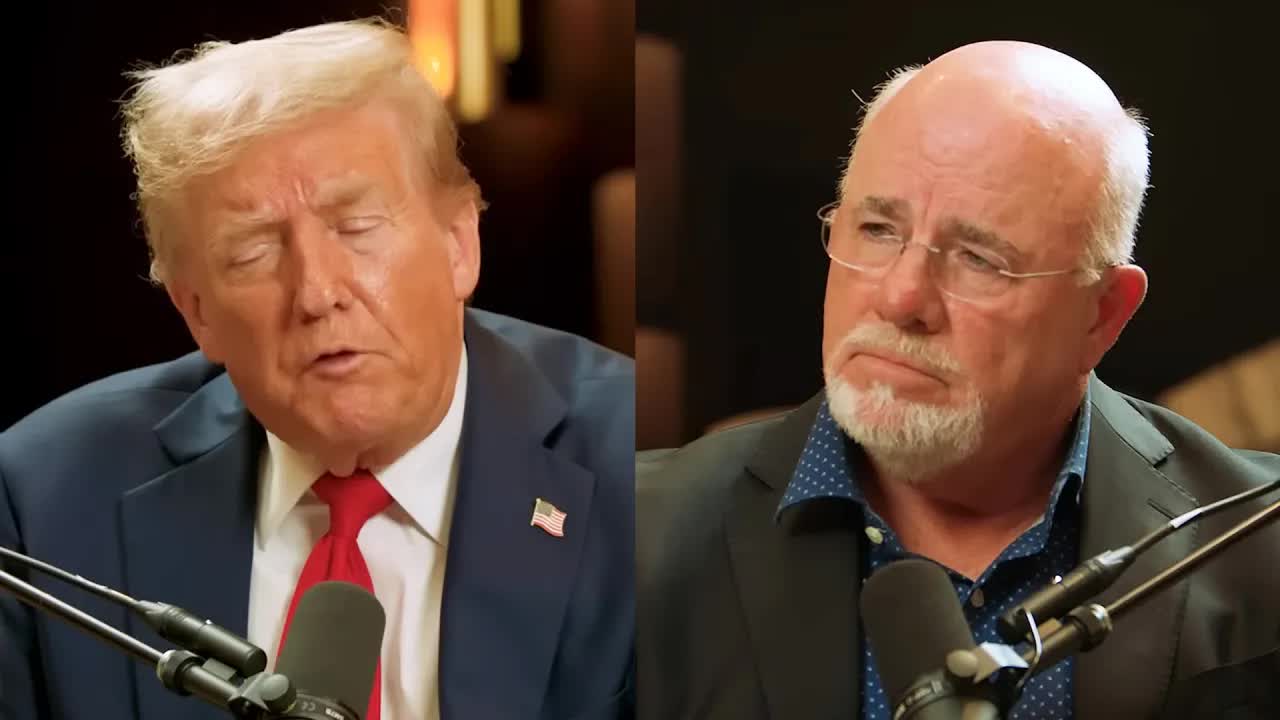
In a recent conversation that has sparked considerable chatter, Donald Trump sat down with financial commentator Dave Ramsey.
While the dialogue was meant to delve into business insights and leadership strategies, many viewers found themselves focusing more on Trump’s peculiar speech patterns than on the content of his responses.
During the interview, Trump casually mentioned his hiring practices, stating, “I hire my kids.” This remark, while intended to showcase his approach to building a business, raised eyebrows for its overt display of nepotism.
It seems that instead of discussing effective leadership strategies, Trump leaned heavily into family ties as a means of managing his enterprises.
Listeners couldn’t help but notice the disparity in speech clarity between Trump and Ramsey.
Despite being in the same room with similar microphones, Trump’s words came out slurred, while Ramsey spoke clearly and confidently.
This inconsistency has led to speculation about Trump’s speech issues, especially given that previous explanations for his unclear diction—such as audio processing problems during an interview with Elon Musk—did not seem to apply here.
Ramsey posed questions about Trump’s leadership style and how he cultivates a productive work environment.
Trump responded by highlighting the roles his children play in his businesses, particularly mentioning Eric and Don Jr., while only briefly acknowledging Ivanka’s involvement.
His comments seemed to suggest that family loyalty trumps professional merit, making one wonder about the implications of such a hiring philosophy.
The discussion took a surprising turn when Trump proposed implementing tariffs reminiscent of the 1890s, claiming it would restore America’s economic prowess.
He asserted that the nation thrived under high tariffs during that era, referencing historical figures like President William McKinley as examples of successful tariff policies.
However, critics argue that such a plan could lead to significant inflation, undermining the very economy Trump claims to champion.
Throughout the interview, Trump’s slurring persisted, leading some to speculate whether the footage had been edited to present him more coherently.
This raises questions about the authenticity of the interview and whether the editing process was an attempt to mask any speech difficulties.
Interestingly, Ramsey seemed to overlook Trump’s checkered history with national debt, where he presided over significant increases during his presidency.
Instead, Ramsey appeared to endorse Trump’s claims, framing him as a savior who could restore America to its former glory.
This dynamic left many questioning the integrity of the conversation, as it resembled more of a mutual admiration society than a critical examination of policy.
As Trump reminisced about the pre-COVID economic landscape, he painted a picture of unparalleled success, ignoring the ramifications of his administration’s actions during the pandemic.
Critics have pointed out that his handling of COVID-19 may have contributed to a tragic loss of life, overshadowing his claims of economic triumph.
The interview, which was initially slated to last an hour, was cut short to around thirty minutes.
This abrupt ending left viewers wondering if the truncated format was an effort to sidestep any potential controversies or slip-ups that might have arisen during the discussion.
In a bizarre moment, Ramsey attempted to frame Trump as braver than Vice President Kamala Harris, suggesting that her refusal to engage in a similar interview reflected fear.
This comparison drew ridicule, as many questioned why Harris would choose to sit down with someone whose views she fundamentally opposes.
Ultimately, the encounter between Trump and Ramsey turned out to be less about insightful discourse and more about self-promotion.
As the two exchanged compliments, it became clear that the focus on Trump’s speech difficulties overshadowed any substantive discussion about leadership or economic policy.
Viewers are left pondering the implications of Trump’s speech issues and what they mean for his political aspirations.
The interview serves as a reminder that sometimes, the delivery can be just as important as the message itself.
Read more
