
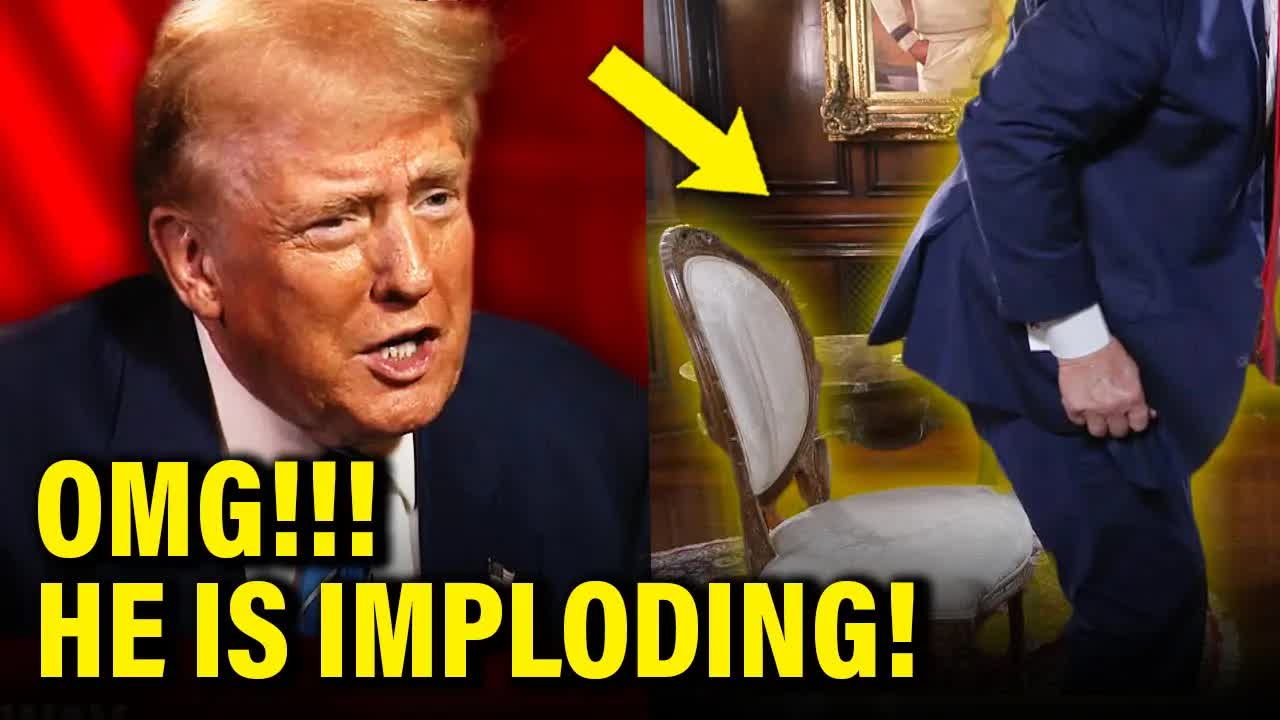
With less than a month remaining until the election, former President Donald Trump seems to be unraveling.
In what could be considered a critical moment for his campaign, he has been canceling interviews and avoiding interactions with journalists.
It’s almost ironic, isn’t it?
The man who once thrived on media attention now appears terrified of facing tough questions.
His recent rallies have taken a bizarre turn, showcasing a more erratic and incoherent side that raises eyebrows.
Adding fuel to the fire, mainstream media outlets are finally addressing concerns regarding Trump’s mental state.
Instead of focusing on policy or campaign strategies, he has resorted to bizarre social media rants, including an odd attack on comedian Jimmy Kimmel.
Meanwhile, Vice President Kamala Harris and Minnesota Governor Tim Walz are actively engaging undecided voters through interviews and appearances on popular shows.
They seem to be embracing their roles while Trump hides from scrutiny.
Speaking of Harris, her recent interview on the podcast “Call Her Daddy” with Alex Cooper was a hit.
They delved into significant topics like women’s rights and Harris’s personal journey, resonating particularly well with female voters.
This podcast has a vast audience, and it’s clear that Harris is making the effort to connect with those who might be wavering in their political choices.
Interestingly, Trump was invited to join but either declined or failed to respond—further evidence of his reluctance to confront issues that matter to voters.
Even some of Trump’s supporters recognize the significance of Harris’s outreach.
Notably, Mike Cernovich, a prominent Trump advocate, acknowledged the importance of her appearance and cautioned fellow supporters against mocking it.
This highlights a growing realization that engaging with voters directly is crucial in this election cycle.
With Harris’s busy schedule lined up, including appearances on “60 Minutes,” “The View,” and various campaign stops in key states, it’s evident she’s committed to reaching out.
In stark contrast, Trump’s decision to withdraw from a scheduled interview with “60 Minutes” has raised eyebrows.
The program, which has a long tradition of featuring presidential candidates, announced that while Harris would participate, Trump would not.
His team cited fears of being fact-checked as a reason for pulling out—an unusual excuse that suggests he may not be ready to defend his record under pressure.
This pattern of avoidance isn’t new for Trump.
He famously stormed out of a previous interview with “60 Minutes” during the 2020 campaign, leaving viewers questioning his ability to handle challenging questions.
During that encounter, he became visibly upset over straightforward inquiries, leading many to wonder how he would fare in a similar situation today.
At a recent rally in Wisconsin, Trump continued to voice his grievances about past interviews, demanding apologies from the media for what he perceives as unfair treatment.
This fixation on perceived slights only adds to the narrative that he struggles to cope with criticism, particularly from established journalists.
The ongoing spectacle raises questions about his readiness for the upcoming election.
In a recent report, the New York Times highlighted concerns about Trump’s mental acuity, describing his speeches as increasingly angry and rambling.
Observers noted that he often strays from coherent thoughts and makes outlandish claims.
Such observations, especially as the election draws near, could have serious implications for his campaign strategy.
Amidst all this, Trump remains fixated on past grievances, including a recent social media post about Jimmy Kimmel’s jokes at the Oscars.
His inability to let go of these moments suggests a deeper insecurity that could alienate potential supporters.
Kimmel, for his part, responded with humor, reinforcing the idea that Trump’s fixation on such trivial matters may not resonate well with voters.
Meanwhile, as Trump grapples with his public image, Harris is actively addressing pressing issues, including reproductive rights, which Trump has historically avoided discussing directly.
Harris’s ability to articulate her stance on such matters contrasts sharply with Trump’s reluctance to engage in meaningful dialogue about his policies.
As the election approaches, it’s clear that the dynamics between the candidates are shifting.
Harris’s proactive approach to campaigning stands in stark contrast to Trump’s increasingly defensive posture.
Voters are watching closely, and the question remains: will they choose a candidate willing to face the public or one who shies away from scrutiny?
With early voting already underway in many states, the urgency for both campaigns to connect with voters is palpable.
As we move closer to election day, it will be fascinating to see how these narratives unfold and who ultimately captures the hearts and minds of the electorate.
Read more
