



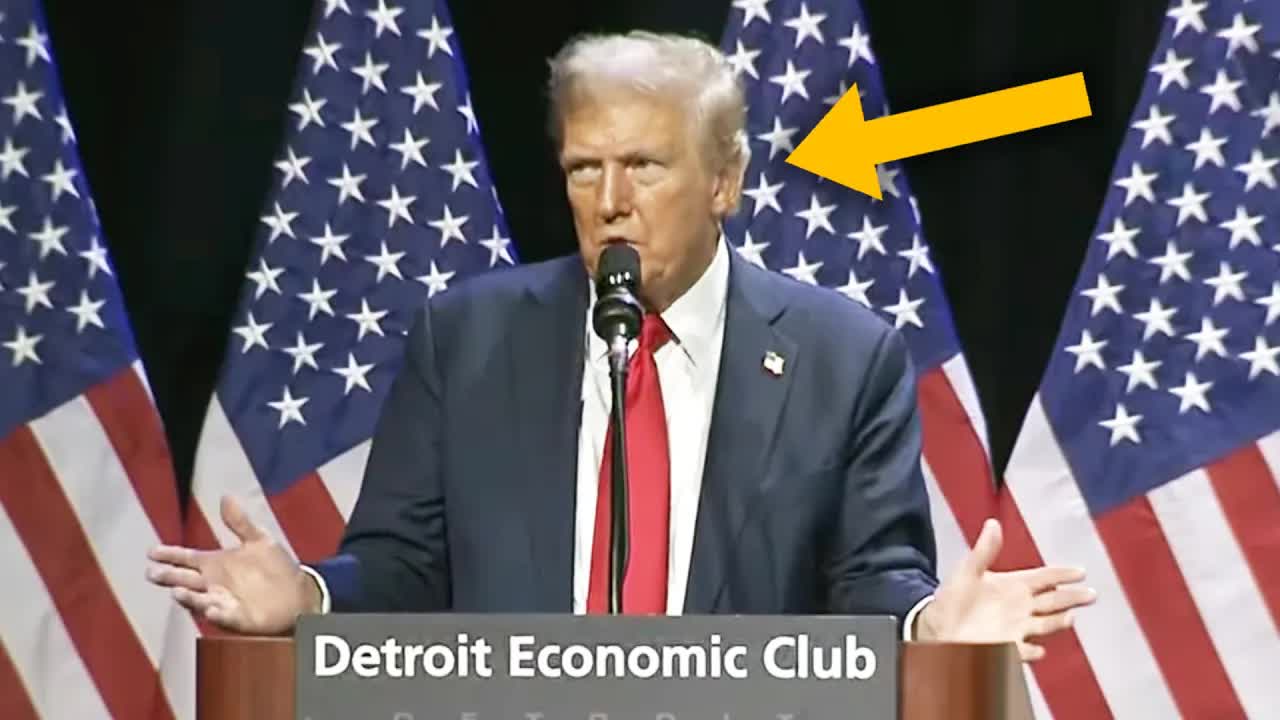
In a recent rally in Detroit, former President Donald Trump delivered a speech that left many scratching their heads.
The event showcased the increasingly erratic nature of his public appearances, as he veered from topic to topic with little coherence.
Observers noted that, despite his claims of a packed house, there were moments when it appeared attendees were not entirely engaged.
During his speech, Trump insisted that no one was leaving the venue, dismissing any reports of empty seats as fabrications from the “fake news.”
He claimed that if he noticed people departing, he would simply conclude his remarks.
This fixation on crowd size has become a hallmark of his rallies, raising questions about his need for validation from the audience.
As he spoke, the content of his message seemed to reflect a stream-of-consciousness style reminiscent of a child narrating a story.
Trump jumped from discussing various countries to bizarre comments about rocket landings, drawing strange parallels between space exploration and political events.
His references often lacked clarity, making it challenging for listeners to follow his train of thought.
In a particularly odd moment, Trump recounted a past honor he claimed to have received, stating that he was named “Michigan Man of the Year.”
However, he faced criticism when a journalist challenged the authenticity of this accolade, leading him to insist that it was indeed true.
This obsession with recognition and accolades appears to dominate his narrative, overshadowing any substantive discussion about pressing issues facing the country.
The former president’s tendency to dwell on personal grievances was evident throughout the rally.
He repeatedly criticized the media, specifically targeting a New York Times journalist for allegedly misrepresenting his past.
Trump’s fixation on past slights seems to fuel his speeches, often diverting attention from the concerns of his audience.
As he continued, Trump made a series of sweeping statements about the state of the nation, suggesting that if Kamala Harris were to become president, the entire country would mirror Detroit’s struggles.
This hyperbolic rhetoric elicited mixed reactions, with some supporters cheering while others appeared taken aback by the implications of his words.
Adding to the surreal atmosphere, Trump launched into a rambling discourse about grocery prices, describing them in a manner that felt almost poetic.
His use of the word “rape” to describe economic issues raised eyebrows, showcasing his penchant for provocative language that often overshadows the actual content of his messages.
Despite the chaos of his speech, Trump did touch on a point that resonated with some attendees: the idea that ignorance poses a significant threat to democracy.
While his delivery may have been erratic, the underlying sentiment sparked conversations among supporters about the importance of informed citizenship.
Amid the confusion, Trump also took a moment to boast about his physical appearance, contrasting himself with President Biden.
He claimed he could be enjoying a luxurious beach day instead of addressing the crowd, a statement that drew laughter but also highlighted his self-absorption.
As the rally progressed, observers began to wonder whether Trump genuinely seeks to regain the presidency or if he is simply reveling in the spotlight.
His impulsive remarks and erratic behavior raise doubts about his campaign strategy, leaving many to question his commitment to the race.
In the end, Trump’s Detroit rally served as a microcosm of his political journey—a blend of bravado, grievance, and an unwavering need for affirmation.
Whether this approach will resonate with voters remains to be seen, but one thing is clear: the road ahead is bound to be anything but predictable.
Read more
