








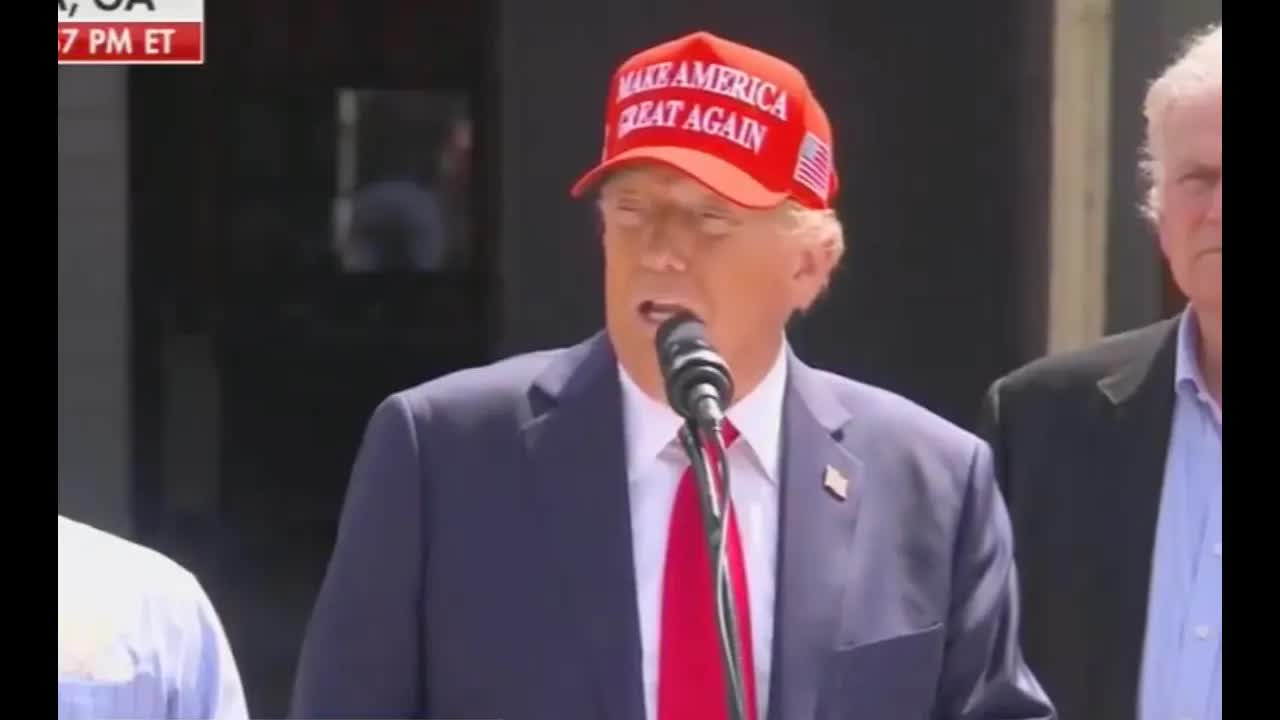
In a recent discussion, political commentator Jessica Tarlow took a strong stance against former President Donald Trump’s narrative regarding federal disaster responses in the wake of a devastating hurricane.
Tarlow pointed out that despite Trump’s frequent appearances in Georgia, the state remains a loss for him, highlighting that his visibility hasn’t translated into voter support.
In fact, she argued that his campaign activities often lead people to vote against him.
Turning her attention to the situation in Maui, Tarlow noted that Trump and his supporters are recycling old tactics, reminiscent of their approach to the East Palestine crisis.
She emphasized that President Joe Biden had been proactive, signing disaster declarations even before the storms arrived, ensuring that aid would flow without delay.
On the other hand, Tarlow criticized Trump for spreading misinformation, particularly regarding Georgia’s Governor Brian Kemp’s communications with Biden.
Contrary to Trump’s claims, Kemp confirmed that he had spoken directly with the president and received assurances of support.
Tarlow also highlighted the extensive resources currently deployed to assist affected areas, including over 3,300 FEMA personnel and 5,500 National Guard members from 11 states.
While the devastation is immense, she argued that the Biden administration is actively engaged in relief efforts, countering the narrative that Biden and Vice President Kamala Harris are absent from the situation.
Tarlow noted that it is essential for leaders to manage their presence in a way that does not detract from emergency operations.
The discussion revealed a stark contrast between Trump’s rhetoric and the reality on the ground.
Tarlow pointed out that while Trump continues to push his narrative, both Governor Kemp and North Carolina’s Governor Roy Cooper have publicly expressed their satisfaction with the federal response.
Cooper shared his plans to visit affected areas, emphasizing the emotional toll on residents and the need for a coordinated recovery effort.
Amidst the chaos, it seems Trump is more focused on discrediting the current administration than offering real solutions.
His accusations of negligence by Biden and Harris were met with swift rebuttals from both the governors involved.
Biden, visibly frustrated, asserted that Trump was lying about the federal response and reiterated his commitment to providing necessary assistance.
In a heartfelt address, Vice President Harris acknowledged the hard work of FEMA and local officials, expressing gratitude for their dedication during such trying times.
She emphasized the importance of communication and support for those impacted, recognizing the human element behind the statistics of disaster recovery.
Harris made it clear that her priority is to ensure that help reaches those who need it most.
Despite the gravity of the situation, Trump’s comments seemed to downplay the severity of the hurricane’s impact, referring to it as a “little hurricane” while lamenting about crowd sizes at his events.
This trivialization of a serious disaster raised eyebrows and highlighted a disconnect between his narrative and the lived experiences of those affected.
Moreover, Tarlow pointed out that Trump’s proposals, such as dismantling NOAA, could have dire consequences as climate change continues to intensify weather events.
This perspective sheds light on the broader implications of leadership decisions during times of crisis and the potential risks involved in undermining vital agencies responsible for disaster preparedness.
The political landscape surrounding disaster relief has become increasingly contentious, particularly in light of recent congressional actions.
While Republicans recently passed a continuing resolution to keep the government operational, they notably omitted disaster relief funding, raising questions about their commitment to supporting affected communities.
As the nation grapples with the aftermath of natural disasters, it’s crucial to recognize the responsibilities of leadership in these moments.
The contrasting approaches of the Biden administration and Trump’s rhetoric reveal the complexities of governance and the urgent need for effective disaster response strategies.
In the face of adversity, the true test of leadership lies in the ability to unite and support communities in need.
With ongoing challenges posed by climate change and increasingly severe weather patterns, the focus must remain on collaboration and action rather than divisive politics.
The stakes are high, and the consequences of inaction could be felt long after the storms have passed.
Read more
