



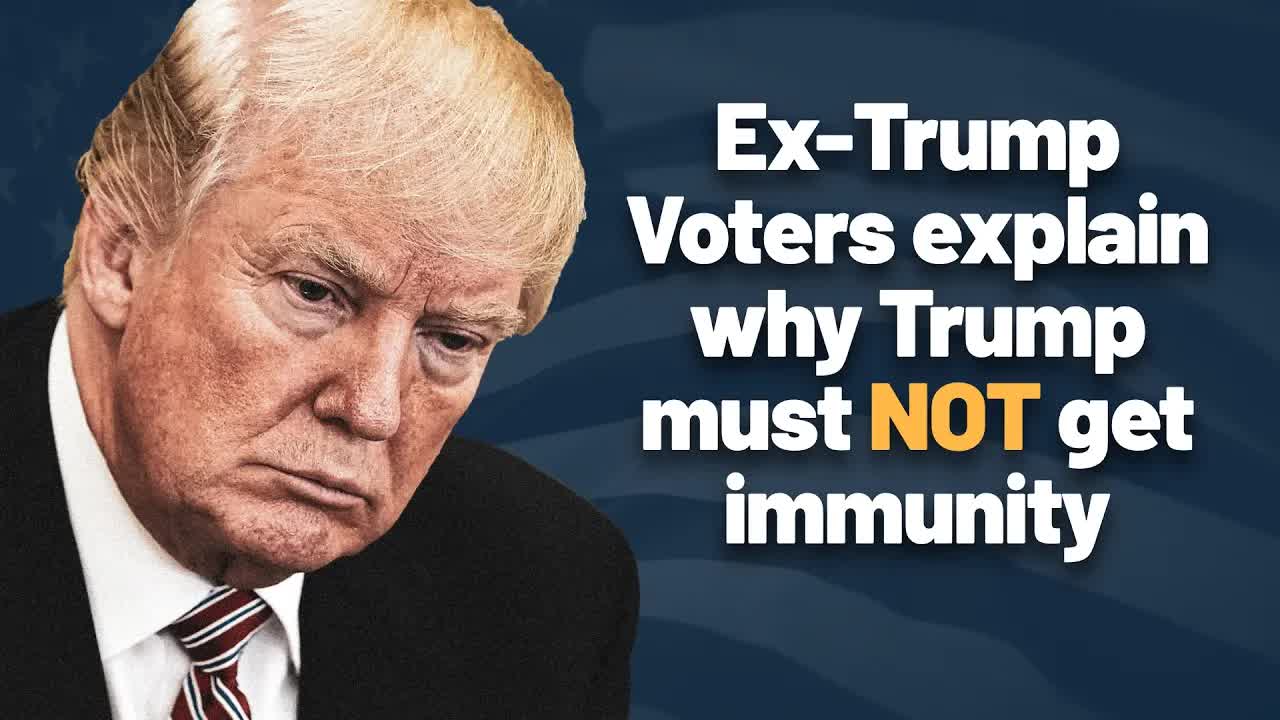
In a heated discussion surrounding Donald Trump’s assertion of presidential immunity, critics are voicing strong opinions about the implications of such beliefs.
Many argue that no individual, including the president, is above the law.
This sentiment resonates with those who uphold the principles of democracy and accountability, emphasizing that every person must answer for their actions, regardless of their position.
The notion that a sitting president could evade legal repercussions for actions taken while in office is met with skepticism.
Critics assert that allowing such immunity would set a dangerous precedent, undermining the very foundation of American governance.
The idea that a president could act without fear of consequence raises alarms about potential abuses of power and the erosion of democratic norms.
One commentator expressed deep concern over Trump’s behavior, suggesting that his temperament and disregard for the law make him unfit for office.
Rather than prioritizing the welfare of the nation, they argue, Trump appears to prioritize his own interests, which could threaten the integrity of American democracy.
The fear is palpable: what happens if he returns to power?
The chilling hypothetical scenarios presented by Trump’s legal team—suggesting that he could commit violent acts under the guise of presidential immunity—have left many feeling uneasy.
Such claims evoke a sense of authoritarianism, prompting questions about the future of the United States should Trump regain the presidency.
Would he manipulate governmental institutions for personal gain?
The implications of Trump’s recent remarks about terminating the Constitution have also sparked outrage.
Critics argue that such statements represent a blatant attack on the democratic framework that has governed the nation for over two centuries.
They stress that the Constitution is not merely a document but a living guide that ensures the rule of law applies to everyone, including the president.
Concerns extend beyond Trump’s rhetoric to the current state of the Supreme Court.
Many worry that the court’s willingness to entertain arguments for presidential immunity could undermine its legitimacy.
Some observers hope that the justices will swiftly reject these claims, reinforcing the principle that no one is above the law.
As discussions unfold, the sentiment among some conservatives is that Trump’s actions diverge from traditional Republican values.
They express frustration that the party seems to have shifted away from its historical commitment to the rule of law, accountability, and ethical governance.
This shift raises uncomfortable questions about the future of the Republican Party and its alignment with fundamental democratic principles.
The ongoing legal challenges facing Trump, particularly regarding the mishandling of classified documents, further complicate the narrative.
Critics emphasize that while other politicians may have encountered similar issues, Trump’s situation is unique due to the sheer volume of documents involved and the lengthy delay in addressing the matter.
This discrepancy underscores concerns about his respect for national security and the rule of law.
Moreover, Trump’s insistence on his immunity raises eyebrows.
Critics argue that the idea of a president being untouchable by law is not only absurd but also fundamentally un-American.
They emphasize that accountability is essential for maintaining public trust in government institutions, and any attempts to shield a sitting president from scrutiny threaten to erode that trust.
As discussions about Trump’s potential return to power intensify, fears of a more authoritarian regime loom large.
Observers worry that if he were to regain the presidency, he might attempt to consolidate power further, undermining the checks and balances that are vital to American democracy.
The prospect of a Trump-led administration raises alarms about the future of civil liberties and democratic governance.
Ultimately, the debate surrounding Trump’s claim to immunity is not merely about one individual; it reflects broader concerns about the integrity of American democracy.
As citizens grapple with the implications of these discussions, the call for accountability and adherence to the rule of law remains paramount.
The future of the nation may depend on the willingness of its leaders to uphold these principles, ensuring that no one, regardless of their position, is above the law.
Read more
