



In a world increasingly defined by political polarization, the rise of Trumpism has become a focal point of concern for many.
The recent discussion featuring Dan Partland, the acclaimed director of “Unfit,” sheds light on this phenomenon, revealing how one of America’s political parties has veered into anti-democratic territory.
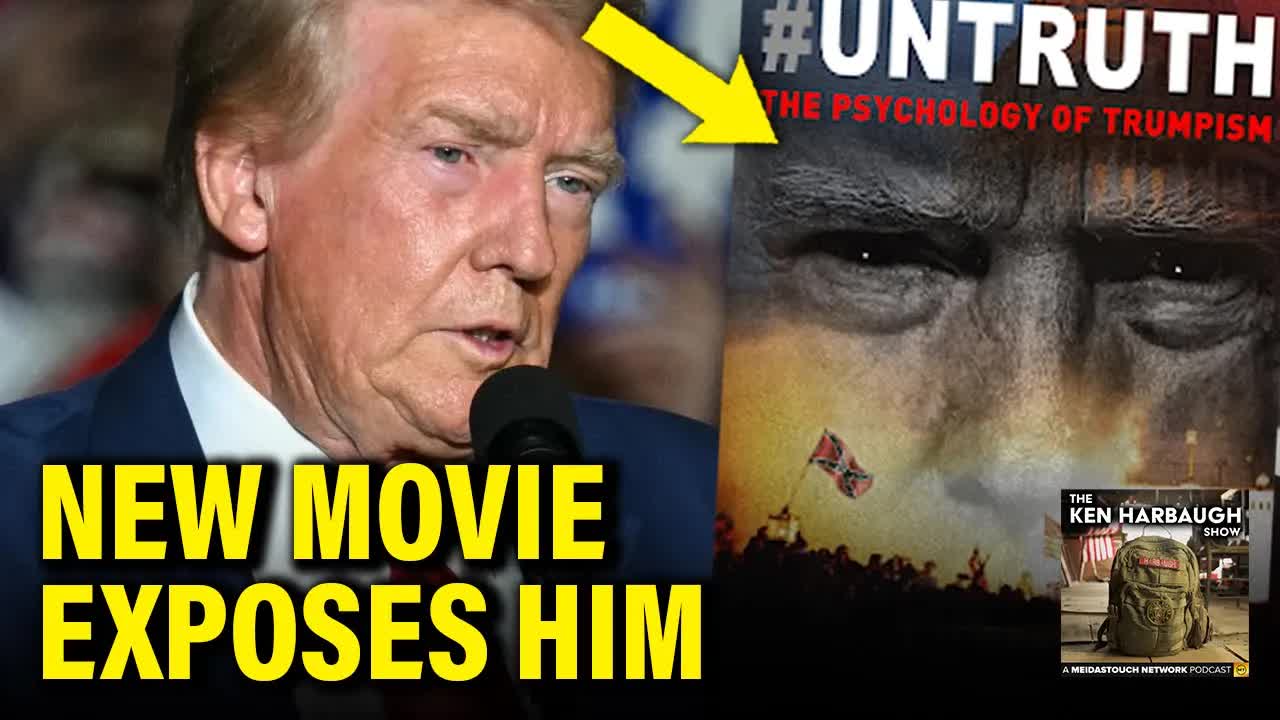
Partland’s latest film, “Untruth: The Psychology of Trumpism,” is not just a sequel but a necessary exploration of the psychological underpinnings that have led to this unsettling shift.
When Partland initially set out to make “Unfit,” he likely didn’t foresee that a follow-up would be essential.
However, as he points out, the current political climate demands it.
While “Unfit” delved into Donald Trump’s psyche, “Untruth” aims to dissect the broader appeal of Trumpism itself.
The film seeks to answer pressing questions about why democratic values seem to be eroding and why authoritarianism has gained such traction in the United States and beyond.
The film features an impressive lineup of commentators, including Ruth Ben-Ghiat and Anthony Scaramucci, each contributing unique insights into the allure of Trump and his ideology.
One striking observation made during the discussion is that Trump represents an “epiphenomenon”—a symptom of deeper societal issues rather than the root cause of them.
This notion prompts a critical examination of the electorate’s psychology and the broader cultural anxieties that fuel the appeal of authoritarian figures.
Partland emphasizes that we are living in an era marked by significant uncertainty and anxiety.
Psychologically, when people feel insecure about their futures, they often gravitate toward authoritarian solutions that promise simplicity and security.
This tendency can be traced back to childhood experiences where strong, decisive leadership provided comfort.
As societal conditions shift and create unease, the latent desire for such leadership can resurface, making authoritarian figures increasingly appealing.
Importantly, Partland warns that even if Trump were to lose in the upcoming elections, the underlying factors that led to his rise would still persist.
The real challenge lies not just in defeating Trump but in addressing the societal discontent that enables such figures to thrive.
This sentiment resonates deeply, raising questions about whether any other contemporary political figure could amass the same fervent following as Trump.
While some may argue that figures like Marco Rubio or Ted Cruz could fill the void, Partland contends that Trump’s unique combination of charisma and circumstances creates a distinct phenomenon in American history.
However, he also notes that similar leaders are emerging globally, suggesting that Trumpism is part of a larger trend rather than an isolated incident.
The conversation shifts to historical comparisons, particularly with figures like Mussolini.
Partland highlights how these leaders often exploit feelings of grievance among specific demographics, elevating their status without offering substantial policy changes.
This dynamic can lead to a dangerous blend of identity politics and emotional manipulation, which has been observed throughout history during periods of social upheaval.
As misinformation and disinformation proliferate through social media, the ability of leaders like Trump to reshape narratives becomes even more pronounced.
Partland reflects on the recent disaster response in North Carolina, illustrating how Trump has managed to shift blame onto others despite evidence of effective federal assistance.
Such tactics underscore a troubling trend where accountability is obscured by a barrage of misleading information.
The conversation also touches on the critical distinction between misinformation—unintentional inaccuracies—and disinformation, which involves deliberate falsehoods.
Partland argues that the media struggle to hold public figures accountable for spreading disinformation, leading to a confused public discourse.
The challenge lies in discerning truth from falsehood in an age where the lines have become blurred.
Ultimately, “Untruth” serves as a call to action for understanding the psychological phenomena at play in today’s political landscape.
Partland urges viewers to engage with the complexities of the current moment and to recognize that the responsibility for repairing democracy lies not only in defeating Trump but also in addressing the underlying issues that have allowed Trumpism to flourish.
As the film becomes available across various platforms, it offers a vital perspective on the ongoing crisis in American democracy.
It invites viewers to reflect on the broader implications of political allegiance and the importance of fostering a more informed and compassionate society.
In a time when the stakes are higher than ever, understanding the psychology behind our political choices may be the key to reclaiming democratic values.
Read more
