


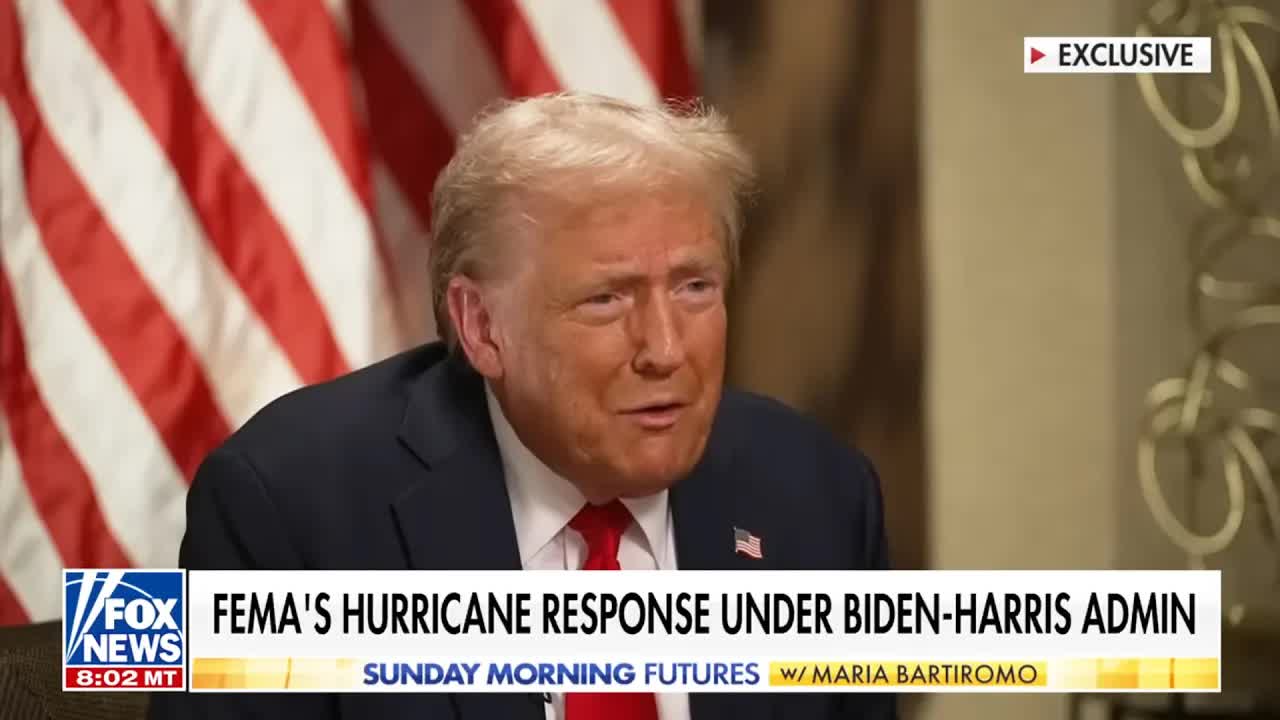
In a recent episode of Maria Bartiromo’s program, ex-President Donald Trump once again stirred controversy by suggesting the potential use of military force against supporters of Vice President Kamala Harris.
This alarming rhetoric raises critical questions about the state of American democracy and the implications of such statements.
Trump’s remarks were not made in jest; they reflect a deeply troubling mindset.
He insinuated that chaos could erupt on Election Day, particularly if he were to emerge victorious.
His warnings seemed to point fingers at various groups, including foreign nationals and individuals with criminal backgrounds, labeling them as potential threats to the electoral process.
The former president claimed that the real danger lies not just with external forces but with what he termed “the enemy from within.”
This phrase, which he used repeatedly, suggests that he views fellow Americans who disagree with him as adversaries.
Such a perspective is disconcerting, especially when he implies that military intervention might be necessary to deal with these so-called threats.
During the segment, Trump painted a grim picture of the current political landscape, suggesting that radical leftists pose a significant risk to the nation.
He argued that these individuals, whom he described as “sick” and “bad,” could incite violence on Election Day, necessitating a response from the National Guard or even the military.
J.D.
Vance, a prominent political figure, was also featured in the discussion.
When pressed about Trump’s frequent calls for military action, Vance appeared to downplay the seriousness of the comments.
He attempted to sidestep the issue, stating that he had never heard Trump make such claims, despite the evidence presented.
Jake Tapper, a journalist known for his probing questions, challenged Vance on this point.
He highlighted that Trump’s rhetoric has consistently included threats to deploy military resources against American citizens, particularly those labeled as “far-left lunatics.”
This characterization of dissenting opinions as a form of internal warfare is concerning.
Moreover, Trump’s assertion that the military should be mobilized against citizens who protest or riot after elections raises significant ethical concerns.
The implication that differing political views could justify military action against Americans is a dangerous precedent that could undermine the very foundations of democracy.
The conversation took a more alarming turn when Trump reiterated that the “enemy within” comprises those who oppose his views.
This framing of political opposition as a threat to national security is not only divisive but could also incite further polarization among the electorate.
As the election approaches, the stakes are undeniably high.
The notion that military force could be employed against fellow Americans based on their political beliefs is a chilling thought.
It poses serious questions about the future of political discourse in the country and the potential for escalating violence.
Amidst this backdrop, the urgency for voters to engage in the democratic process cannot be overstated.
If Trump’s rhetoric is not enough to galvanize public concern, the prospect of J.D.
Vance potentially ascending to power should serve as a wake-up call for many.
In light of these developments, it’s imperative to consider the broader implications of such statements.
The possibility of military intervention in domestic affairs not only threatens individual liberties but also challenges the very essence of what it means to live in a democratic society.
As we navigate this tumultuous political landscape, it becomes clear that the upcoming elections will be pivotal.
How citizens respond to these alarming calls for action may very well shape the future of American governance and civil rights.
Read more
