

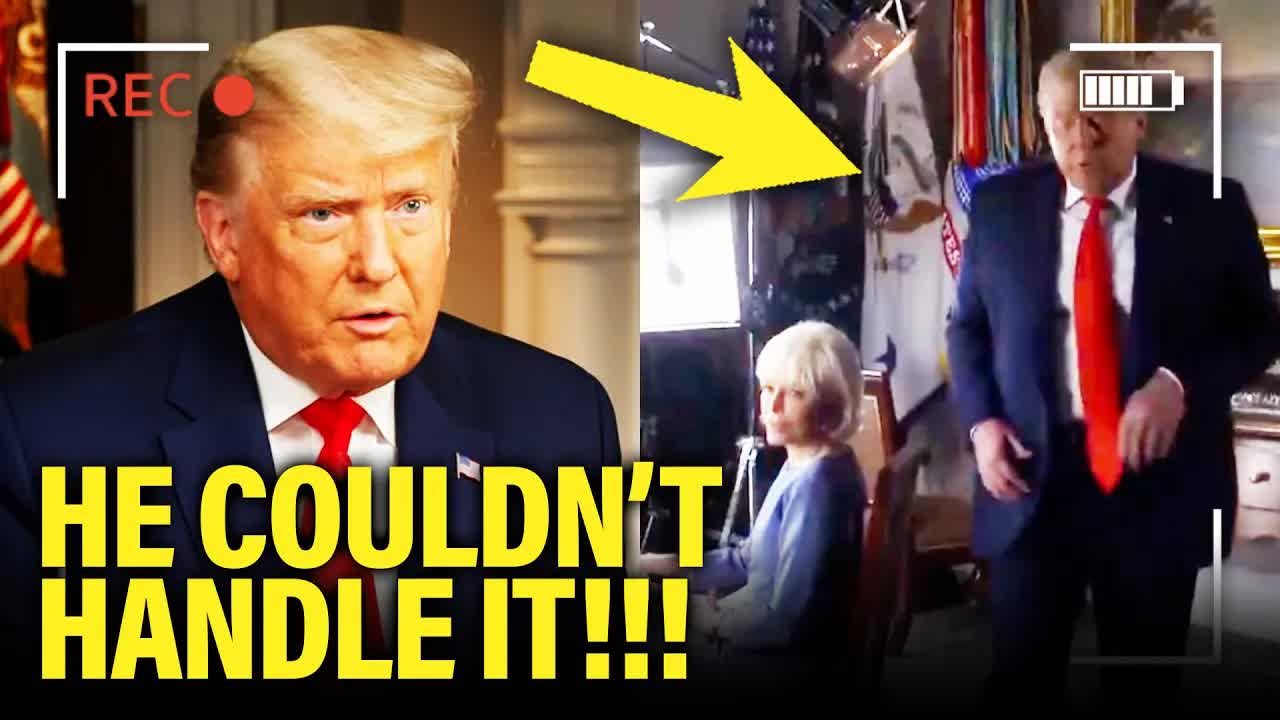
In a surprising twist reminiscent of his controversial exit from a 2020 interview, Donald Trump has decided to withdraw from an upcoming appearance on the 60 Minutes election special.
This means that Vice President Kamala Harris will be the only candidate featured in the segment, raising eyebrows and sparking discussions about Trump’s reluctance to face tough questions.
The 60 Minutes team announced that their primetime election special is set to air on October 7th at 8 p.m. For decades, the program has extended invitations to both Democratic and Republican candidates, aiming to provide voters with insights as they prepare to head to the polls.
While both campaigns initially agreed to participate, Trump’s campaign has now opted out, leaving Harris to engage with correspondent Bill Whitaker.
This decision has led to a flurry of reactions on social media, with many commentators suggesting that Trump is afraid to confront Harris again.
Some users expressed disbelief that he would abandon a tradition that has been upheld for over fifty years, while others labeled him “scared” and “weak.” It appears that Trump’s retreat is not just a spontaneous decision but rather a calculated move by his campaign to avoid a repeat of the fallout from previous interviews.
Flashback to 2020: Trump’s first encounter with 60 Minutes ended in chaos when he abruptly left during an interview with Leslie Stahl after being pressed on straightforward questions.
That moment is still fresh in the minds of many, particularly as his campaign seems to fear a similar scenario unfolding this time around.
In that previous interview, Trump was confronted about his infamous rally chants of “lock her up,” which he denied ever saying, despite evidence to the contrary.
The back-and-forth with Stahl revealed a pattern of evasive responses that has characterized many of Trump’s public appearances.
His inability to handle simple inquiries raised questions about his preparedness for the scrutiny of a national audience.
Even as Trump’s campaign attempts to deflect attention, the reality remains that he has consistently struggled to articulate coherent policies or plans, especially regarding healthcare.
The lack of a clear strategy has become a hallmark of his public persona, further complicating his relationship with the media and voters alike.
As the election cycle heats up, Trump’s fear of facing real journalists and being fact-checked is palpable.
His recent interactions have shown a tendency to devolve into rants rather than substantive discussions about pressing issues.
With his handlers reportedly concerned about how he might perform under pressure, it’s no wonder that they would choose to pull him from a high-stakes interview.
The stakes are high for both candidates, but Harris appears ready to take on the challenge.
While Trump has often resorted to name-calling and distractions, Harris has been actively engaging in discussions about critical topics, such as border security and healthcare reform.
Her ability to communicate effectively on these issues could resonate well with voters who are looking for genuine solutions rather than political theatrics.
In a recent speech in Arizona, Harris discussed a bipartisan border security bill that Trump allegedly sabotaged for his own political gain.
By highlighting her commitment to addressing real problems, she positions herself as a candidate focused on governance rather than grandstanding.
With Trump opting out, Harris’s opportunity to shine on national television is significant.
She will be able to present her vision for the future without the distraction of Trump’s antics.
This could prove advantageous as voters seek clarity and direction amidst the chaos of the current political landscape.
Ultimately, Trump’s decision to withdraw from the 60 Minutes interview speaks volumes about his approach to accountability and engagement.
As Harris prepares to step into the spotlight alone, it will be interesting to see how this moment shapes the narrative leading up to the election.
With the absence of Trump’s bombast, viewers may finally get a chance to hear a substantive discussion about the issues that matter most to Americans.
Read more
