






In today’s media landscape, the importance of discerning fact from fiction has never been more critical.
One prominent voice in this discussion emphasizes that no single person holds the monopoly on truth.
This journalist openly admits to the possibility of being corrected by their audience, showcasing a refreshing humility in an era where many claim absolute authority over political narratives.
Contrasting this approach is a disturbing trend emerging from the MAGA camp, which includes not only Donald Trump but also his staff and various right-wing commentators.
They often present themselves as the definitive interpreters of events, attempting to dictate how the public should perceive news and information.
This behavior raises eyebrows, especially when Trump himself famously declared that people should not believe what they see or hear, insisting instead that he would provide the “real” story.
This phenomenon has taken on a new name: “sane washing.” It refers to the attempts by Trump’s allies and supporters to sanitize his often chaotic and contradictory statements, framing them as logical and coherent.
Over the past six months, as Trump’s rhetoric has become increasingly erratic, the need for this kind of cleanup has grown more apparent.
Observers note that it sometimes feels like a desperate effort to maintain a facade of rationality around his comments.
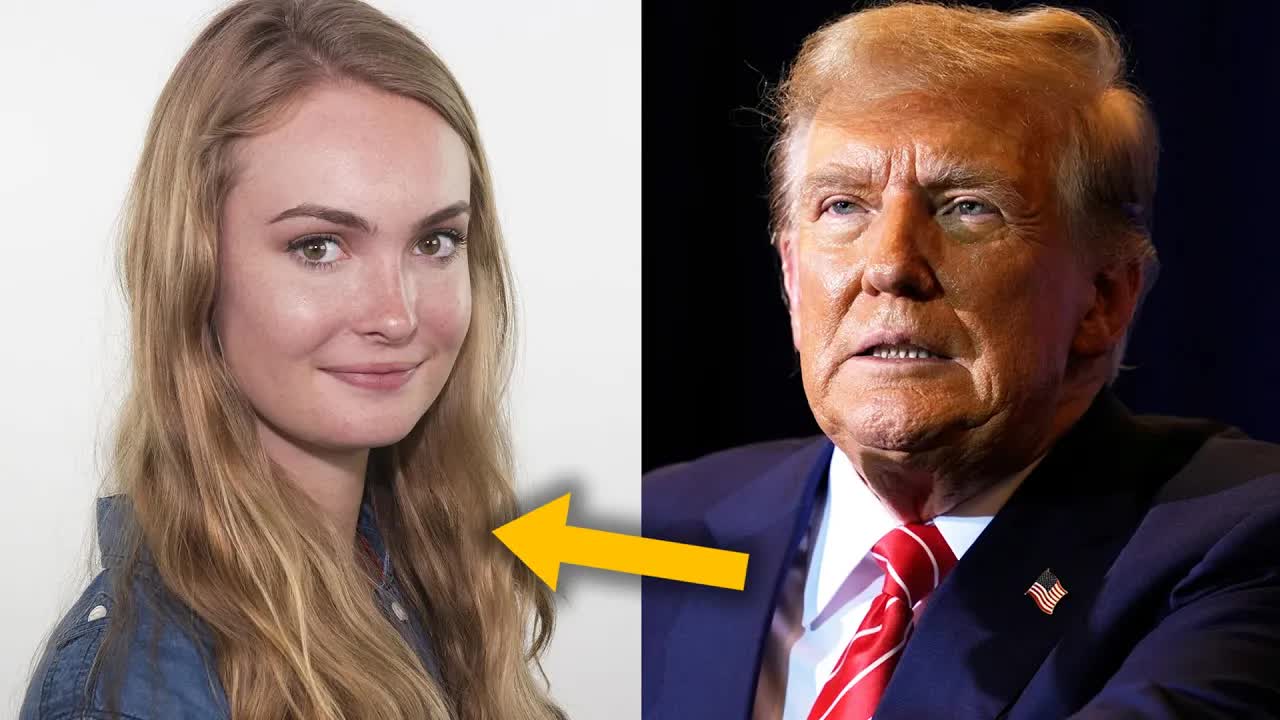
A striking example of this occurred recently when Kayleigh McGee, the deputy editor of the D.C.
Examiner, provided a defense of one of Trump’s convoluted answers regarding tariffs and economic policy.
Her assertion that Trump was being “straight and direct” drew skepticism, even eliciting laughter from some Fox and Friends hosts who seemed baffled by her interpretation.
In a particular segment, McGee attempted to juxtapose Trump’s remarks with those of Vice President Kamala Harris, claiming that Trump’s answers were clear-cut.
However, Harris’s responses were criticized for being vague, highlighting a perceived contrast between the two candidates’ communication styles.
Yet, the question remains: are Trump’s statements genuinely straightforward, or are they riddled with confusion?
For instance, during a town hall event in Michigan, Trump responded to a question about making childcare more affordable.
His answer, filled with non sequiturs and disjointed logic, left many wondering how he intended to achieve this goal.
McGee’s portrayal of his response as coherent seems to contradict the reality of his rambling discourse.
Another instance of this “sane washing” came when Trump confused Alaska with Afghanistan while discussing energy independence.
His claim about Bagram Air Force Base being in Alaska is a glaring example of his disorientation, yet McGee and others insist that such statements should be interpreted as direct and factual.
The critical takeaway here is the necessity for audiences to engage in their own fact-checking.
The journalist encourages viewers to watch full segments of Trump’s remarks to form their own opinions.
This call for independent verification underscores the importance of media literacy in navigating today’s complex political landscape.
As the political climate continues to shift, the effectiveness of “sane washing” remains uncertain.
While it may resonate with some ardent supporters at rallies, broader voter sentiment might not be so easily swayed.
The challenge lies in whether the public will accept these sanitized narratives or demand a more authentic representation of political discourse.
In a world inundated with information, the need for critical thinking is paramount.
Individuals must sift through the noise and assess what constitutes genuine communication versus mere political spin.
As the landscape evolves, the ability to discern truth from manipulation will be crucial for informed citizenship.
Ultimately, the rise of “sane washing” highlights the ongoing battle for narrative control in politics.
As audiences become more aware of these tactics, the hope is that they will seek out diverse perspectives and hold leaders accountable for their words.
After all, a well-informed public is the backbone of a healthy democracy.
Read more
