
As the U.S. presidential election approaches, the atmosphere is charged with anticipation.
Just over three weeks remain before voters cast their ballots, and the race is tighter than ever.
Current national polls indicate that Vice President Kamala Harris holds a slight edge over former President Donald Trump.
However, a closer look at battleground states reveals a different story, with Trump often leading in key areas.
With so much at stake, the final weeks of campaigning are crucial for both candidates.
In a recent discussion featuring political strategists Lindy Lee and Amy Coke, the strategies employed by both campaigns were scrutinized.
Lee, a Democrat strategist, highlighted how Trump has been noticeably quieter since the Republican National Convention.
Instead of engaging with the press, he seems to be focusing on rallies and targeted advertisements.
This strategic silence raises questions: Is this approach effective?
Or does it risk alienating potential voters?
Coke pointed out that Trump’s limited public appearances might be a calculated move.
His past comments, at times controversial, have drawn significant backlash.
By keeping a lower profile, the campaign may be attempting to avoid further gaffes that could harm his standing.
Yet, as Lee noted, the novelty of Trump’s rhetoric has faded; many voters have grown desensitized to his provocative statements, which could diminish their impact.
On the Democratic side, the campaign has ramped up efforts to engage voters, particularly those who may feel hesitant about supporting Harris.
Recently, former President Barack Obama took to the campaign trail, emphasizing the importance of unity among voters.
He urged those who might be uncomfortable with a female candidate to put aside their doubts, stressing that the stakes are too high to remain on the sidelines.
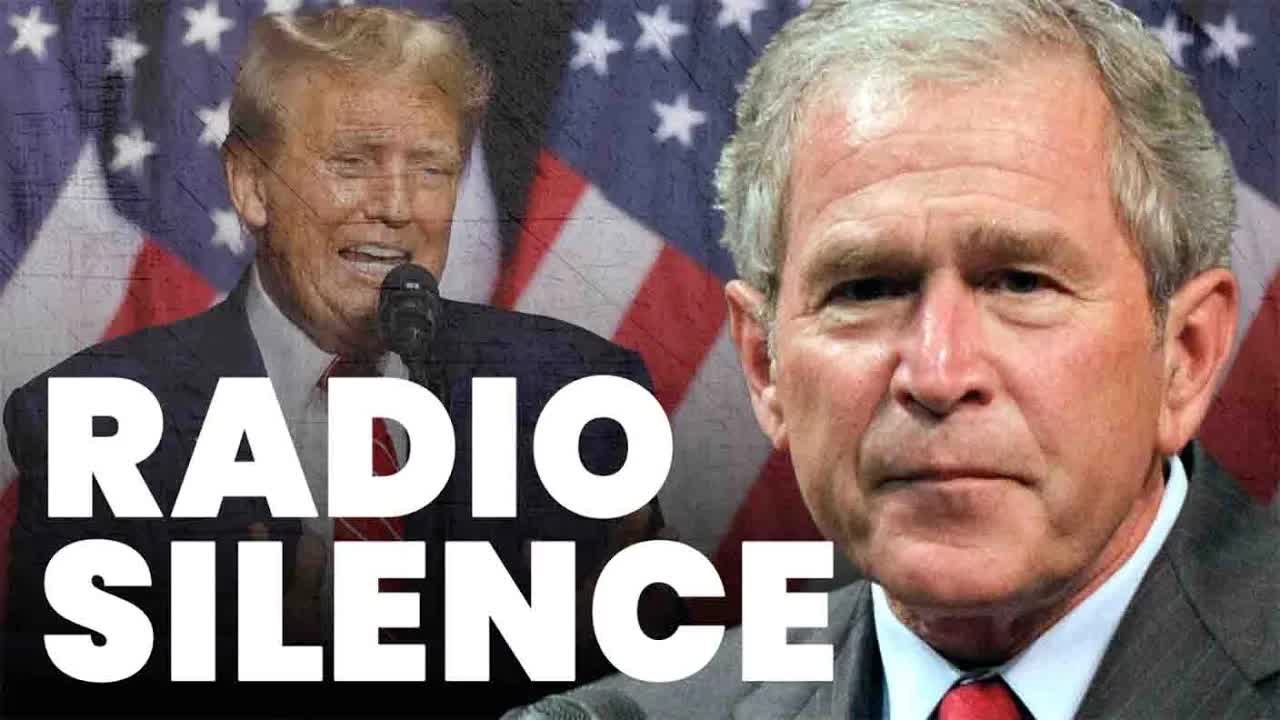
Interestingly, Coke observed that there hasn’t been a significant presence of former Republican presidents on the campaign trail this time around.
While Trump has been active, his predecessors have largely remained silent or critical from the background.
This absence of high-profile endorsements could impact Trump’s campaign strategy, especially as he seeks to solidify his base.
Despite the intense campaigning, the polls have shown little movement.
Harris was leading by a slim margin of 2.5% in early September, a figure that has barely changed as of mid-October.
The outcome of the election may hinge on a handful of battleground states, particularly Pennsylvania, Michigan, and Wisconsin, which have historically played pivotal roles in determining the presidency.
Lee elaborated on the targeted strategies being employed by the Harris campaign, highlighting the meticulous approach to voter outreach.
Campaign teams are not just casting a wide net but are instead focusing on individual voters based on specific demographics and preferences.
This granular strategy aims to ensure that every potential supporter is reached, reflecting the urgency of the situation.
However, fundraising remains a contentious issue.
Lee mentioned that while the Harris campaign has amassed significant funds, the influx of undisclosed “dark money” poses a challenge.
This type of funding, which lacks transparency regarding its sources, complicates the financial landscape for both parties.
Coke acknowledged that dark money affects both sides, a reality stemming from landmark decisions like Citizens United.
As the conversation shifted to the tactics employed by the Harris campaign, Coke expressed concern over some of their choices, such as a recent interview with Vogue.
She questioned whether this approach would resonate with undecided voters in key regions, suggesting that it might alienate those who are already skeptical.
It’s a valid point—do Vogue readers represent the swing voters needed to tip the scales?
Lee countered that Harris is actively engaging with diverse audiences through various platforms, including popular podcasts and interviews.
She emphasized that the campaign is not resting on its laurels but is instead working tirelessly to connect with voters.
In her view, the real overconfidence lies with Trump, who continues to rally large crowds without addressing the pressing concerns of undecided voters.
As the clock ticks down, both campaigns are feeling the pressure.
The stakes have never been higher, and the strategies employed in these final weeks will be critical.
With the race so close, every decision made could have far-reaching consequences.
As voters prepare to head to the polls, the question remains: who will emerge victorious in this high-stakes battle for the presidency?
Read more
