





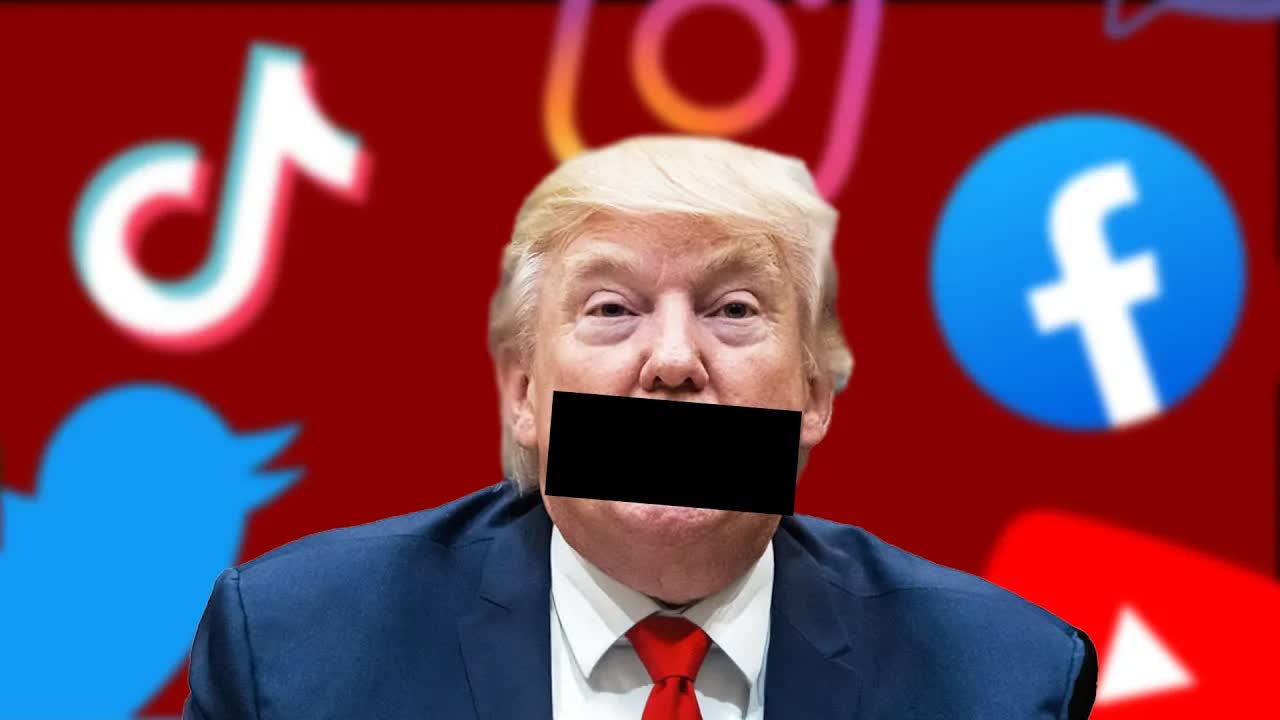
In a world where social media reigns supreme, the narrative surrounding online censorship has become a hotbed of controversy, especially among conservative circles.
Many right-wing supporters assert that they are victims of systemic bias on platforms like Twitter and Facebook, claiming their opinions—especially regarding COVID-19 and political figures—are being unfairly silenced.
But is there any truth to these claims of widespread discrimination against conservatives?
Recent research published in Nature dives deep into this very issue, and the findings might surprise you.
It turns out that while conservative users do face suspensions at a higher rate, the reason isn’t rooted in political bias.
Instead, it stems from the fact that these users are significantly more likely to disseminate misinformation compared to their left-leaning counterparts.
Yes, you read that right—it’s not about politics; it’s about the content being shared.
The study reveals a troubling trend: right-wing users frequently engage with low-quality information sources.
This includes everything from dubious blogs and satire sites to outright fake news outlets.
The irony here is palpable—despite their vocal criticisms of the mainstream media, many conservatives struggle to differentiate between credible news and unreliable sources.
A visual representation from the study shows that tweets featuring Trump-related hashtags are disproportionately linked to these low-quality sites, while Biden hashtags tend to lead to more reputable sources.
Researchers from prestigious institutions such as MIT Sloan School of Management and Yale University conducted an extensive analysis focusing on Twitter suspensions after the 2020 election.
They examined a sample of 900 users—split evenly between those who tweeted with pro-Trump and pro-Biden hashtags.
The results were telling: pro-Trump accounts were 4.4 times more likely to face suspension than their Biden-supporting counterparts.
But does this indicate bias?
Not quite.
The evidence suggests that the higher suspension rates for right-wing users are a direct consequence of their engagement with hyper-partisan and misleading content that violates Twitter’s guidelines.
This pattern isn’t confined to Twitter either; similar trends are observed across other social media platforms.
Both professional fact-checkers and politically neutral individuals agree: right-wing users are sharing disinformation at alarming rates.
So, what does this mean for the claims of bias?
When right-wing users report feeling targeted, the critical questions to ask are: Is this assertion valid?
And if so, is the bias political or based on user behavior?
The data strongly supports the latter.
Many conservative accounts have been suspended for spreading false narratives, particularly around contentious issues like the COVID-19 pandemic and the legitimacy of the 2020 election.
For example, numerous right-wing accounts have propagated debunked theories linking COVID-19 vaccines to severe health risks, or even worse, promoting dangerous remedies like injecting bleach.
All of these actions breach the established terms of service of social media platforms, leading to justified suspensions.
Additionally, right-wing users often share misinformation regarding climate change, dismissing it as a hoax, and engaging in harmful rhetoric about LGBTQ+ communities.
These posts frequently rely on misleading information, which, unsurprisingly, also violates platform policies.
The situation becomes even more convoluted when considering the algorithms of these platforms.
Content that is sensationalist or misleading tends to garner more engagement, creating a feedback loop that amplifies disinformation.
In this sense, right-wing users may inadvertently be trapped in a cycle where their own engagement with shocking content leads to increased scrutiny and suspensions.
It’s almost ironic how this victim narrative perpetuates itself.
Right-wing media often portrays corporate media as biased, yet when social media platforms enforce rules against misinformation, these same users cry foul.
They overlook the fact that their own actions—spreading conspiracy theories and falsehoods—are the real culprits behind their suspensions.
The takeaway here is clear: the narrative of bias against conservatives is largely unfounded.
Instead of being victims of an oppressive system, many right-wing users are facing consequences for their choices in sharing disinformation.
Engagement with low-quality content drives these higher suspension rates, and the solution lies in improving media literacy and discernment.
If conservatives truly wish to avoid these pitfalls, they must learn to distinguish between fact and fiction in the digital landscape.
By doing so, they can navigate social media more responsibly and, ultimately, stop facing the repercussions of their online behavior.
Read more
