






In a striking observation, Lucy Ash, a seasoned journalist and expert on Russian affairs, suggests that the Russian Orthodox Church has effectively taken on the role once held by the Communist Party.
In her new book, “The Baton in the Cross,” she argues that the Church now dictates societal norms and behaviors, acting as a tool for enforcing obedience among the populace.
This transformation is particularly evident in the context of the ongoing conflict in Ukraine, where the Church has become an ally of the state, lending its authority to Vladimir Putin’s controversial actions.
For over a thousand years, the Russian Orthodox Church has demonstrated remarkable resilience, surviving various political upheavals from the Mongol invasions to the Soviet era.
Today, it stands firmly beside the Kremlin, offering religious justification for Russia’s invasion of Ukraine.
Ash’s insights delve into how under Putin’s regime, the essence of spirituality has been stripped away from religion, repurposing it as a mechanism for control.
During a recent interview, Ash highlighted a provocative image she encountered in St. Petersburg: a poster depicting a cross made from police batons, commonly seen during protests.
Beneath this striking visual was the word “pokaisa,” meaning “repent.”
This image encapsulated the troubling relationship between state violence and religious doctrine, illustrating a long-standing but increasingly blatant alliance between the Church and the government.
As the conflict in Ukraine escalated, the Church’s rhetoric transformed.
In July, Patriarch Kirill framed the invasion as a holy war.
Early on, he attributed the conflict to what he termed the “Satanic West,” linking it to issues such as LGBTQ+ rights.
By September 2022, as military casualties mounted, new recruits were blessed with holy water and assured that dying on the battlefield would absolve their sins—a narrative reminiscent of historical crusades.
Ash pointed out that soldiers on the front lines received Bibles adorned with images of Kalashnikovs, reinforcing the militaristic and religious fusion.
They were told that Putin himself was a divine leader, akin to an archangel commanding an army.
This portrayal raises questions about the extent to which Putin has embraced a messianic identity, using religious symbolism to bolster his authority.
The historical context of this religious-political intertwining reveals deep roots.
Influential philosopher Ivan Ilyin, whose ideology Putin seems to champion, argued that Russia cannot exist without Ukraine.
This belief aligns with a 16th-century prophecy claiming Moscow as the “Third Rome,” positioning it as the ultimate bastion of Orthodox Christianity.
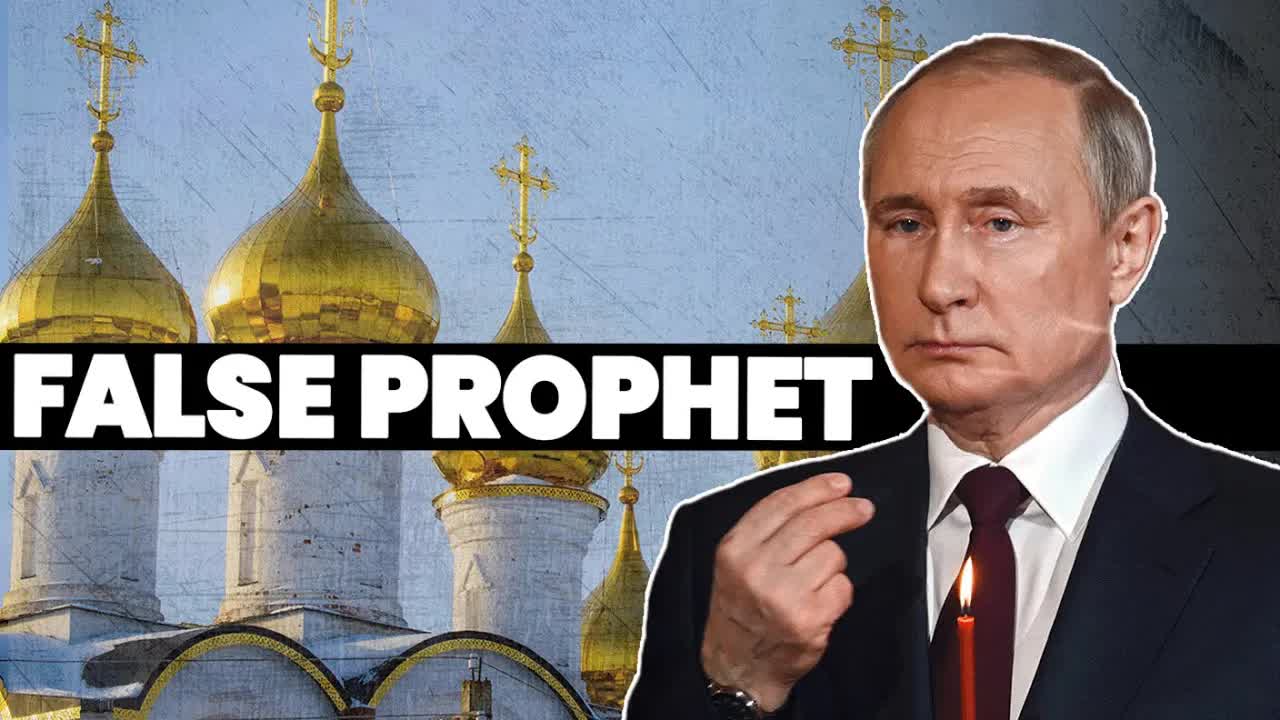
Despite Putin’s KGB past, he has reinvented himself as a pious leader.
His public displays of faith, from lighting candles to participating in religious rituals, seem more theatrical than genuine.
While he engages in these acts, many question the sincerity of his beliefs, especially when juxtaposed with the oppressive measures of his regime.
Ash also reflected on the symbolic significance of a massive swimming pool in Moscow, originally built on the site of a destroyed cathedral.
This pool, once a gathering place for the public, represents the complex relationship between the state and religion throughout Russian history.
Its eventual replacement with a rebuilt cathedral coincided with Putin’s rise to power, further intertwining the narratives of faith and governance.
Looking at the current political landscape, Ash speculates whether Putin’s reliance on the Church will sustain his leadership amid growing discontent surrounding the war in Ukraine.
The recent turmoil, including the Wagner Group’s mutiny and the fate of political opponents like Alexei Navalny, raises questions about the stability of his regime.
The Church’s endorsement may provide a veneer of legitimacy, but it remains to be seen if it can truly fortify his authority.
As Ash considers the future of her work and potential return to Russia, she expresses cautious optimism.
However, the prevailing sentiment among many observers is that significant change is unlikely while Putin remains in power.
The risks involved in returning to a country where dissent is met with harsh reprisals are substantial, underscoring the precariousness of the situation.
In her compelling narrative, Lucy Ash sheds light on the intricate dynamics between religion and state in contemporary Russia, revealing how the Church has evolved into a crucial player in Putin’s strategy.
Her book, “The Baton in the Cross,” offers a profound exploration of this relationship, inviting readers to reflect on the implications of faith being wielded as a tool of political control.
Read more
