









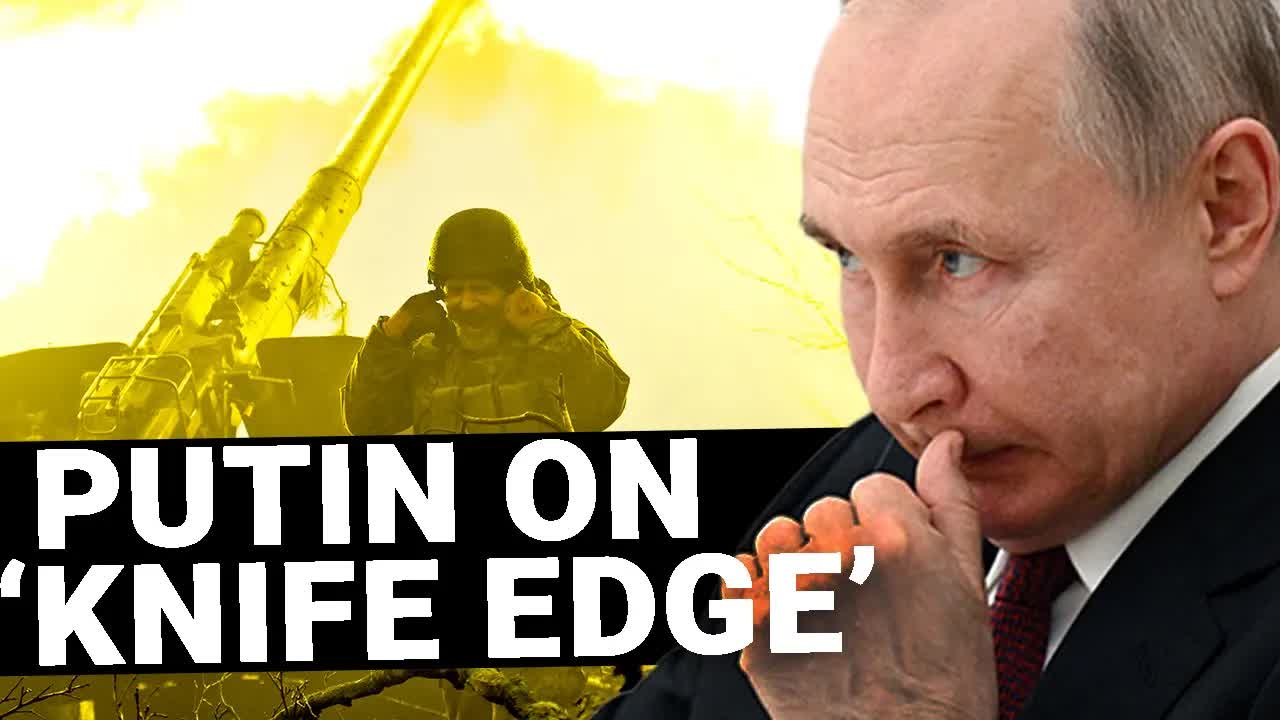
In a world where geopolitical tensions are escalating, the war in Ukraine has become a focal point of international discourse.
The conflict is not merely a struggle for territory but a broader fight for identity and sovereignty.
As Russia seeks to reassert its influence over Ukraine, the implications of this war extend far beyond the borders of Eastern Europe.
Professor Malcolm Chalmers, Deputy Director General of RISI, shared insights during the UK Labour Conference in Liverpool, emphasizing that Russia’s ambitions go beyond just capturing Donbass.
According to him, President Putin views Ukraine as an entity that must be brought under Russian control, a move that would significantly alter the balance of power in the region.
The loss of key cities like Odessa and Kiev would symbolize a strategic defeat for Russia, making Ukraine a more formidable adversary.
Chalmers highlighted the UK’s substantial contribution to the Ukrainian cause, noting that it stands out among major European countries.
While Scandinavian and Eastern European nations have also stepped up their efforts, the UK’s proactive stance has made a significant impact.
However, he acknowledged the challenges that lie ahead, particularly as the UK struggles to identify additional military supplies from its own stocks.
The recent election of a new Labour government has sparked discussions about the UK’s role in supporting Ukraine.
Chalmers pointed out that key figures like David Lammy and John Healey have been working diligently to strengthen ties with European partners and the United States.
This cooperation is crucial, especially as Ukraine embarks on a long-range strike campaign against Russian targets, raising questions about its confidence in using advanced weaponry like Storm Shadow missiles.
Despite the ongoing discussions about military support, Chalmers cautioned against over-reliance on Western supplies.
He emphasized the importance of Ukraine’s domestic capabilities, noting that they have developed effective weapons systems independently.
This self-sufficiency is vital as Ukraine navigates the complexities of modern warfare, where striking deep into enemy territory can disrupt supply lines and hinder the opponent’s operational capabilities.
The conversation turned to the strategic implications of providing advanced weaponry, such as the Storm Shadow missile.
Chalmers warned that public discussions about military capabilities could give Russia valuable intelligence, allowing them to adapt their defenses accordingly.
The element of surprise is essential in warfare, and maintaining ambiguity about military strategies could be advantageous.
As the conflict continues, both sides are locked in a war of attrition.
Chalmers pointed out that sustaining the war is becoming increasingly difficult for both Ukraine and Russia.
Supply shortages and personnel losses are taking a toll, raising the stakes for both nations.
The possibility of a stalemate looms large, with each side hoping the other will falter first.
Chalmers also noted that the current situation mirrors historical conflicts where front lines remained static for extended periods.
The war has evolved into a battle of endurance, with both sides facing mounting pressures.
The targeting of Ukraine’s energy infrastructure poses a significant threat as winter approaches, potentially straining civilian resources and morale.
Looking ahead, the dynamics of the conflict may shift as international political landscapes change.
The potential for a new American president could influence the level of support for Ukraine.
Chalmers emphasized the need for the UK and its allies to ensure that President Zelensky enters any negotiations from a position of strength, safeguarding Ukraine’s independence and future.
The Kremlin’s perception of the war is also crucial.
Chalmers suggested that while the Russian leadership may still believe in a plausible path to victory, the reality on the ground is complex.
The historical ties between Russia and Ukraine complicate the narrative, with many Russians viewing Ukraine as an integral part of their heritage.
As the Labour Conference unfolds, Chalmers underscored the importance of maintaining a united front within the UK government regarding support for Ukraine.
The consensus among British political parties sends a strong message to both allies and adversaries alike.
The commitment to European security remains steadfast, reinforcing the notion that the UK is prepared to play a critical role in countering Russian aggression.
In this intricate web of international relations, the battle for Ukraine is far more than a territorial dispute.
It represents a clash of ideologies, national identities, and strategic interests.
As the conflict evolves, the world watches closely, aware that the outcomes will shape the future of Europe and beyond.
Read more
