









The Labour Party’s recent conference in Liverpool concluded with a mix of self-congratulation, anxiety, and a tinge of disappointment.
This reaction seems particularly curious considering the party’s resounding victory just three months ago.
The conference, which was tightly controlled and state-managed, ended with a minor rebellion against the government’s decision to cut winter fuel payments for most pensioners.
While this act of defiance may have felt empowering for attendees, it is unlikely to result in any substantial change.
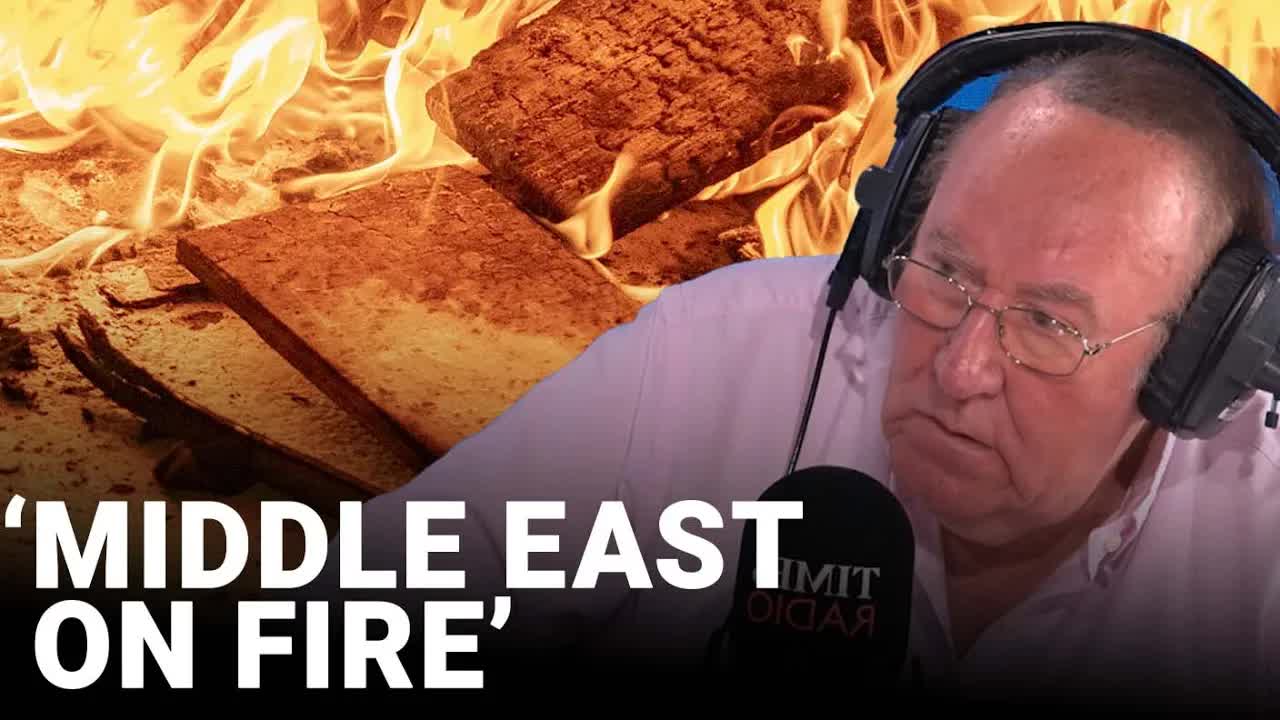
As the Labour faithful exited the conference hall, they were met with the stark realities of global conflicts, particularly the escalating situation in the Middle East.
Keir Starmer, the Labour leader, has already departed for New York on an official jet to attend the UN General Assembly.
Meanwhile, British defense officials are preparing for the potential evacuation of approximately 10,000 UK citizens from Lebanon, fearing an imminent all-out war with Israel.
Tanks are being mobilized to the British base in Cyprus, positioned strategically close to Lebanon, as a precautionary measure.
The urgency of these preparations comes amid heightened tensions, particularly following Hezbollah’s recent launch of a ballistic missile aimed at Tel Aviv.
Although Israel’s missile defense systems intercepted the attack, the incident underscores the growing threat posed by Hezbollah, which possesses a vast arsenal of missiles.
Since the Hamas attack on October 6, Hezbollah has already fired over 8,500 missiles into Israel, and this latest escalation marks the first use of a ballistic missile.
The situation is precarious, with fears that Hezbollah could potentially unleash enough ballistic missiles to overwhelm Israel’s defenses.
Consequently, Israel’s military operations against Hezbollah in Lebanon are expected to intensify further.
While it’s uncertain whether Hezbollah will act independently or wait for Iran’s approval, the reality remains that these developments are largely beyond our control.
In a conversation with Times Radio, Lieutenant-Colonel Peter Lerner of the Israeli Defense Force commented on the shifting focus of military operations from the south to the north due to Hamas’s weakened capabilities.
He emphasized the need for Israel to ensure safety and security for its northern residents, even as the fate of hostages held by Hamas remains unresolved.
From the Lebanese perspective, Mark Dow, an independent member of parliament, expressed his concerns about his country’s precarious position.
He highlighted the staggering number of attacks across the border, with Israel launching nearly 7,400 strikes compared to Hezbollah’s five retaliatory actions.
The toll has been devastating, with 600 casualties in Lebanon over the past 11 months, exacerbated by recent airstrikes that resulted in nearly 600 deaths in just one day.
The plight of British nationals in Lebanon is also a pressing issue, prompting discussions about evacuation strategies.
Former Conservative Defense Secretary Ben Wallace weighed in, acknowledging that while some areas of Lebanon remain stable, the international airport in southern Beirut poses significant challenges for evacuation efforts.
The potential for a wider conflict looms large, but Wallace believes that not all parts of Lebanon are embroiled in chaos.
Wallace also noted that any military response should be carefully considered, emphasizing the importance of having a political plan alongside military action.
He pointed out that the Lebanese army, comprised of various religious factions, would likely defend their sovereignty if Israel were to invade.
This complex dynamic complicates the situation further, as the Lebanese army is equipped by Western powers yet may find itself caught in the crossfire.
The ongoing conflict raises questions about Israel’s long-term strategy.
While the Israeli military has demonstrated its strength, critics argue that a clear political plan is essential to prevent future escalations.
The relationship between Hezbollah and Hamas adds another layer of complexity, as both groups have historically been at odds due to their differing sectarian affiliations.
As the situation continues to evolve, concerns about a broader regional conflict persist.
The fear is that if tensions escalate further, it could lead to a wider war involving multiple nations.
However, analysts suggest that Iran, despite its aggressive rhetoric, may be limited in its ability to engage in conventional warfare against Israel, relying instead on proxy forces to exert influence in the region.
The dialogue surrounding the conflict emphasizes the intricate web of alliances, rivalries, and historical grievances that define the Middle East landscape.
As the world watches closely, the hope remains that diplomatic solutions can emerge to de-escalate tensions and restore stability to a region fraught with uncertainty.
Read more
