









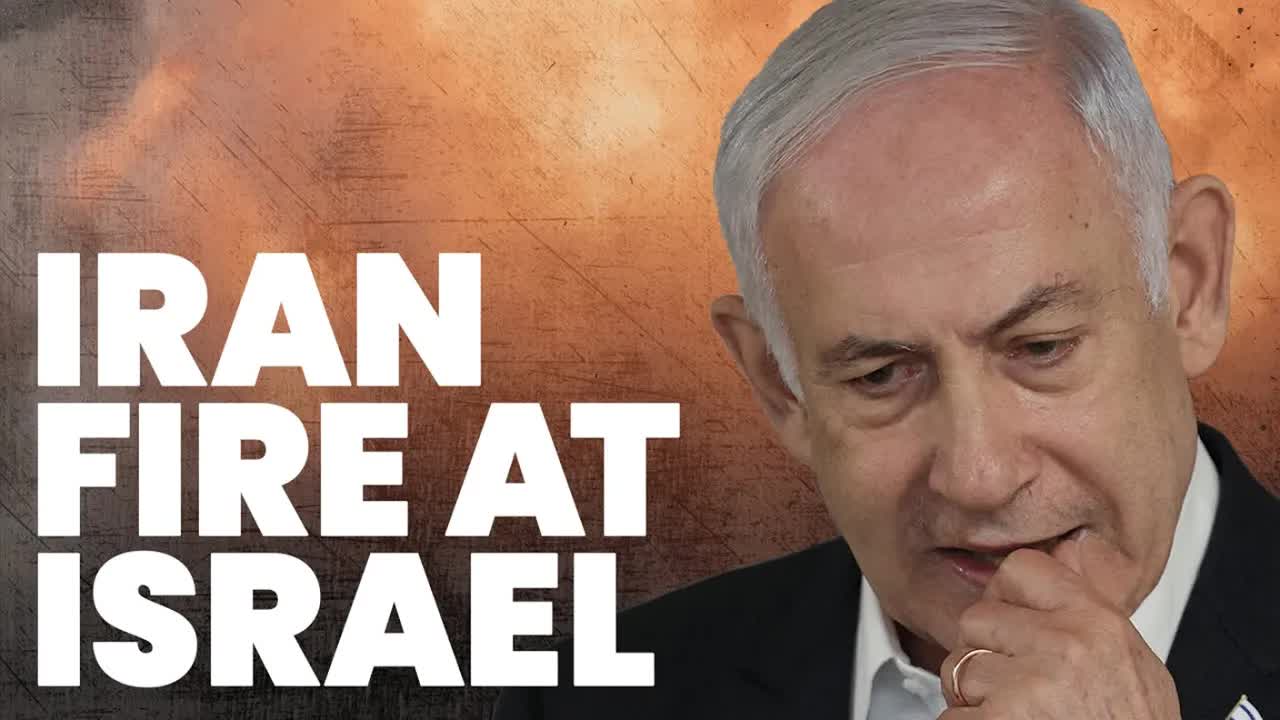
In the ever-evolving landscape of Middle Eastern politics, the anticipation surrounding Iran’s next move has reached a fever pitch.
Reports indicate that Iran may be gearing up to launch a ballistic missile, a response many experts deem necessary given the recent escalations in the region.
This comes on the heels of a series of missile attacks that have largely been thwarted by Israeli defenses, leaving Iran in a precarious position where inaction could be perceived as weakness.
To shed light on this situation, we turn to Richard Spencer, a seasoned correspondent for The Times, who has extensive experience reporting from the Middle East.
Speaking from Tel Aviv, Spencer highlighted that the intelligence suggesting Iran’s potential missile launch is still preliminary.
However, it underscores the urgency of Iran’s need to respond to the dramatic events that have unfolded in recent weeks.
The backdrop to this tension includes significant losses suffered by Iran’s allies, particularly Hamas and Hezbollah, whose command structures have been severely compromised by Israeli operations.
Given these circumstances, it seems increasingly likely that Iran’s response will involve missile strikes, as they have limited options for retaliation without risking further escalation.
Iran’s predicament is compounded by a history of setbacks over the past few years, including the assassination of Qasem Soleimani, the head of the Quds Force, and the targeted killing of key figures in their nuclear program.
These events have left Iran feeling cornered, and failing to respond to the latest provocations would further diminish its standing in the region.
As we probe deeper into the complexities of this conflict, one pressing question arises: How did Israeli intelligence fail to anticipate Hamas’ plans for the devastating October 7th attacks?
Spencer noted that there are ongoing inquiries into this intelligence failure.
While some analysts suggest that complacency played a role, others argue that Israeli authorities underestimated Hamas’ capabilities, mistaking military drills for mere posturing.
Moreover, the Israeli media has recently showcased images of tunnels being explored by the Israeli army, which connect Lebanon to Israel.
This has raised concerns about potential incursions by Hezbollah, echoing the tactics used during the October 7th assault.
The challenge for Israel lies in how to effectively address these tunnels while navigating international calls for restraint.
Saudi Arabia’s silence amidst these tensions raises eyebrows as well.
As the kingdom grapples with its own internal reforms under Crown Prince Mohammed bin Salman, its position on the Israeli-Palestinian conflict remains ambiguous.
While Saudi Arabia has historically supported the Palestinian cause, recent developments have complicated its stance, especially with Iran’s growing influence in the region.
As discussions about a two-state solution arise, many observers believe it has become a distant dream.
Current Israeli leadership, particularly Prime Minister Netanyahu, shows little inclination to pursue peace negotiations, leaving the future of the Palestinian people uncertain.
The Arab world, too, appears fragmented, lacking a unified approach to pressure Israel into accepting a Palestinian state.
The humanitarian crisis in Syria adds another layer of complexity.
Reports indicate that thousands are fleeing Lebanon into Syria, a country still reeling from its own conflicts.
The situation for these refugees is dire, as many fear returning to a war-torn homeland where safety is far from guaranteed.
The United Nations peacekeeping force in Lebanon, known as UNIFIL, has faced scrutiny over its effectiveness in curbing Hezbollah’s military buildup.
Critics argue that, despite its long-standing presence, UNIFIL lacks the mandate to confront Hezbollah directly, rendering it somewhat ineffective in a rapidly changing security environment.
As the situation unfolds, the need for a comprehensive solution becomes increasingly urgent.
The cycle of violence and retaliation has left both Israelis and Palestinians in a precarious position, with no clear path forward.
With regional powers like Iran and Saudi Arabia playing pivotal roles, the stakes have never been higher.
The complexities of Middle Eastern politics continue to challenge even the most seasoned analysts.
As we look to the future, the question remains: can diplomacy prevail in a region where conflict has become the norm?
Only time will tell if a lasting resolution can emerge from the chaos.
Read more
