








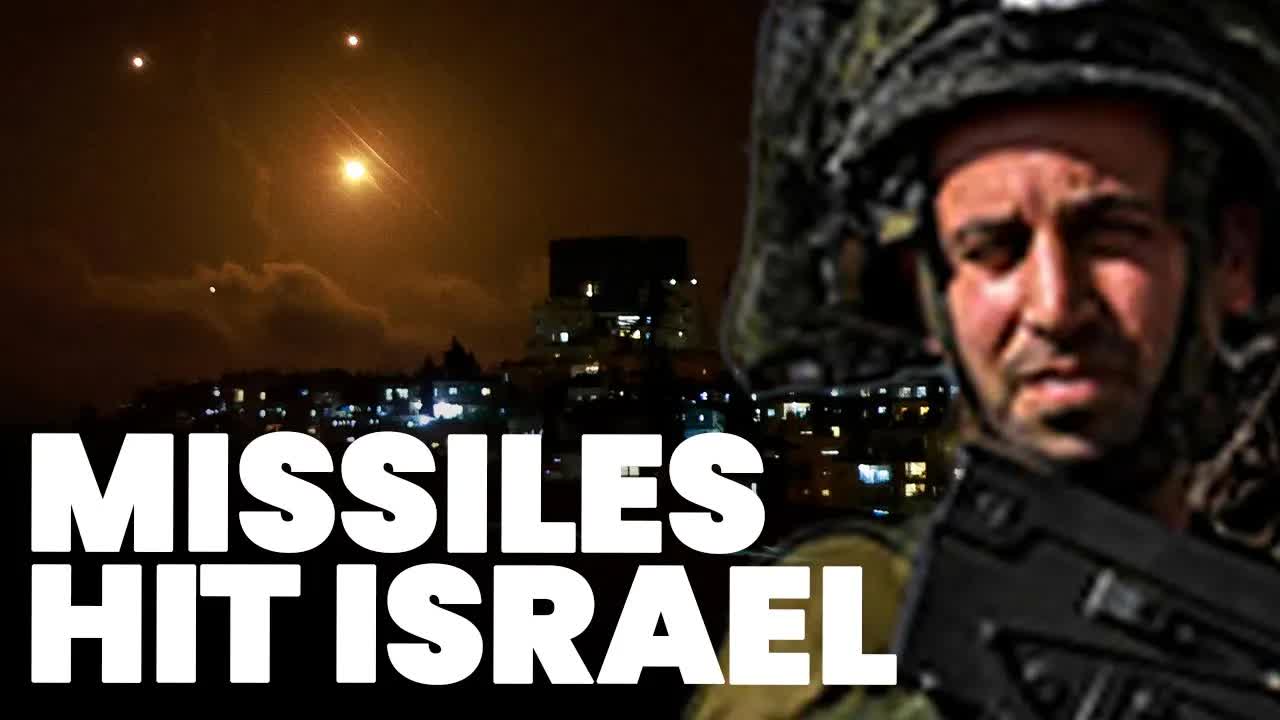
Explosions echoed through the streets of Tel Aviv, marking a troubling escalation in the ongoing conflict.
Reports indicate that interceptor rockets were launched in response to incoming missiles, raising urgent questions about Israel’s defense capabilities and the potential for further violence.
As the situation unfolds, the effectiveness of the Iron Dome defense system will be critical in determining the safety of civilians in the area.
Richard Splinter, reporting live from Tel Aviv, provided insight into the chaos surrounding him.
After hurriedly seeking refuge in his hotel’s basement shelter, he described the atmosphere filled with anxiety as sirens wailed in the background.
The barrage of missiles had been anticipated, yet the reality of the attack was jarring.
Richard expressed concern that while some missiles may have been intercepted, others could still be on their way, increasing the urgency of the situation.
The tension in Tel Aviv is palpable, with citizens on high alert.
Richard shared that the explosions he heard seemed to be defensive measures rather than incoming strikes.
However, the uncertainty looms large; the question remains whether the Iron Dome can effectively neutralize all threats.
This immediate crisis has sparked discussions about the broader implications of such an attack, particularly regarding Iran’s involvement and intentions.
When asked about the potential for escalation, Richard reflected on the dynamics between Israel and Iran.
He emphasized that while Israel is keen on maintaining its security, it is also wary of provoking a full-scale war.
The prevailing sentiment seems to be that both sides are cautious, with Iran likely not wanting to escalate tensions to a point of no return.
Richard noted that Iran’s primary ally in the region, Hezbollah, complicates the situation, and Israel’s recent military actions have demonstrated its capabilities.
As the conversation shifted to the Israeli government’s stance, Richard pointed out the diverse opinions within the coalition led by Prime Minister Netanyahu.
Some factions are eager for a decisive confrontation, while others advocate for a more measured approach, focusing on immediate threats like Hezbollah.
The internal debate highlights the complexity of Israel’s military strategy and its hesitations regarding direct conflict with Iran.
Despite the tensions, Richard suggested that Israel has contingency plans in place for various scenarios, including potential confrontations with Iran.
However, there remains a reluctance to act unilaterally without American support, especially given the historical reliance on U.S. backing during crises.
Netanyahu’s rhetoric may suggest a willingness to act independently, but the reality is more nuanced.
The role of the United States in this volatile situation cannot be understated.
Richard articulated that when Israel faces direct threats, American support tends to solidify.
The U.S. often rallies behind Israel, reinforcing the notion of unwavering alliance.
However, this dynamic shifts when peace talks are on the table, at which point American voices might push for diplomacy rather than military action.
In the midst of this turmoil, Richard’s insights shed light on the complicated interplay of military strategy, political considerations, and international relations.
The urgency of the current situation underscores the precarious balance that Israel must navigate in protecting its citizens while avoiding a larger conflict.
As the night wears on in Tel Aviv, the city remains on edge.
Residents are left to grapple with the uncertainty of their safety, aware that each explosion carries the weight of potential devastation.
Richard, from his makeshift shelter, exemplifies the resilience of those caught in the crossfire, even as he conveys the gravity of the unfolding events.
This latest round of missile exchanges serves as a stark reminder of the ongoing volatility in the region.
With each passing moment, the stakes rise higher, and the world watches closely.
Richard’s report underscores the immediate need for vigilance and the hope that cooler heads will prevail amidst the chaos.
The situation in Tel Aviv is far from resolved, and as the hours progress, the implications of this escalation will resonate beyond the city’s borders.
The international community remains alert, anticipating the next moves from both Israel and Iran.
In this charged atmosphere, the quest for peace feels more elusive than ever, leaving many to wonder what the future holds for this troubled region.
Read more
