









In a world where economic policies often spark debates, tariffs have emerged as a particularly contentious topic.
Recently, former President Donald Trump reignited discussions by proposing significant tariffs on Chinese goods, a move that has drawn mixed reactions within the Republican Party.
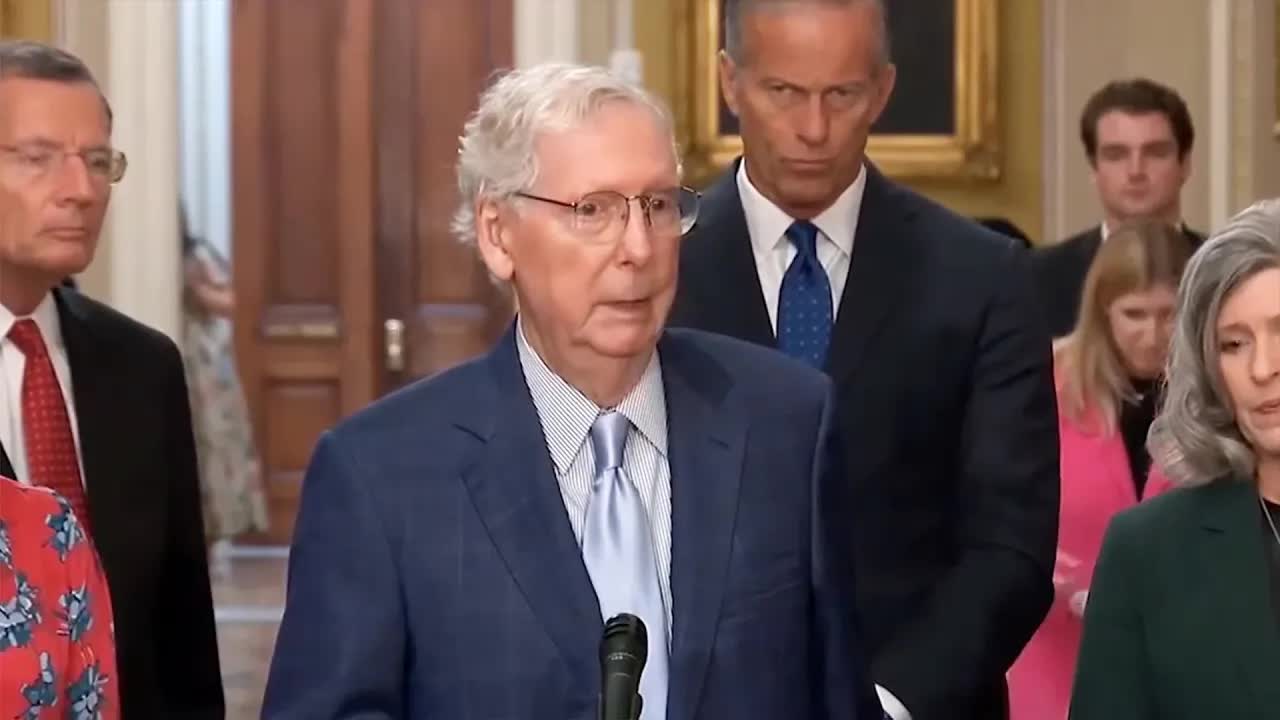
Mitch McConnell, the Senate minority leader, expressed his disapproval of Trump’s tariff plans, highlighting the potential consequences for American consumers.
Trump’s strategy revolves around imposing a blanket tariff ranging from 10 to 20 percent on Chinese imports.
This proposal isn’t just limited to general products; he has even threatened a staggering 200 percent tariff on John Deere tractors if the company shifts production to Mexico.
For Trump, tariffs appear to be the go-to solution for addressing various economic challenges, from the national deficit to funding childcare.
It’s as if tariffs are his only tool in a toolbox filled with nails.
When asked about Trump’s tariff proposals, McConnell didn’t mince words.
He stated, “I’m not a fan of tariffs.
They raise prices for American consumers.”
Instead, he champions free trade, recalling the job opportunities that arise from robust export activities.
His comments reflect a broader concern within the GOP about the impact of such tariffs on the economy and everyday Americans.
This raises an interesting question: When might tariffs actually be beneficial?
While they are often criticized, there are scenarios where tariffs could serve a purpose without necessarily inflating prices.
The effectiveness of tariffs largely hinges on industry competitiveness, availability of substitutes, and overall market dynamics.
Consider this: if the U.S. imposes tariffs on a good that it doesn’t produce in sufficient quantity or quality, consumers may continue to rely on imports, despite the added tariff cost.
Take electronics, for instance.
If tariffs are placed on Thai electronics and American alternatives are subpar or nonexistent, consumers will still purchase the more expensive imported goods, leading to inflation rather than relief.
Similarly, if there are few alternative sources for a product, tariffs can drive up domestic prices.
Imagine a unique luxury item from abroad with no domestic equivalent.
If a tariff is imposed on that item, consumers will face higher costs with no local options to mitigate the increase.
Market dynamics also play a crucial role.
Factors like the power of importers and exporters, as well as supply chain disruptions, can significantly influence the outcome of tariff implementation.
For example, tariffs on auto parts from China could disrupt the supply chain for American-made vehicles, leading to price hikes that consumers would ultimately bear.
So, when can tariffs be applied without causing domestic inflation?
The key lies in having ample domestic alternatives available.
If the U.S. can source similar products from other countries or produce them locally, tariffs can be implemented without burdening consumers.
For instance, if a tariff is placed on Chinese sumo oranges but Chilean producers step in to fill the gap, American consumers could avoid price increases while still applying economic pressure on China.
However, Trump’s proposed tariffs on Chinese goods are likely to lead to higher prices for consumers.
Many essentials are sourced from China, and without adequate domestic substitutes, the result will be increased costs across the board.
Companies relying on Chinese materials will face rising production expenses, which they will inevitably pass on to consumers.
Moreover, the assumption that foreign producers will absorb tariff costs often proves false.
Historical evidence suggests that when tariffs are enacted, prices don’t simply drop on the other side of the ocean to offset the additional costs.
Instead, consumers in the U.S. frequently end up footing the bill.
In summary, while there are instances where tariffs can be wielded effectively, the blanket approach championed by Trump is fraught with risks.
McConnell’s skepticism toward such measures reflects a deeper understanding of their potential pitfalls.
As the debate continues, it remains clear that tariffs are a complex tool that require careful consideration and strategic application to avoid unintended consequences for the economy and American consumers.
Read more
