









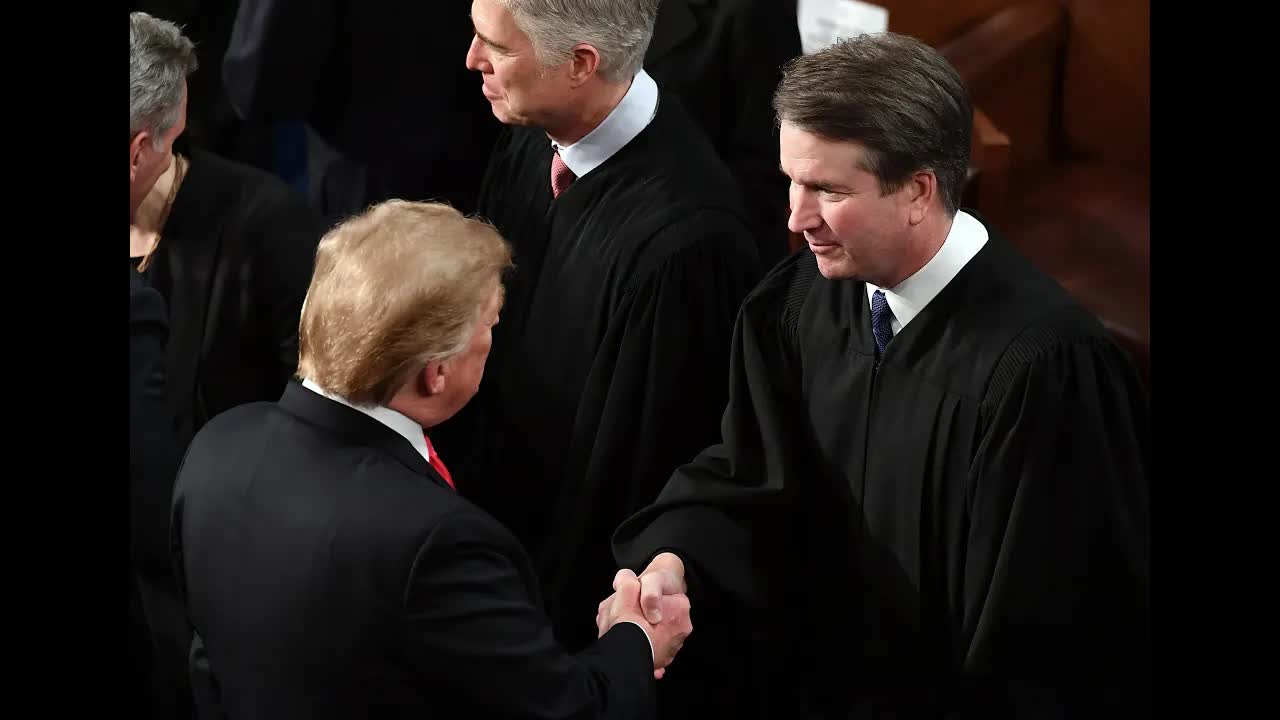
Recent revelations have shed new light on the controversial confirmation of Supreme Court Justice Brett Kavanaugh, particularly regarding Donald Trump’s alleged interference during the investigation into sual misconduct claims against him.
This fresh reporting raises serious questions about the integrity of the judicial process and the lengths to which Trump may have gone to ensure his nominee’s success.
According to Senator Sheldon Whitehouse, Trump’s administration effectively stifled an FBI investigation into Kavanaugh’s past.
While Kavanaugh faced accusations from Christine Blasey Ford and others during his confirmation hearings, many are now questioning whether the FBI was ever genuinely allowed to pursue these allegations.
Instead, it appears that the White House took control of the narrative, limiting the FBI’s ability to act on the 4,500 tips received from the public.
During the confirmation process, the FBI established a tip line for citizens to share any relevant information about Kavanaugh.
However, rather than investigating these claims, the FBI reportedly handed the information directly to Trump and his team.
This maneuver raises eyebrows—what good is a tip line if the information is simply buried at the behest of those in power?
It’s hard not to wonder what Trump did with those 4,500 tips.
Could he have used them as leverage against Kavanaugh?
Given Trump’s history of wielding information to his advantage, it’s a valid concern.
This situation highlights a troubling dynamic where a president can manipulate investigations to protect his interests.
The core issue here revolves around the relationship between the FBI and the executive branch.
Typically, the FBI operates as an independent law enforcement agency.
However, when conducting background checks for nominees, they often find themselves acting more like a service for the requesting official—in this case, Trump.
This shift in roles raises significant ethical questions about the FBI’s independence and its commitment to justice.
Moreover, the constraints placed on the FBI were alarming.
Reports indicate that the agency was not permitted to interview key figures like Ford and Kavanaugh, effectively halting any meaningful inquiry into the allegations.
The idea that the White House could dictate the terms of an FBI investigation is deeply concerning and undermines the very foundation of accountability.
As we look ahead, the implications of these revelations are profound.
If Trump were to regain power, would we see a further erosion of the FBI’s independence?
The fear is that the agency could become an extension of the Oval Office, used to target political opponents and shield allies from scrutiny.
This situation also serves as a stark reminder of the potential consequences of Trump’s Project 2025, which aims to reshape federal agencies to align with his agenda.
The weaponization of government resources for personal gain poses a threat not only to the judicial system but to democracy itself.
The failure to investigate the allegations against Kavanaugh is just one piece of a larger puzzle.
It reflects a pattern of behavior that prioritizes political expediency over justice and accountability.
This trend could lead to a Supreme Court populated by justices who disregard constitutional rights in favor of partisan agendas.
As the nation approaches the next election, the importance of voter participation cannot be overstated.
Engaging in the electoral process is crucial to safeguarding democratic institutions from those who would exploit them for personal gain.
Early voting offers an opportunity to ensure that every voice is heard without the intimidation that may arise on Election Day.
In this charged political climate, it’s vital for citizens to remain vigilant and proactive.
Early voting not only helps ensure your vote is counted but also diminishes the chances of encountering potential voter intimidation tactics.
It’s a small step, but one that can make a significant difference in the outcome of future elections.
As we navigate these turbulent waters, let’s commit to staying informed and involved.
The stakes are high, and the future of our democracy hangs in the balance.
Engaging in discussions, sharing information, and encouraging others to vote can help us collectively steer towards a more just and equitable society.
Read more
