





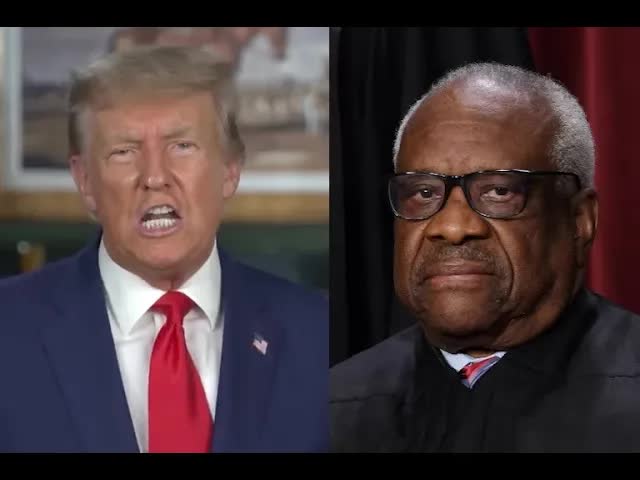
In a recent episode of “The Legal Breakdown,” hosts Glenn Kirschner and Brian Tyler Cohen tackled a pressing question from viewers regarding the ethical conduct of Supreme Court justices.
The inquiry centered on whether these high-ranking officials could be criminally charged for their actions, particularly in light of ongoing controversies surrounding Justice Clarence Thomas.
Kirschner was quick to affirm that yes, Supreme Court justices can indeed face criminal charges.
If sufficient evidence exists to establish probable cause, a grand jury can issue an indictment, leading prosecutors to pursue legal action.
This is a significant point, underscoring that no one, regardless of their position, is above the law.
The discussion turned to Justice Thomas, who has faced scrutiny for alleged violations of financial disclosure laws.
Kirschner recounted his own experiences as a federal prosecutor, emphasizing the rigorous nature of financial disclosure forms.
He recalled the anxiety he felt while completing these forms, fearing even minor mistakes could lead to serious repercussions.
In stark contrast, Thomas reportedly accepted extravagant gifts without proper disclosure, raising questions about his adherence to the same standards.
One particularly glaring example involved Thomas receiving a luxury recreational vehicle valued at around $250,000 from a wealthy Republican donor.
Initially presented as a loan, the donor later forgave the debt, a situation that should have been disclosed but was not.
Such omissions could lead to civil penalties, and if found to be intentional misstatements, they could also result in criminal charges under federal law.
Kirschner pointed out that any Supreme Court nominee who lies during their Senate confirmation hearings could face severe consequences, including prison time.
He highlighted past instances where justices, under oath, claimed that established precedents like Roe v. Wade were settled law, only to later overturn them, potentially exposing themselves to charges of making false statements.
Despite the legal framework allowing for the prosecution of justices, Kirschner expressed skepticism about whether government institutions would take action.
He raised the question of who would initiate investigations into potential misconduct by justices, noting that the Department of Justice (DOJ) and the FBI would be responsible for such inquiries.
There have already been calls from lawmakers, such as Senators Sheldon Whitehouse and Ron Wyden, urging the DOJ to investigate Thomas and Justice Samuel Alito for their acceptance of lavish gifts.
These requests stem from concerns that the justices may have failed to report significant gifts, raising further ethical and legal questions.
Kirschner also pondered whether these justices reported their extravagant gifts on their tax returns.
Given the scale of the gifts, it seems unlikely that they complied with tax obligations, suggesting potential tax crimes.
This adds another layer to the already complex situation surrounding financial disclosures.
A recent ProPublica article highlighted Thomas’s acknowledgment of his failure to disclose free trips from a billionaire donor.
This admission raises serious questions about accountability and transparency among Supreme Court justices.
If a regular citizen were to make similar errors, the repercussions would likely be severe.
The discussion underscored the disparity between the treatment of ordinary citizens and those in positions of power.
While everyday individuals face harsh penalties for minor mistakes in financial reporting, justices seem to operate under a different set of rules.
This inconsistency fuels public distrust in the judicial system.
Ultimately, the conversation reveals a crucial need for accountability among those who hold the highest offices in the land.
As Kirschner noted, the expectation is that justices should exercise sound judgment, given their role in interpreting the law.
The apparent lack of action from the DOJ and the FBI in investigating these serious allegations raises concerns about the integrity of the judicial system.
This episode of “The Legal Breakdown” serves as a reminder of the importance of transparency and ethical conduct among Supreme Court justices.
As the public continues to scrutinize their actions, the hope remains that justice will prevail, regardless of one’s status.
Read more
