









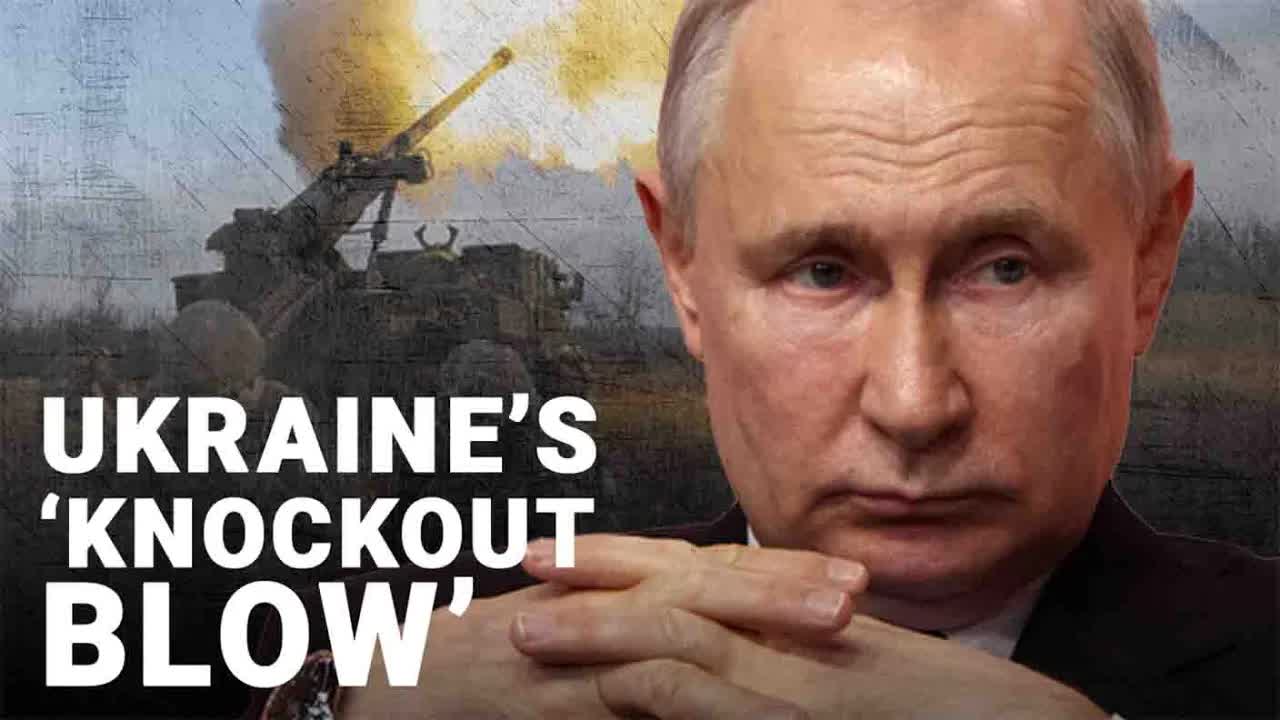
In a significant escalation in the ongoing conflict between Ukraine and Russia, the Black Sea Fleet headquarters in Sevastopol has reportedly been hit by Storm Shadow missiles.
This attack raises questions about Russia’s claims regarding the territories it has annexed from Ukraine.
Despite holding referendums to assert control over these regions, the reality on the ground suggests a different narrative.
Russian government buildings, schools, and websites now depict these areas as part of Russia, yet Ukraine continues to conduct strikes within them, indicating a complex and evolving situation.
James Hanson, host of Frontline on Times Radio, recently engaged with Justin Crump, a British Army veteran and CEO of the strategic advisory firm Sibylline, to delve deeper into the implications of this attack.
The discussion began with the ongoing UN General Assembly in New York, where Ukrainian President Volodymyr Zelensky is actively seeking support for his victory plan.
Crump expressed cautious optimism about Western allies adopting this plan, noting that while support for Ukraine has exceeded Russian expectations, it has still fallen short of what Ukraine needs.
The unity among Western countries that emerged early in the war surprised many, including Moscow.
However, as time has passed, fractures have appeared within this coalition.
Crump emphasized that consensus among diverse stakeholders often leads to watered-down outcomes, suggesting that Ukraine may need to adjust its expectations regarding unconditional support.
He likened this to negotiations in business, where asking for more than needed can sometimes yield better results.
The conversation then shifted to the military aid Ukraine receives, particularly concerning Storm Shadow and Scout missiles.
Crump noted a delay in allowing Ukraine to use these weapons against targets inside Russia, attributing this hesitance to fears of escalation from the U.S. administration.
He argued that Russia has consistently pushed the boundaries of what the West considers acceptable, often ignoring established red lines without facing significant repercussions.
Crump pointed out that the Kremlin’s propaganda has effectively instilled a sense of paralysis in Western support for Ukraine.
The ongoing debate about red lines and military aid reflects a broader concern about how to assist Ukraine without provoking a direct conflict with Russia.
He highlighted the irony that while Ukraine has conducted successful strikes within contested territories like Crimea, the reaction to these actions has not been consistent with the supposed red lines set by Russia.
The discussion also touched on the complexities of military strategy and the importance of surprise in warfare.
Crump criticized the notion of announcing military plans in advance, suggesting that doing so only allows the enemy to prepare.
He underscored that the fear of escalation often leads to indecision among Western allies, which ultimately hampers Ukraine’s ability to effectively counter Russian aggression.
As the dialogue progressed, Crump addressed the role of the U.S. in the alliance, explaining that American approval is crucial for Ukraine’s use of certain weaponry.
He noted that while the U.K. has been proactive in supporting Ukraine, there remains a collective desire among NATO members to act in unison, avoiding unilateral decisions that could jeopardize the alliance’s cohesion.
The conversation turned to the potential implications of the upcoming U.S. presidential election on Ukraine’s support.
Crump acknowledged the uncertainty surrounding a possible second Trump presidency, suggesting that such a scenario could complicate Ukraine’s position.
He emphasized that Ukraine is keen to secure as much support as possible before any potential shifts in U.S. policy occur.
In terms of the current battlefield dynamics, Crump described the situation in eastern Ukraine as one of grinding conflict, with Russia making incremental advances.
He noted that while Ukraine has had tactical successes, these have not translated into broader strategic victories.
The looming mud season poses additional challenges for military operations, making it imperative for both sides to capitalize on their current positions.
Ultimately, the discussion highlighted the intricate interplay of military strategy, international relations, and domestic politics that shapes the ongoing conflict in Ukraine.
As both sides brace for the challenges ahead, the urgency for Ukraine to solidify its support and achieve its objectives remains paramount.
The coming months will be crucial in determining the trajectory of this protracted conflict as global attention remains focused on the unfolding events.
Read more
