




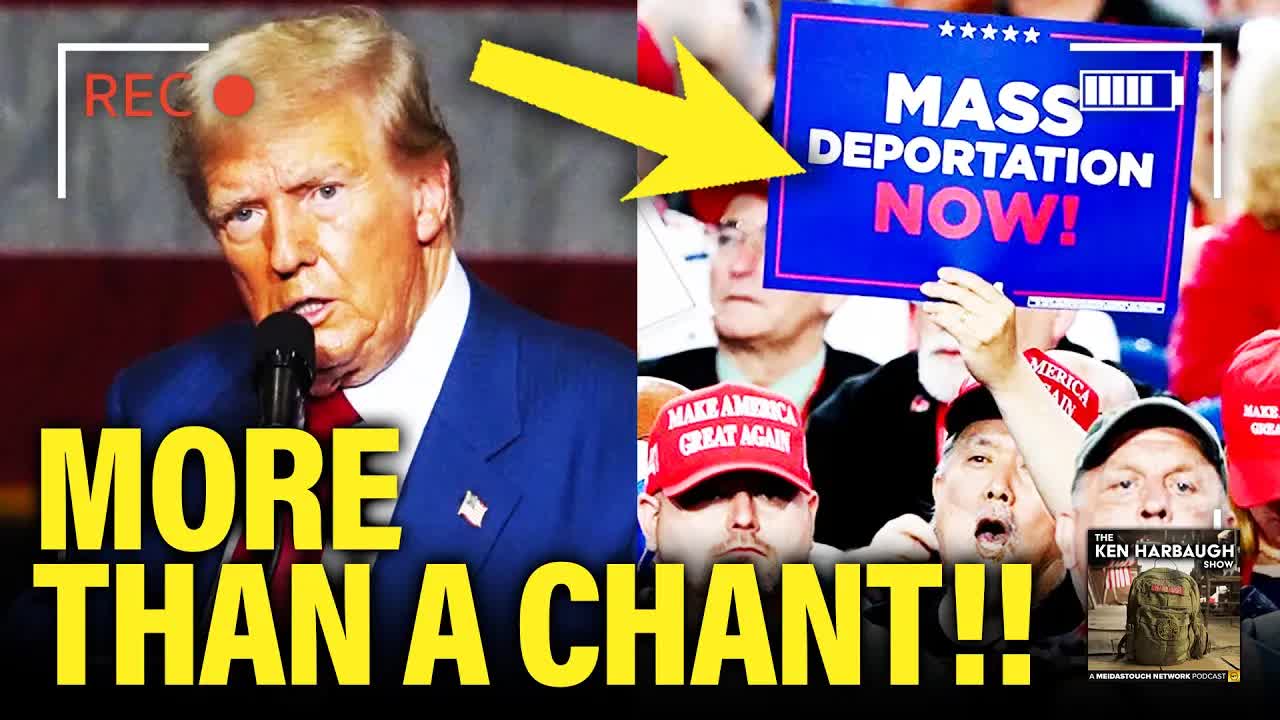
In a recent discussion on the Ken Harbaugh Show, the spotlight turned to Springfield, Ohio, where tensions have escalated due to inflammatory remarks directed at Haitian immigrants.
The conversation, featuring award-winning director Charlie Sadov, delved into the alarming rhetoric being used by political figures, including former President Trump and Senator J.D.
Vance.
Their comments have ignited a firestorm of controversy, raising questions about the underlying currents of racism that persist in American society.
Sadov, known for his film “Against All Enemies,” emphasized that the narratives surrounding race and immigration are deeply rooted in the fabric of American history.
He pointed out that the hostility towards Haitian immigrants is not a new phenomenon but rather a continuation of a long-standing tradition of scapegoating marginalized communities.
This troubling trend was echoed in the words of Louis Beam, a figure from the film, who infamously rallied his followers against Haitians, framing them as invaders threatening American jobs.
The parallels between Beam’s rhetoric and the current political climate are striking.
Sadov noted that the language employed by Trump and Vance is no longer subtle; it’s overt and aggressive, almost like a shout rather than a whisper.
This shift reflects a broader strategy that seems to be designed to rally a base around fear and division, especially as the election season heats up.
It raises the question: what does this mean for the future of American democracy?
Ohio, once considered a critical battleground state, has seen its political landscape shift dramatically.
According to Sadov, the recent comments are not merely tactical moves aimed at winning votes; they represent a deeper ideological commitment to a vision of America that excludes those who do not fit a specific mold.
This vision, articulated by Beam, seeks to establish a nation dominated by white Christian values, targeting not just Haitians but also Jews, Mexicans, and anyone else deemed “other.”
The implications of this rhetoric extend beyond mere political maneuvering.
Sadov warned that such inflammatory discourse fosters an environment where extremist groups feel empowered.
He highlighted the presence of neo-Nazi elements in Springfield, suggesting that these groups are capitalizing on the fear and division sown by political leaders.
This situation raises concerns about the potential for violence and unrest, reminiscent of darker chapters in American history.
Moreover, the conversation touched on the strategic aspect of this rhetoric.
Sadov pointed out that figures like Mike Flynn are likely orchestrating efforts to mobilize these extremist factions.
The intertwining of Trump’s platform with the agendas of far-right groups creates a dangerous synergy that threatens to undermine democratic principles.
This is not just about winning an election; it’s about shaping the very fabric of American society.
As the dialogue unfolded, the hosts reflected on the chilling normalization of racist rhetoric in political discourse.
The once-hidden whispers of racism have transformed into loud declarations, emboldening those who harbor such beliefs.
This shift invites a critical examination of how these sentiments are received by the public and the potential consequences for social cohesion.
Despite the bleak outlook, there remains a glimmer of hope.
Sadov expressed a belief that if Americans fully grasped the implications of this rhetoric, they would reject it.
He argued that a well-informed public could counteract the divisive narratives being pushed by political leaders.
However, he acknowledged the challenges posed by a media landscape that often fails to contextualize these issues adequately.
The discussion concluded with a call to action for the media and the public alike.
It is imperative to shine a light on these dangerous ideologies and to engage in meaningful conversations about race and immigration.
Only by addressing these issues head-on can society hope to forge a path toward unity and understanding.
In light of these revelations, the future of Springfield—and indeed, the country—hangs in the balance.
The ongoing struggle against hate and division is far from over, and it will require vigilance, compassion, and a collective effort to ensure that the ideals of inclusion and equality prevail.
As Sadov aptly put it, the America we envision for future generations must be one that stands firmly against the tide of hatred.
Read more
