









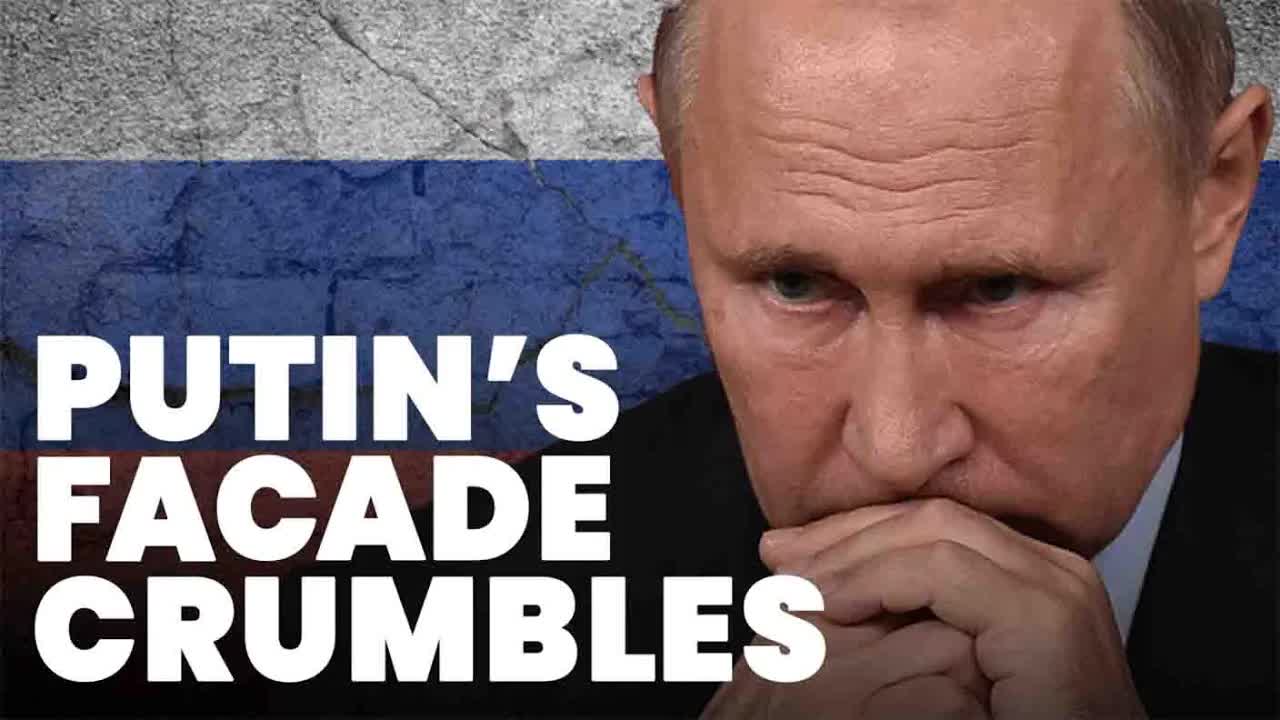
In a world increasingly polarized by geopolitical tensions, the recent gathering of leaders from Russia, China, India, and Turkey under the BRICS banner has raised eyebrows and sparked discussions about the shifting dynamics of international relations.
This summit, which marked the largest congregation of world leaders in Russia since the onset of the Ukraine conflict over two years ago, was touted by President Vladimir Putin as evidence that Western efforts to isolate Russia have faltered.
But is this really the case?
The BRICS nations, originally a coalition of Brazil, Russia, India, and China, have expanded to include South Africa and several other countries, including Iran and Saudi Arabia.
While the summit aimed to showcase solidarity among these nations, analysts suggest that the actual support for Russia’s military endeavors remains limited.
For instance, while Iran is actively supplying drones to aid Russia’s war efforts, North Korea’s involvement appears more speculative at this point.
Indian Prime Minister Narendra Modi’s assertion that BRICS is “non-Western” rather than anti-Western reflects a careful diplomatic balancing act.
India, much like China, is keen on maintaining its global standing without jeopardizing relationships with Western powers.
The reality is that both India and China are treading lightly around Russia, avoiding overt support that could alienate their own economic interests in the West.
Stephen D. L., a former senior Russian affairs analyst at the BBC, weighed in on the significance of the summit.
He quoted Jim O’Neill, the creator of the BRIC acronym, who recently downplayed the relevance of the BRICS coalition.
Despite Putin’s attempts to project an image of global camaraderie, the actual influence of this group in the face of Western sanctions remains questionable.
The summit also featured leaders from Turkey and other countries, creating a diverse mix of political agendas.
While Turkey’s President Erdogan enjoys mingling with authoritarian figures, his country’s participation does not necessarily translate into substantial economic collaboration with Russia.
In fact, many of these nations are reluctant to fully embrace an alliance that could jeopardize their own trade relations with the West.
Despite the mixed signals from these nations, the gathering does provide Putin with a platform to reinforce his narrative of resilience against Western isolation.
By showcasing images of handshakes and camaraderie, he aims to project strength to his domestic audience, reassuring them of Russia’s standing on the global stage.
However, the economic reality tells a different story.
While India has increased its imports of Russian oil and gas, the overall trade volume among BRICS nations remains modest compared to the global economy.
Furthermore, the notion that these countries could collectively challenge the dominance of the U.S. dollar is largely seen as unrealistic.
As discussions continue, concerns linger about the implications of Russia’s alliances.
With North Korea reportedly considering sending troops to support Russia, and Iran’s ongoing military assistance, the potential for these pariah states to bolster Russia’s war efforts cannot be dismissed entirely.
Yet, the level of commitment from these countries varies significantly.
In a related development, UK Labour leader Sir Keir Starmer highlighted the threat posed by Russia to global food security, particularly through intensified attacks on Ukrainian ports.
These strikes have disrupted grain exports, a critical lifeline for many nations reliant on Ukrainian agriculture.
Such actions may signal a renewed strategy by Russia to leverage its military capabilities in the economic realm.
As the situation unfolds, it becomes clear that the BRICS summit serves multiple purposes.
For some, it’s a chance to engage with a powerful ally; for others, it’s a delicate dance of diplomacy that seeks to avoid upsetting the balance of global power.
The coming weeks will reveal whether these alliances can withstand the pressures of international scrutiny and economic realities.
Ultimately, while the BRICS nations may present a united front, the underlying complexities of their relationships with Russia and each other reveal a landscape fraught with contradictions.
As the world watches, the true impact of these alliances on the ongoing conflict in Ukraine and the broader geopolitical climate remains uncertain.
Read more
