


In recent weeks, a palpable shift has been observed among Republican leaders as they begin to grapple with the unsettling reality that former President Donald Trump may not secure a victory in the upcoming election.
It seems many are now scrambling to position themselves on record, perhaps hoping to mitigate any backlash should the tide turn against Trump.
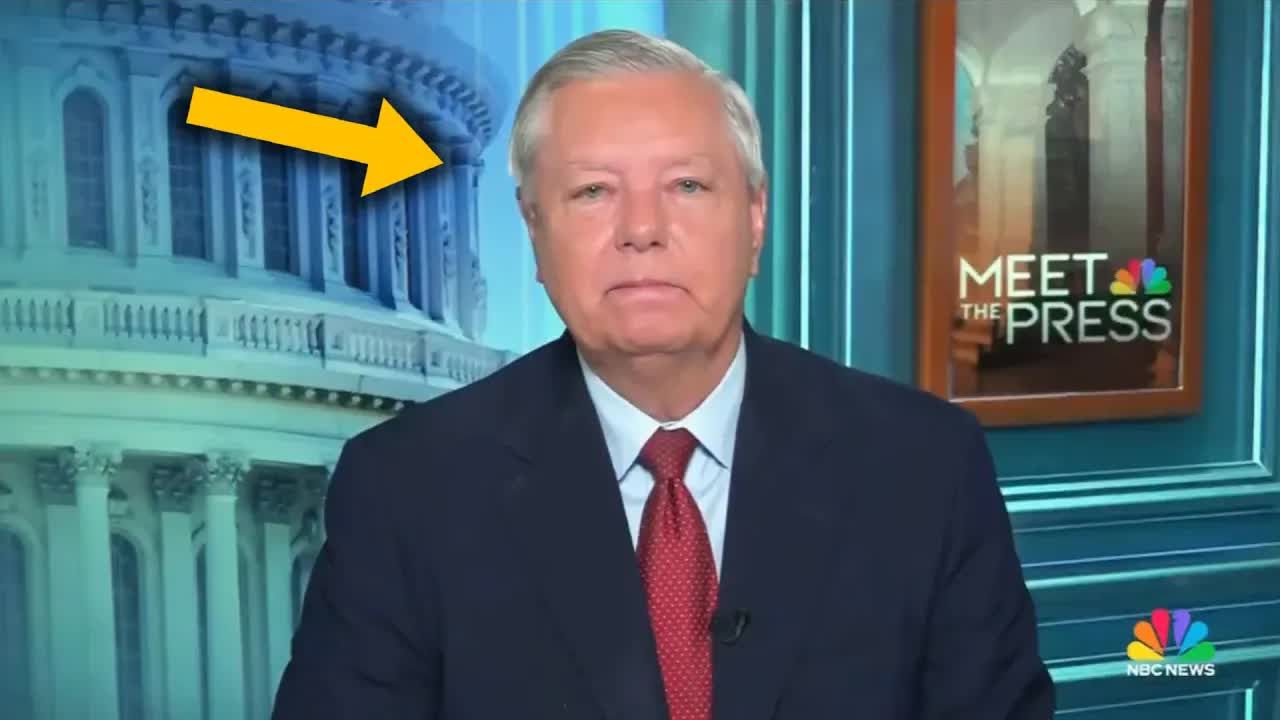
This sentiment was echoed in discussions surrounding a recent clip featuring Senator Lindsey Graham.
As conversations unfolded online, some commentators suggested that while Republicans might be vocal about their concerns, they are unlikely to openly admit that Trump could lose.
Instead, there’s a growing fear that if the election results are close, Trump may once again cry foul, claiming the election was stolen.
The truth is, if the margins are razor-thin in key states, we could see a repeat of his previous tactics.
However, there’s a silver lining: if voters show up in droves, delivering a decisive landslide victory, even the staunchest Trump allies might find it hard to support his claims of victory.
Senator Graham recently appeared on “Meet the Press,” where he expressed a dual perspective on Trump’s candidacy.
He noted that there exists a version of Trump capable of winning the election, yet the current iteration—characterized by his provocative and theatrical style—might not be enough to clinch the win.
Graham’s remarks raise an interesting question: can Trump pivot from being a showman to a serious candidate in the final stretch of the campaign?
Graham emphasized the need for Trump to articulate a clear vision for America, focusing on crucial issues like immigration and inflation.
However, critics argue that when Trump does discuss policy, his proposals often leave much to be desired.
For instance, his plans for tariffs could exacerbate inflation for everyday families, and his commitment to reviving the controversial border wall program raises eyebrows.
Moreover, Trump’s approach to governance has drawn scrutiny, particularly regarding his inclination to appoint loyalists rather than qualified professionals to key positions within the federal government.
This trend, coupled with his track record of selecting extreme judges, has many worried about the long-term implications for American democracy and media freedom.
The spectacle of Trump’s rallies, once vibrant and electric, appears to be losing steam.
Recent events, such as one in Wilkes-Barre, Pennsylvania, saw attendees leaving mid-speech, signaling a potential waning enthusiasm among his base.
As Graham contemplates the future of Trump’s campaign, he seems to recognize that the showman persona may not resonate with voters looking for substantive leadership.
Adding to the chorus of Republican voices, New Hampshire Governor Chris Sununu has also weighed in, labeling some of Trump’s recent comments as “asinine.” Yet, despite this critique, Sununu remains committed to supporting Trump, underscoring a complex dynamic within the party.
This raises an intriguing point: how do party members reconcile their discontent with Trump’s rhetoric while still backing him as their candidate?
Trump’s comparison of awarding the Presidential Medal of Freedom to a major Republican donor with the Congressional Medal of Honor has sparked outrage.
Critics, including the head of the Veterans of Foreign Wars, have condemned these comments as diminishing the honor associated with military sacrifices.
Sununu acknowledges the inappropriateness of Trump’s remarks but insists that such controversies won’t derail his candidacy.
This pattern of defense among Trump supporters is telling.
When confronted with controversial statements, many choose to downplay their significance, asserting that Trump’s overall appeal outweighs specific missteps.
The narrative often hinges on the belief that the alternative—presumably a Democratic candidate—poses an even greater threat to conservative values.
As the election approaches, it’s clear that Republicans are treading a fine line.
They want to express concern over Trump’s conduct while ensuring they don’t alienate his base.
This balancing act might serve as a safety net for those who wish to maintain their political standing regardless of the election’s outcome.
The undercurrent of uncertainty is palpable.
With Trump’s unpredictable nature and the stakes at play, many party leaders are preparing for various scenarios.
Whether they will ultimately side with Trump or distance themselves remains to be seen, but one thing is certain: the next few months will be critical for the Republican Party as it navigates this tumultuous landscape.
Read more
