








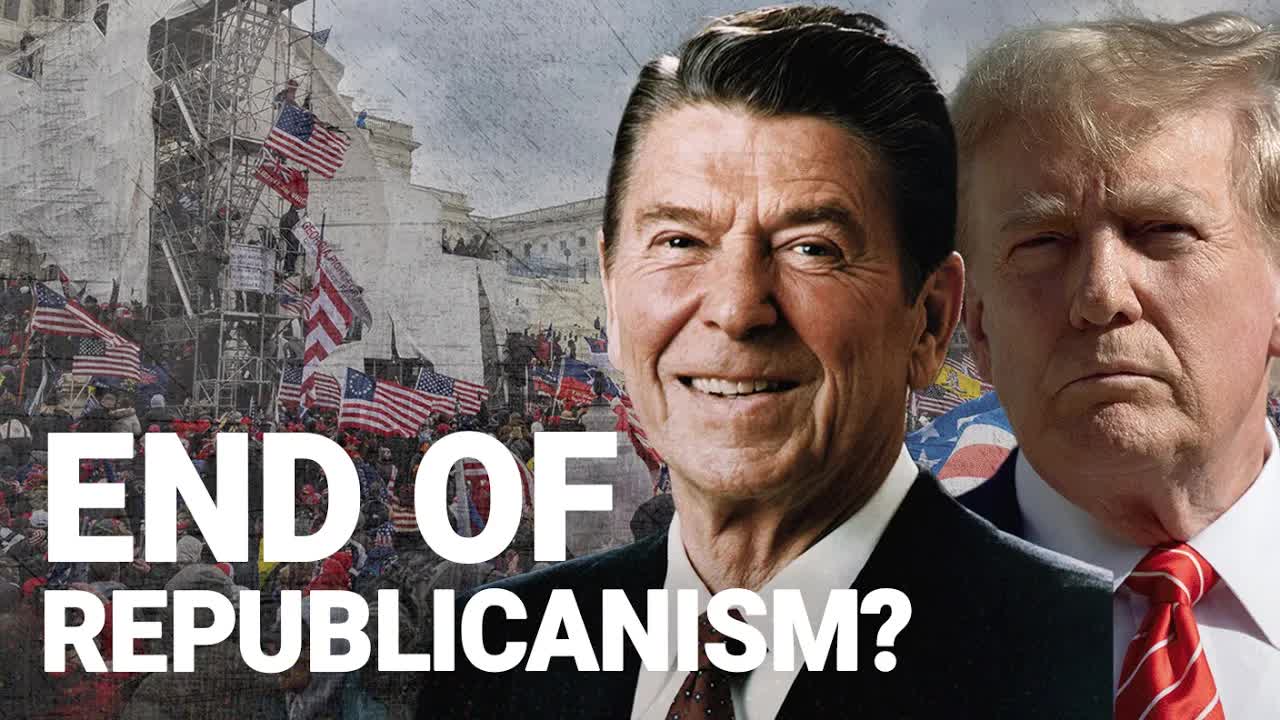
As the United States gears up for its next presidential election, a fascinating comparison is emerging between two prominent figures in American politics: Ronald Reagan and Donald Trump.
Despite their stark differences, many observers are beginning to recognize continuities between these two leaders, both of whom have roots in the entertainment industry.
With just over a month until voters head to the polls, the question arises: how much did Reagan’s presidency set the stage for Trump’s rise?
In a new biography titled “Reagan, His Life and Legend,” author Max Boot delves into this intriguing connection.
Boot, who was too young to vote for Reagan but was deeply influenced by his leadership, reflects on how the former president’s charisma captivated not just Americans but the world during the 1980s.
For Boot, who emigrated from the Soviet Union, Reagan’s strong stance against communism resonated powerfully, shaping his political identity and ultimately leading him to the Republican Party.
However, Boot’s journey has taken a turn.
He credits Trump with prompting him to leave the Republican Party and embrace independence, allowing him to approach Reagan’s legacy with a fresh perspective.
This newfound objectivity, he argues, enables a more balanced examination of Reagan’s impact on contemporary politics.
Boot describes Reagan as a complex figure, revealing that despite his public persona as a warm and engaging leader, he often felt isolated.
Those closest to him noted a certain remoteness in his character—a trait that can be traced back to his challenging childhood in Illinois.
Growing up with an alcoholic father, Reagan learned to keep emotional distance, a pattern that persisted throughout his life, even in his closest relationships.
The parallels between Reagan and Trump are striking, yet Boot emphasizes the significant differences that define their political ideologies.
While Reagan championed free trade and immigration, Trump has adopted a more isolationist and protectionist stance.
Boot argues that both presidents emerged as populists, often criticizing the federal government, yet their visions of America diverge dramatically—one optimistic, the other dark and divisive.
Boot also addresses the troubling aspects of Reagan’s presidency, particularly regarding civil rights.
While Reagan did not employ the overtly racist rhetoric seen in Trump’s era, he nonetheless appealed to white backlash politics, a tactic that began with his early political campaigns.
This legacy raises questions about the deeper implications of his policies and their lasting effects on race relations in America.
One of the most controversial aspects of Reagan’s presidency was his handling of the AIDS crisis.
Boot points out that Reagan’s lack of response to the epidemic in the 1980s was a glaring failure of leadership.
It wasn’t until late in his presidency that he addressed the issue, which led to thousands of unnecessary deaths.
This neglect highlights a darker side of his political persona that is often glossed over in discussions of his achievements.
When considering Reagan’s outsider status, it’s clear that his celebrity background played a significant role in shaping his political identity.
Like Trump, Reagan positioned himself against the establishment, using his showbiz experience to connect with the American public.
However, Boot suggests that Reagan’s pragmatism allowed him to navigate the political landscape more effectively than Trump, who often remains steadfast in his more extreme views.
Despite their shared populism, Reagan’s approach to foreign policy starkly contrasts with Trump’s.
Reagan was a staunch supporter of NATO and international alliances, believing in the importance of standing up to adversaries like the Soviet Union.
Boot asserts that if Reagan were alive today, he would likely advocate for continued support of Ukraine, a position that stands in sharp contrast to Trump’s skepticism.
Reflecting on what Reagan would think of Trump today, Boot speculates that while Reagan might disapprove of some of Trump’s tactics, he would likely remain silent due to his commitment to party loyalty.
This adherence to the so-called “11th commandment” of not speaking ill of fellow Republicans further complicates the narrative around these two leaders.
Boot concludes that the Republican Party could learn valuable lessons from Reagan’s tenure, particularly the importance of compromise and pragmatism.
In an era where extreme partisanship reigns, Reagan’s ability to work across the aisle and achieve tangible results stands as a testament to effective leadership.
Ultimately, Reagan’s humor and charm played a crucial role in his political success.
From quips during debates to light-hearted remarks in the face of adversity, his wit helped endear him to the American public.
As Boot highlights, these traits not only shaped Reagan’s legacy but also serve as a reminder of the qualities that can unite rather than divide.
Read more
