









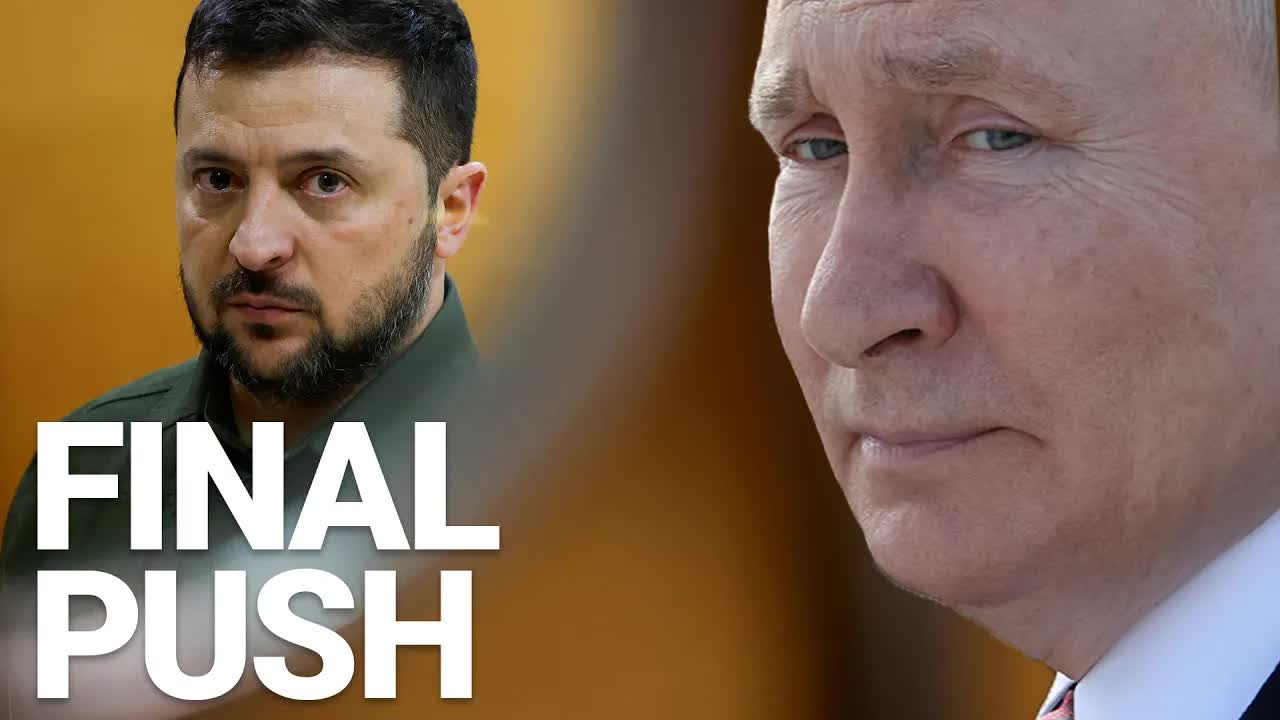
Tensions surrounding the ongoing conflict in Ukraine are reaching a boiling point, particularly regarding Western military support.
As discussions intensify about providing advanced weaponry to Ukraine, many analysts believe that Vladimir Putin is increasingly on edge.
The question remains: will Western allies step up their support with storm shadow and scout missiles for Ukraine, and what implications would this have for the war?
The debate among Ukraine’s Western allies is heated.
Some argue that supplying longer-range missiles could significantly alter the battlefield dynamics.
The frustration stems from the gradual approach taken by Western nations in supplying military aid to Ukraine.
Initially, it was tanks, followed by air defense systems, and now the focus has shifted to long-range missiles.
Critics contend that this piecemeal strategy is inadequate for addressing the urgent challenges Ukraine faces.
One expert pointed out that the West has been hesitant to escalate military support due to fears of provoking Russia.
Since the invasion began in February 2022, Putin and his inner circle have consistently issued nuclear threats, which have understandably alarmed European leaders.
However, some analysts argue these threats are mere bluster, particularly if Ukraine is empowered to use advanced missile systems like storm shadow.
The potential impact of storm shadow missiles cannot be overstated.
Currently, Russian forces are launching attacks from bases deep within their territory, targeting civilian infrastructure in Ukraine.
With a range of around 200 miles, storm shadow missiles could enable Ukraine to strike back at these launch sites, disrupting Russian operations and potentially reducing the frequency of attacks on Ukrainian cities.
Moreover, the discussion around storm shadow also intersects with concerns about Russia’s tactical nuclear capabilities.
As tactical nuclear weapons require closer proximity to the front lines, the ability for Ukraine to target these missile sites could deter Russia from deploying them against Ukrainian cities.
This capability could shift the balance of power and force Russia to reconsider its aggressive tactics.
However, the path to supplying these missiles is fraught with complications.
Major General Chip Chapman emphasized that while storm shadow missiles could provide strategic advantages, they are not a silver bullet.
He noted that most Russian aircraft operate from airfields beyond the reach of these missiles, meaning that the immediate impact on battlefield engagements would be limited.
Furthermore, the logistics of using precision-guided munitions like storm shadow require sophisticated targeting capabilities, often reliant on American intelligence and satellite technology.
Without this support, the effectiveness of such strikes could be compromised, raising questions about the feasibility of unilateral action by the UK or other allies.
As the situation evolves, the urgency for decisive action grows.
Former British defense secretaries have urged the current government to allow Ukraine to use these advanced systems without waiting for American approval.
They argue that this could significantly disrupt Russian supply lines and bolster Ukraine’s defensive efforts, ultimately leading to a more favorable outcome for both Ukraine and its allies.
Yet, the political landscape complicates matters.
With upcoming elections in the U.S. and varying levels of commitment among European allies, the timing and coordination of military support remain uncertain.
Some analysts suggest that the longer the West hesitates, the more entrenched Russia becomes, potentially leading to dire consequences for Ukraine’s sovereignty.
As discussions continue, the stakes are higher than ever.
The fear of escalation looms large, but so does the reality that failing to act decisively could embolden Russia further.
History teaches us that moments of indecision can lead to catastrophic outcomes, and the lessons of the past must not be ignored.
In light of these complexities, the international community watches closely.
The dynamics of this conflict are shifting, and the decisions made in the coming weeks could determine not only the fate of Ukraine but the broader geopolitical landscape in Europe.
The imperative to support Ukraine is clear, but how that support materializes remains a critical question that will shape the future of the region.
Read more
