









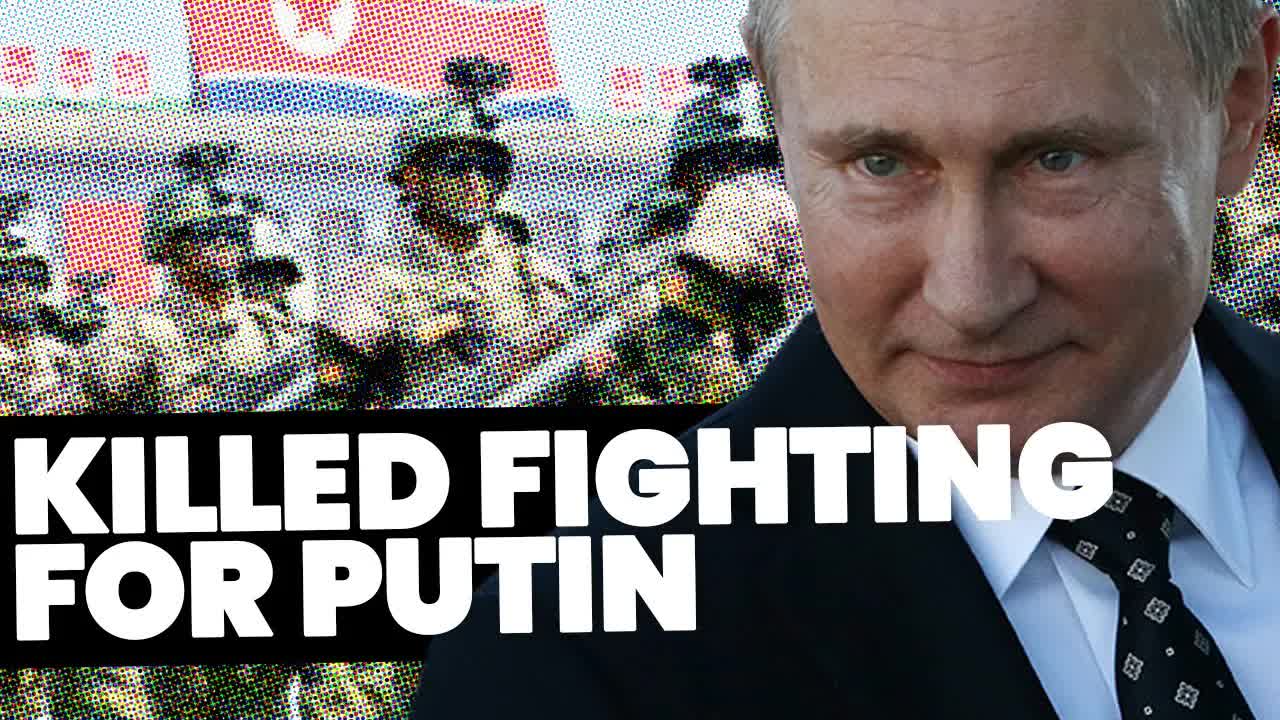
Recent reports have shed light on the surprising involvement of North Korean soldiers in the ongoing conflict in Ukraine.
According to a Russian military blog, dubbed the “Kremlin Snuffbox,” at least 20 soldiers were killed in the Donetsk region, among them six North Koreans.
This alarming news raises questions about the extent of North Korea’s military support for Russia and the implications of their personnel being deployed in a war zone.
A Ukrainian security official has indicated that a limited contingent of North Korean military personnel, primarily engineers, is present in occupied areas of Ukraine.
Their role appears to be focused on overseeing the implementation and quality of North Korean weaponry supplied to Russian forces.
However, this revelation also suggests that some of these North Korean soldiers have already lost their lives in the conflict.
Western intelligence sources have reported that North Korea is responsible for supplying approximately half of the artillery shells used by Russian forces in the war—an estimated three million shells annually.
This substantial contribution underscores the significance of North Korea’s involvement, but the nature of their participation remains unclear.
To gain further insight, I spoke with John Everard, a former British ambassador to North Korea.
He emphasized that while North Korean personnel may be in Ukraine, there is no solid evidence indicating they are actively engaged in combat.
Instead, it seems more plausible that they are there to provide technical support for the munitions being utilized by Russian troops.
Everard noted that North Korea’s military has not engaged in warfare for quite some time, which could leave them at a disadvantage regarding modern battlefield tactics.
Their presence in Ukraine might be less about direct combat and more about observing Russian military operations and supporting the use of North Korean munitions.
The recent reports from local media, including the Kyiv Post, suggest that the deaths of the North Korean soldiers signify a notable presence of personnel on the ground.
However, Everard pointed out that this does not necessarily indicate a large-scale deployment.
Instead, it reflects the technical support role that North Korea appears to be playing in the conflict.
The implications of North Korea’s military assistance to Russia cannot be understated.
If reports are accurate, the scale of munitions supplies could significantly bolster Russia’s war efforts.
With North Korea allegedly supplying half of the shells used by Russian forces, this partnership could alter the dynamics on the battlefield.
Yet, the question remains: would the involvement of North Korean soldiers in combat change the situation significantly?
Everard believes that while such a development would provoke outrage in the West, it might not lead to any drastic changes in policy or response.
The sanctions already imposed on North Korea limit the options available for further action.
North Korea’s motivations for supporting Russia are multifaceted.
For one, they gain valuable battlefield experience, which is scarce for their military.
Additionally, this collaboration allows North Korea to engage in trade, receiving essential goods like oil and food in exchange for munitions—a vital lifeline for their struggling economy.
As the conflict continues, both North Korea and Russia seem eager to maintain their alliance.
The potential fallout from the war in Ukraine poses risks for North Korea, particularly if Russia were to abandon its commitments after the conflict ends.
Thus, it is in their interest to keep the relationship strong and mutually beneficial.
In summary, the involvement of North Korean soldiers in Ukraine opens up a new chapter in the ongoing conflict.
While their presence may be limited to technical support for munitions, the implications of this partnership are profound.
As we continue to monitor the situation, the world watches closely to see how this unusual alliance unfolds and what it means for the future of both nations involved.
Read more
