







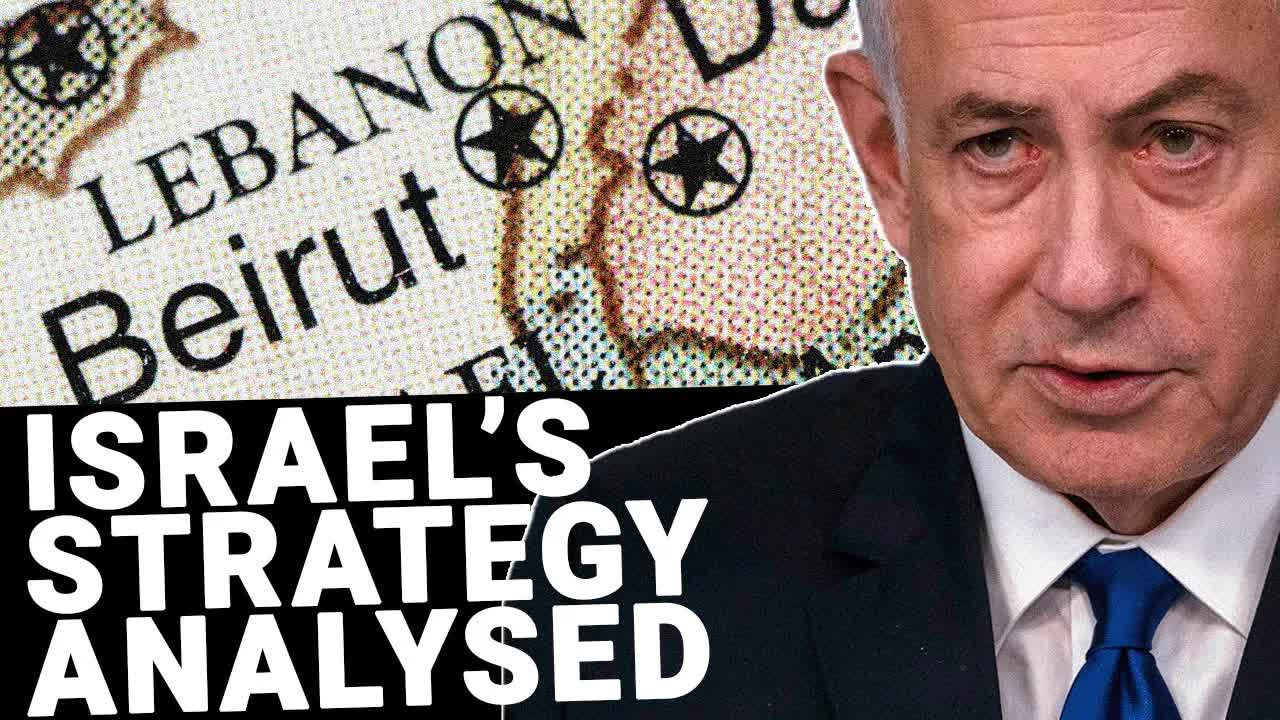
In recent developments, Israeli Prime Minister Benjamin Netanyahu appears to be making strategic calculations regarding the ongoing tensions with Hezbollah.
Observers suggest that he views U.S. President Joe Biden as a “lame duck,” seizing what he perceives as an opportune moment to address the longstanding threat posed by Hezbollah, which has loomed over Israeli leaders since the conflict in 2006.
This perceived leadership vacuum may be influencing Netanyahu’s decisions on the ground.
Joining us to unpack this complex situation is Mark Urban, a familiar face in discussions surrounding foreign policy and defense.
Urban highlights the current state of affairs along the Israel-Lebanon border, where Israeli tanks are gathering.
While some speculate that a ground invasion is imminent, Urban argues that while it is a possibility, it is not necessarily a foregone conclusion.
The Israeli government seems to be leveraging the threat of escalation to compel Hezbollah to agree to a ceasefire and withdraw from the border region.
Urban points out that the situation is fluid, with the potential for various military actions, ranging from limited raids to more extensive incursions.
However, he believes that a full-scale invasion akin to the one seen in 1982, which involved tens of thousands of troops, is unlikely given the current troop levels at the border.
The last significant Israeli military operation in Lebanon occurred in 2006 and did not yield favorable results, leaving Israeli forces with lessons learned about the complexities of engaging Hezbollah.
The 2006 conflict saw Israel conducting airstrikes against Hezbollah and Lebanese infrastructure, followed by a ground invasion that resulted in significant losses for the Israeli military.
Urban recalls how the Israeli forces faced unexpected resistance, leading to a reassessment of their military tactics.
This history raises questions about whether Netanyahu’s current strategy will lead to a different outcome or merely repeat past mistakes.
As Israel contemplates its next moves, Urban notes an apparent paradox in their approach.
Despite inflicting damage on Hezbollah’s leadership through targeted strikes, it remains unclear who would be able to command a retreat from the organization.
The remnants of Hezbollah’s leadership may exist, but their willingness to back down in the face of Israeli pressure is uncertain, especially given Iran’s ongoing support for the group.
Hezbollah’s defiance is further complicated by societal pressures within Lebanon, where many factions oppose continued hostilities.
Urban suggests that any resolution may hinge on Hezbollah’s perception of public sentiment in Lebanon and Iran’s stance on escalating support for the group.
If Hezbollah feels isolated and unsupported, they might reconsider their aggressive posture.
Meanwhile, Israel’s military operations have extended beyond Lebanon, with recent strikes in Yemen targeting the Houthis, who have launched missiles at Tel Aviv.
Urban interprets these actions as a direct response to threats rather than a shift towards broader military engagement in the region.
He emphasizes that while such operations may be necessary for immediate security, they are unlikely to become a regular occurrence.
Despite Biden’s appeal for restraint from both sides, Urban questions the impact of his words.
Netanyahu’s calculations seem to indicate that he believes Biden’s influence is waning, allowing him to act more decisively against Hezbollah without significant repercussions from the U.S.
This perception of a leadership vacuum could embolden Netanyahu to pursue aggressive military actions.
The dynamics of international relations complicate the situation further.
Urban points out that many Middle Eastern governments share Israel’s concerns about Hezbollah and Iran, suggesting that American leaders may be reluctant to reign in Israeli actions.
Even if there were a desire to do so, the geopolitical landscape makes it challenging for any U.S. president to impose restrictions without risking further instability in the region.
Turning our attention to Europe, Urban shifts gears to discuss Keir Starmer’s upcoming visit to Brussels.
This trip marks a crucial moment for the Labour government as they seek to reset relations with the European Union.
Starmer’s meetings with key EU leaders aim to explore opportunities for collaboration, particularly in areas like youth mobility and immigration.
Starmer’s agenda includes discussions about facilitating student exchanges between the UK and EU, reflecting a desire to foster closer ties post-Brexit.
However, Urban notes that the Labour government is navigating complex issues surrounding immigration regulations, which remain contentious on both sides of the Channel.
European leaders have expressed a cautious optimism regarding the potential for a reset in UK-EU relations, but they remain skeptical about the extent of meaningful changes.
Urban highlights that while there is a desire for smoother processes, significant alterations to existing agreements are unlikely unless there is a stable and committed UK government willing to negotiate.
As Starmer’s visit unfolds, the implications for NATO and transatlantic relations also come into focus.
Urban underscores the importance of maintaining strong ties with the U.S., particularly in light of uncertainties surrounding American commitment to NATO in the future.
The new Secretary General of NATO faces the challenge of balancing differing perspectives among member states regarding support for Ukraine and broader defense strategies.
With tensions simmering in the Middle East and diplomatic efforts underway in Europe, the coming days will be pivotal in shaping the geopolitical landscape.
The interplay of military strategy, international relations, and domestic pressures will undoubtedly continue to influence the decisions made by leaders on both sides of the Atlantic.
Read more
