








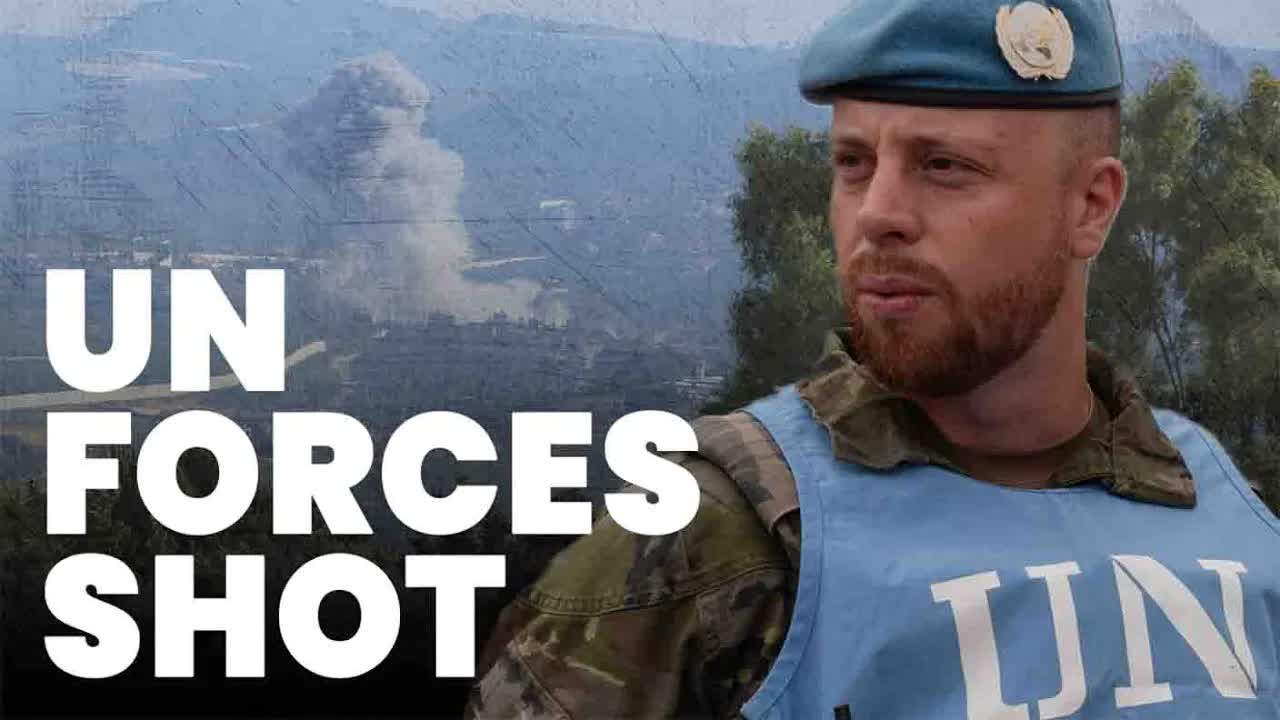
Israeli Prime Minister Benjamin Netanyahu has recently urged the United Nations to withdraw its peacekeeping forces from Lebanon following an alarming incident where a fifth peacekeeper was shot and injured.
The circumstances surrounding the shooting remain murky, with Israel yet to clarify whether its military was involved.
This development has raised eyebrows and sparked concerns globally.
In a recent update, journalist Justin Oliver Salhani, reporting from Beirut, shed light on the escalating situation.
He noted that Netanyahu’s call for the UN to evacuate comes amid a series of attacks that have left at least four UN peacekeepers wounded in just a few days.
Among the injured are two Indonesian peacekeepers, while the nationalities of the other two remain uncertain, with one possibly being Irish.
The Israeli Prime Minister’s warning has not gone unnoticed.
A coalition of 34 nations, out of the 50 contributing to the peacekeeping mission, signed a letter condemning the attacks on their personnel.
France’s President Emmanuel Macron also weighed in, criticizing the situation and summoning the Israeli ambassador in response to the rising tensions.
Netanyahu has previously labeled the UN as a “once respected institution” that has degenerated into a “swamp of anti-Semitic bile.” These remarks, made about two weeks ago, underscore his growing frustration with the international body.
As the situation unfolds, it remains to be seen how the UN will respond to his latest demand for troop withdrawal.
The implications of this request are significant.
Observers anticipate that the UN will approach this directive with deep concern.
Patterns of violence against peacekeepers have been noted before, particularly in Gaza over the past year.
The UN peacekeepers in Lebanon have faced similar threats, leading to calls for accountability regarding attacks that many argue are deliberate.
Human Rights Watch has classified such attacks on peacekeepers as potential war crimes, amplifying the urgency of the matter.
The UN Interim Force in Lebanon (UNIFIL) has acknowledged the severity of these incidents, expressing alarm over the safety of their personnel who are caught in the crossfire.
Established in 1978, UNIFIL was originally deployed to oversee the withdrawal of Israeli forces from southern Lebanon and to restore peace and security in the region.
The mission has been renewed annually by the UN Security Council, reflecting ongoing tensions and the need for an international presence.
Currently, UNIFIL comprises around 10,000 peacekeepers from 50 different countries, with Indonesia providing the largest contingent.
The force has a long history of involvement in various conflicts, having been active during significant military engagements, including Israeli invasions in 1982 and 2006.
As the situation continues to develop, it’s clear that the stakes are high.
The potential for further violence could jeopardize the safety of peacekeepers and exacerbate tensions in an already volatile region.
The international community is watching closely, hoping for a resolution that prioritizes peace and stability.
In light of these events, the dialogue between Israel and the UN is critical.
How both parties navigate this precarious situation could set the tone for future interactions and the overall security landscape in Lebanon.
The eyes of the world are on them as they grapple with these pressing challenges.
As we await further updates, the situation serves as a stark reminder of the complexities involved in peacekeeping missions and the fragile nature of international diplomacy in conflict zones.
Read more
