






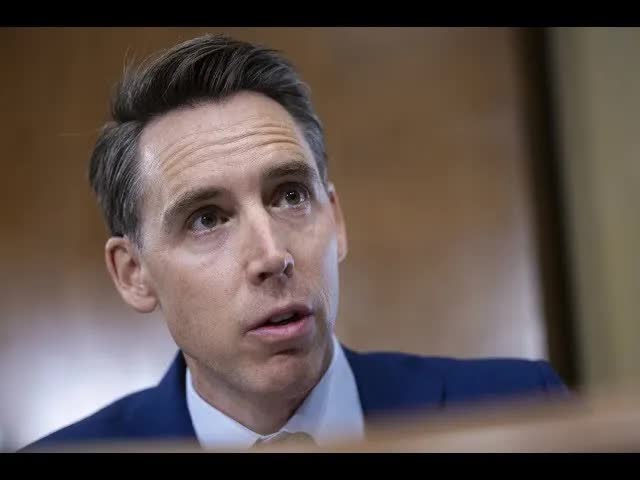
In a recent discussion, Lucas Koontz, the Democratic nominee for the U.S. Senate from Missouri, shared his thoughts on the current state of politics in the Show-Me State, particularly focusing on his opponent, Josh Hawley.
Koontz’s candidacy is gaining traction as he highlights what he perceives to be Hawley’s glaring contradictions and failures.
Koontz kicked off the conversation by referencing a tweet from Hawley dating back to 2018, where he criticized former Senator Claire McCaskill for her lifestyle choices.
Koontz didn’t hold back, labeling Hawley a “hypocrite” who flaunts wealth while neglecting the needs of ordinary Missourians.
He pointed out that Hawley has not held a campaign event in over 55 days, opting instead for a luxurious tour in a private jet, which he sarcastically dubbed a “bromance tour” with NFL player Harrison Butker.
The discussion quickly shifted to Hawley’s controversial stance on women’s rights.
Koontz expressed disbelief at Hawley’s recent comments suggesting that women should “step aside.”
He emphasized that this reflects Hawley’s long-standing record against women’s reproductive rights, a topic that resonates deeply with voters as abortion rights are set to be a significant issue on the ballot in November.
When comparing Hawley to his predecessor, Roy Blunt, Koontz painted a stark picture of Hawley’s performance.
While Blunt was able to secure around $300 million annually for Missouri, Koontz argued that Hawley has failed to deliver any financial support for the state.
He called attention to the tangible impacts of Hawley’s neglect, recalling his own childhood experiences in a struggling neighborhood now plagued by abandoned properties and economic decline.
As the conversation progressed, Koontz outlined what he believes a Democratic senator from Missouri could achieve.
He detailed his “Marshall Plan for the Midwest,” aimed at revitalizing energy and manufacturing sectors in the region.
Koontz contended that having a senator who genuinely cares about the community could lead to transformative changes for working-class families.
Koontz also drew parallels between himself and Joe Manchin, the centrist Democrat from West Virginia, noting that he aims to leverage his position to advocate for Missouri’s needs effectively.
He believes that a Democratic voice in the Senate could bring much-needed attention and resources to the state, especially after years of neglect.
On the campaign trail, Koontz has been heartened by support from individuals who have traditionally voted Republican but are now disillusioned with Hawley’s inaction.
He recounted an email from a lifelong Republican who stated he would vote for Koontz because he believes Koontz would better serve Missouri’s interests.
A key aspect of Koontz’s campaign is his commitment to rejecting corporate PAC money, which he argues has corrupted politics and led to the neglect of working-class citizens.
He believes that by relying on small donations from everyday Missourians, he can remain accountable to the people rather than special interests.
As the race heats up, Koontz’s message resonates with many who feel sidelined by the current political landscape.
He emphasizes the need for a government that empowers individuals rather than controls their lives, positioning himself as a candidate who will fight for the rights and freedoms of all Missourians.
Looking ahead, Koontz is preparing for a debate with Hawley, where he plans to showcase his background and commitment to service.
He aims to contrast his dedication to the community with Hawley’s perceived self-serving ambitions, hoping to highlight the stark differences between their visions for Missouri’s future.
With the election approaching, Koontz is mobilizing supporters, emphasizing the importance of grassroots involvement.
He encourages Missourians to engage in the electoral process, reminding them that their voices matter in shaping the state’s future.
As the political landscape in Missouri evolves, Lucas Koontz stands poised to challenge the status quo, advocating for a vision of progress and accountability that he believes is essential for the state’s recovery and growth.
Read more
