




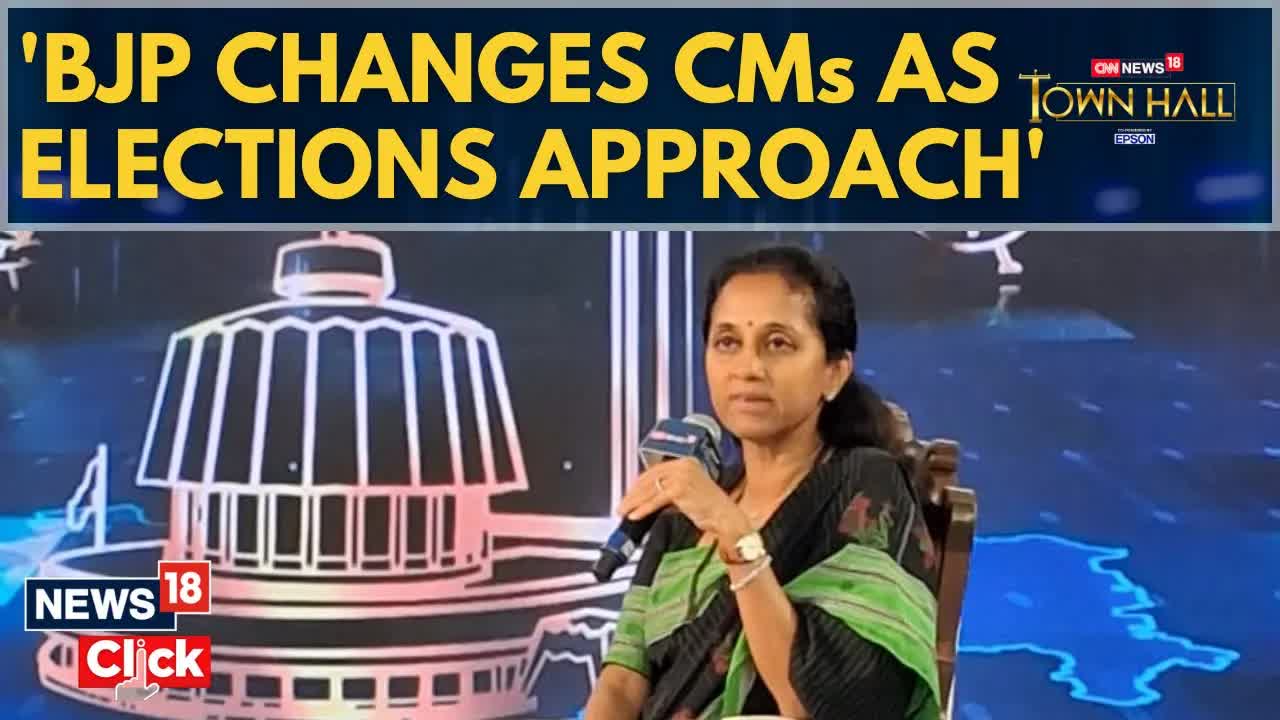
In a recent discussion surrounding the political dynamics in Maharashtra, questions arose about the Chief Ministerial face for the upcoming elections.
The dialogue reflects a broader concern about democratic practices and the nature of alliances in Indian politics.
One participant emphasized that in a democracy, especially in India, it’s uncommon to have a singular figure representing an alliance, unlike a presidential election.
When pressed about whether the alliance would enter the elections with a declared Chief Ministerial candidate, the response was decidedly ambiguous.
“Unlikely,” was the refrain, suggesting that the coalition partners might not settle on a single leader before the polls.
This stance contrasts sharply with the sentiments expressed by Uddhav Thackeray, who has publicly advocated for a clear declaration of the CM face.
The idea of a democratic alliance was underscored, with acknowledgment that each partner should express their views freely.
The speaker welcomed Thackeray’s input, recognizing the importance of open dialogue within the coalition.
Yet, despite this openness, the likelihood of announcing a unified candidate remains low.
The conversation shifted to the opposition, where clarity emerged regarding Eknath Shinde’s position as the sitting Chief Minister.
If the ruling alliance secures victory, Shinde’s continuation in office seems probable.
However, the political landscape is anything but static.
The BJP has a history of reshuffling its leadership, having replaced Chief Ministers in various states before elections.
This unpredictability leaves room for speculation about potential changes in leadership, even among current officeholders.
Amidst these discussions, the Mahayuti alliance is banking on new initiatives like the “Larki Bhena” scheme, which aims to appeal to women voters.
The strategy draws parallels to tactics used in other states, such as Madhya Pradesh and Karnataka, where similar programs were implemented.
But does this mean it will yield success in Maharashtra?
While some successes have been noted, skepticism lingers.
For instance, the impact of such schemes in Telangana has been less than favorable, raising doubts about their effectiveness elsewhere.
Even in Karnataka, where the Congress party regained power, many questioned the sustainability of promises made during campaigns.
The conversation also highlighted the complex interplay between political promises and public sentiment.
The mention of financial incentives like the 1,500 rupees promised by the Congress party serves as a reminder that such pledges often come from opposition parties seeking to capitalize on voter discontent.
The previous government’s promises, particularly in Telangana and Andhra Pradesh, have not always translated into tangible benefits for the electorate.
As the political narrative unfolds, there’s a noticeable focus on addressing women’s issues directly.
The targeted approach to engage female voters is a strategic move, yet it raises questions about the depth of these initiatives.
Are they merely surface-level gestures, or do they reflect a genuine commitment to improving women’s security and rights?
Interestingly, surveys suggest that many women prioritize issues beyond monetary incentives.
The desire for enhanced security and safety resonates strongly within this demographic.
The notion that women would be willing to contribute more to ensure their safety underscores a shift in what voters truly value.
As Maharashtra gears up for the elections, the political atmosphere remains charged with uncertainty.
With alliances forming and strategies being tested, the question of leadership and the effectiveness of new policies will undoubtedly shape the electoral landscape.
Voters are keenly aware of the stakes involved and are ready to make informed choices based on the evolving political discourse.
Read more
